How to Store Antler Chews Between Sessions

Quick Answer: How to store dog antler chews: room temperature, dry, away from direct sunlight, in a spot with airflow. A Grade A antler stored dry at room temperature in an open basket or on a shelf stays scent-active and structurally stable indefinitely. The two mistakes that degrade antlers fastest are storing damp (causes bacterial growth, sour smell, lost dog interest) and storing sealed in a plastic bag (traps moisture). Refrigeration is unnecessary and counterproductive. Bring a chilled antler to room temperature before giving it to your dog, cold surfaces reduce scent release and session engagement.

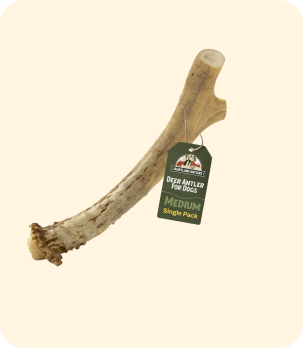
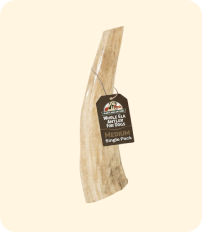
Whole Elk Antler Chew - Large (45-65 lbs)
Recommended for Most Dogs
Whole Elk Antler Chew - Large (45-65 lbs)
A clean dry spot is enough — start with the large whole elk antler.
Shop Whole Elk Antler Chew

Store antler chews at room temperature, dry, away from direct sunlight, and off the floor in a spot with airflow. Those four conditions keep a Grade A antler stable and scent-active indefinitely. A dry antler stored at room temperature in an open basket or on a shelf does not degrade, does not mold, and does not lose structural integrity. A damp antler stored in a sealed bag or left outside for a few weeks will lose your dog's interest before it loses its shape.

The storage rule is simple. This article explains why it matters and covers the common mistakes that degrade a good antler faster than the dog will.

How to Store Dog Antler Chews: What We've Found Across Multi-Dog Households

After working with customers managing antler chews across multiple-dog households, the degradation pattern is consistent: pieces left outside or stored damp lose marrow scent within one to two weeks, and dogs stop returning to them. We've found that owners who keep antlers in an open basket indoors at room temperature report sustained dog engagement across the full lifespan of the piece.

Does Antler Chew Storage Actually Affect Longevity?

Yes. And the difference is simple.

A dry antler stored at room temperature is stable indefinitely. It holds its scent, its surface, and its structural integrity. A damp antler stored in an enclosed space grows bacteria. The smell changes from marrow-forward to sour. Your dog notices and walks away.

Leaving an antler outside compounds the problem. UV exposure degrades the outer cortex of bone mineral over weeks, even in indirect light. Heat causes micro-cracking. Rain re-hydrates the piece and promotes bacterial growth. Three weeks of outdoor exposure is enough to turn a Grade A antler into something your dog wants nothing to do with.

The antler is bone mineral. Treat it like a tool. Store it right.

A Grade A elk antler stored dry at room temperature retains structural integrity and marrow scent for many months. A piece stored in a sealed plastic bag traps moisture and will typically develop bacterial contamination and scent loss within weeks. The difference is airflow and moisture control, not any property of the antler itself.

The Right Way to Store an Antler

Storage Condition Result Recommendation
Room temp, dry, open air Stable indefinitely, scent-active Correct method
Sealed plastic bag or airtight container Moisture trapped, bacteria develops, scent lost within weeks Avoid
Direct sunlight or outdoor porch UV degrades cortex, micro-cracking, surface becomes brittle Avoid
Refrigerator Condensation on removal, moisture introduced Unnecessary, avoid
Warm water soak before presenting Reactivates marrow scent, restores dog interest Use to refresh

How to store a dog antler chew correctly:

  1. After each session, bring the antler indoors immediately.
  2. Rinse with warm water if needed. No soap.
  3. Air dry completely on a rack or towel, at least one hour, before storing.
  4. Place in an open basket or on a shelf at room temperature, away from direct sunlight and exterior walls.
  5. Do not seal in a plastic bag or airtight container.
  6. For split antlers with an exposed marrow channel, store cut-side down on a clean surface to prevent debris accumulation.

No refrigeration needed. No sealed bags. Trapping moisture in a zip-lock or airtight container is one of the most common mistakes. The piece needs air moving around it.

A simple open basket, a shallow bowl, or a mudroom shelf works fine. Keep it away from windows where afternoon sun hits. Keep it away from exterior walls in humid climates. A kitchen drawer with airflow or a shelf in a cool interior room is the right spot.

No special equipment needed. No refrigerator. No humidor. Just a dry, stable environment with some air circulation and nothing generating direct heat or UV light onto the piece.

How to Clean an Antler Between Sessions

Rinse with warm water. No soap.

Soap leaves a residue on the surface and inside the porous bone structure. Your dog tastes it. It also interferes with the marrow scent that keeps the chew interesting. Skip soap entirely.

For a lightly used piece after a short session: warm-water rinse and a dry with a clean towel. Let it air dry completely before returning it to storage. That means at least an hour, not five minutes.

For a heavily used piece with visible buildup:

  • Soak in warm water for five to ten minutes
  • Scrub with a stiff brush, the kind used for vegetable prep
  • Rinse thoroughly
  • Air dry flat on a rack or towel, not standing upright where water pools in the marrow cavity

Never put an antler in the dishwasher. The sustained heat and detergent dry out the outer cortex, accelerate surface cracking, and break down the structure faster than your dog will.

Antler Storage for Multi-Dog Households

One antler per dog. That is not optional.

Sharing an actively-used piece between dogs transfers bacteria. It also creates resource-guarding pressure that builds over time, sometimes quietly, until it does not.

The practical system:

  • Two pieces per dog. Rotate every few days. A piece coming back out after a three-day rest presents as new to your dog. Novelty is part of the drive to chew.
  • Label each piece. A small dot of nail polish on the base end of each antler identifies whose is whose. It does not affect the chew surface and does not wash off.
  • Store each dog's pieces separately. Same basket, different sides, or separate containers. In a multi-dog household with high-drive dogs, scent matters. Your German Shepherd knows which piece belongs to the Lab.

The rotation system also extends the life of each piece. Constant daily chewing accelerates wear. Rotation gives the surface a rest and keeps your dog's interest from plateauing.

When to Retire vs. When to Refresh

Know the difference. It saves money and keeps your dog safe.

For senior dogs, the retirement rule comes up faster. A dog with worn molars generates different pressure and the molar-width threshold arrives sooner than it does for a younger adult. The antler for senior dogs guide covers how to size down and when to move from whole to split.

Retire the piece when:

  • It is down to roughly molar width. At that size it becomes a swallow risk for most dogs.
  • It has sharp edges from a fracture. Run your thumb along the surface. If it catches, retire it.
  • Cracks run through the cortex wall, not surface scratches but structural fractures you can see through. Those can splinter under pressure.

Refresh the piece when:

  • Your dog has lost interest but the piece is still full-sized and structurally sound.
  • The surface has dried out and the scent has faded.

To refresh: soak the piece in warm water for ten to fifteen minutes. The warmth activates the marrow and releases the scent compounds that make antler interesting. Present it during a high-drive moment, after a run, before feeding, when your dog is looking for an outlet. The antler will land differently.

Some dogs respond to a brief rinse under warm running water at the start of each session. Takes ten seconds. Works.

For a guide on knowing when supervision is needed and what a safe antler looks like across its lifespan, see: Are Antlers Safe? When to Retire a Chew.

For puppies specifically, storage and session length work differently than with adults: Antler for Puppies: Phases, Sizes, and When to Start.

For the species decision that affects how you store and use each piece: Elk vs. Deer Antler: Which One Is Right for Your Dog.

Outdoor Storage Mistakes That Degrade Antler Fast

Dogs and back porches are a natural combination. Antlers and back porches are not.

The most common mistake: leaving an antler outside to dry after a session. The logic makes sense. Fresh air, natural drying. The outcome does not hold up.

UV radiation degrades the outer cortex of bone mineral over weeks, even in indirect light. The surface becomes chalky and brittle. A piece that would take a Malinois three months to work through can develop surface fractures from sun exposure before that work is done.

Heat is the other factor. On a porch in summer, ambient heat from a concrete or wood surface dries the antler unevenly, pulling moisture from the center faster than the surface can equilibrate. Micro-cracks form. They do not heal.

Bring the antler inside after each session. It takes five seconds and protects the piece.

How Long Does a Stored Antler Stay Good?

Indefinitely, if stored dry.

Grade A antler does not expire. It is not food. It does not rot, mold, or degrade in dry storage. A piece that has been sitting in a clean, dry basket for six months is structurally the same as a new one. The marrow scent may have faded slightly, which is addressable with a warm-water soak before presenting it.

The antler is bone mineral. Time does not degrade it. Moisture and heat do. Control those two things and the piece is ready whenever your dog is.

What Makes the Antler Worth Storing Properly

The storage rules above keep a Grade A antler performing. What makes Grade A worth the effort starts at sourcing. For a breakdown of how density, cortex structure, and selection at collection determine what you actually have in your hands: What Makes an Antler Grade A: Structure and Sourcing.

For breed-specific chew session guidance that intersects with storage decisions, see the guides for German Shepherds, Labrador Retrievers, and Pit Bulls. For a comparison of how antler holds up versus disposable chews that do not require storage rotation, read Antler vs. Bully Stick and Antler vs. Rawhide.

Find the Right Fit

Storage keeps your antler working. Finding the right antler for your dog in the first place is where it starts.

Find the Right Fit for Your Dog covers size selection by breed, chew intensity, and jaw strength.

Ready to stock up? Shop Grade A elk antler and find the size that fits your dog's bite.

Frequently Asked Questions

Do antler chews go bad or expire?

No. A dry-stored antler does not expire. Antler is bone mineral, not food. It does not rot, ferment, or lose structural integrity in dry storage. A piece stored correctly for a year is as usable as a new one. Moisture is what causes problems, not time.

Should I refrigerate my dog's antler chew?

No. Refrigeration is not necessary and creates problems. The temperature change from cold storage to room temperature causes condensation on the surface, introducing the moisture that promotes bacterial growth. Store at room temperature, dry, with airflow.

How do I clean an antler chew between sessions?

Warm water rinse, stiff brush for heavy buildup, air dry completely before returning to storage. No soap, no dishwasher. For a lightly used piece, a rinse and a dry towel is enough. Full air dry takes at least an hour.

Can two dogs share the same antler chew?

No. Sharing an actively-used piece transfers bacteria between dogs. It also builds resource-guarding pressure over time. One antler per dog. If you have two dogs, keep two pieces per dog and rotate every few days. Label each piece to track whose is whose.

How do I get my dog interested in an old antler again?

Soak the piece in warm water for ten to fifteen minutes. The warmth reactivates the marrow scent. Present it at a high-drive moment, after exercise or before a meal, when your dog is looking for an outlet. If the piece is still full-sized and structurally sound, the issue is scent and novelty, not the antler itself. Both are fixable.

Frequently Asked Questions

Do antler chews go bad or expire?

No. A dry-stored antler does not expire. Antler is bone mineral, not food. It does not rot, ferment, or lose structural integrity in dry storage. A piece stored correctly for a year is as usable as a new one. Moisture is what causes problems, not time.

Should I refrigerate my dog's antler chew?

No. Refrigeration is not necessary and creates problems. The temperature change from cold storage to room temperature causes condensation on the surface, introducing the moisture that promotes bacterial growth. Store at room temperature, dry, with airflow.

How do I clean an antler chew between sessions?

Warm water rinse, stiff brush for heavy buildup, air dry completely before returning to storage. No soap, no dishwasher. For a lightly used piece, a rinse and a dry towel is enough. Full air dry takes at least an hour.

Can two dogs share the same antler chew?

No. Sharing an actively-used piece transfers bacteria between dogs. It also builds resource-guarding pressure over time. One antler per dog. If you have two dogs, keep two pieces per dog and rotate every few days. Label each piece to track whose is whose.

How do I get my dog interested in an old antler again?

Soak the piece in warm water for ten to fifteen minutes. The warmth reactivates the marrow scent. Present it at a high-drive moment, after exercise or before a meal, when your dog is looking for an outlet. If the piece is still full-sized and structurally sound, the issue is scent and novelty, not the antler itself. Both are fixable.

Back to blog