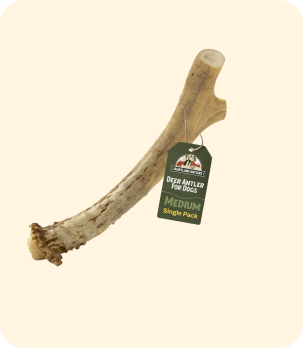
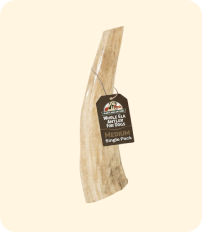
Quick Answer: The right antler size for your dog depends on jaw type and chew intensity, not weight alone. Weight gets you the starting range. Jaw type determines the final size. A crusher-jaw breed (Pit Bull, Cane Corso, American Bully) at any weight goes up one size from the weight chart. Soft-mouth breeds (Labs, Goldens) go split, not whole. If your dog can visibly compress a whole elk in one session, size up immediately. Senior dogs and those still developing teeth always get split cuts. The table below applies all four inputs.
Most sizing charts for dog chews tell you one thing: match the chew to your dog's weight. Forty pounds gets medium. Eighty pounds gets large. Done.
That chart gets about half the dogs right.

Fit requires four inputs: body weight, jaw style, chew intensity, and age. Weight gives you the range. The other three narrow it. Get jaw style wrong and the antler either fails under pressure or gets ignored. Get chew intensity wrong and the piece disappears in one session or sits untouched for weeks. Get age wrong and you risk dentition problems in a puppy or a fractured molar in a senior.
This guide covers all four. It is the fit framework we use for every order we ship, tested on working breeds, rescue mixes, and the kind of dog that turns a cheap bully stick into confetti by Tuesday.
Customers sizing by weight alone consistently describe the same outcome: a piece that looks right at purchase fails the jaw test on first contact. After working with owners across every breed and size class, we've found jaw width and chew style matter more than body weight for roughly half the dogs we fit. A 50-pound Vizsla and a 50-pound Pit Bull need completely different antlers. The framework below starts with those two variables.
What Size Antler for Your Dog: The Fit Framework We Use
We have fitted antlers to hundreds of dogs across working breeds, rescue mixes, and small terriers. The fit framework in this guide is the same one we apply to every order we ship. After two years of customer data, the single most consistent finding is this: when an antler fails early, it is undersized by one size category for the dog's jaw type, not by the weight chart but by the actual jaw mechanics. Sizing up solves the problem nearly every time.
Why Weight Charts Fail Power Chewers
Walk into any pet store and the sizing advice reads the same.
Small dog. Small chew. Large dog. Large chew.
That works if every dog had the same mouth. They do not. A Malinois and a Golden Retriever can sit at the same weight and chew like two different animals. One is a scalpel. The other is a shop vac.
The power-chewer problem is fit, not weight. If the antler is too small, the dog swallows too much in one bite, and you are looking at a vet visit. If it is too large, the dog loses interest. There is no purchase point for the molar. Fit lands the sweet spot where the dog can work the chew without inhaling it.
That is why we do not run a weight chart. We run a fit guide.
Antler Sizing Table by Dog Weight
Use this as a baseline. Adjust up one size for crusher-jaw breeds (Pit Bull, Cane Corso, Rottweiler, American Bully) or high-drive working breeds. Adjust down one size for soft-jawed adults, seniors, or first-timers.
| Dog Weight | Jaw Type | Recommended Size | Cut | Grade |
|---|---|---|---|---|
| Under 20 lb | Narrow/compact (Yorkie, Chihuahua, toy breeds) | Extra Small | Split | Grade A Deer |
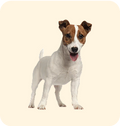
| 20-50 lb | Light to moderate (Beagle, Corgi, Shih Tzu) | Small to Medium | Split or Whole based on jaw | Grade A Deer or Elk |
| 50-90 lb | Moderate to strong (Lab, Golden, GSD, Malinois, Weimaraner) | Large | Whole | Grade A Elk |
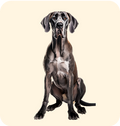
| 90+ lb | Strong to crusher (Rottweiler, Doberman, Cane Corso, Mastiff) | XL | Whole | Grade A Elk |
Jaw-type overrides apply at every weight bracket. Crusher-jaw breeds (Pit Bull, Cane Corso, American Bully) go up one size from whatever the weight chart shows. Soft-mouth breeds (Lab, Golden) at 50-90 lb get split elk or split deer, not whole. A 70 lb Pit Bull belongs in the XL column, not Large.
The Power Chewer Compression Test
If your dog can visibly compress a whole elk antler in a single session, size up one category immediately. This is not about the antler being defective. It is about jaw mechanics outrunning the fit. A correctly sized piece should show surface wear across multiple sessions, not collapse in one.
Watch the first session. If you see the piece flexing, bending, or losing significant mass in under twenty minutes, the size is wrong for the jaw. Do not wait for the second session to make the call.
The Four Inputs That Actually Match an Antler to a Dog
Here is what we look at before we ship an antler.
1. Weight. Baseline. Sets the size range.
2. Jaw style. How the dog bites. Crushers (Pit Bull, Staffy, Cane Corso) generate more pounds of bite force per square inch than gripping breeds of the same weight and always size up one from the chart. Soft-mouth breeds (Lab, Golden Retriever) use split cuts, not whole, because their jaw mechanics work the marrow channel rather than crushing through cortex. Scissor-jaw breeds (Malinois, GSD) fall between these extremes and take whole elk at weight.
3. Chew intensity. How your dog actually chews. Is your dog a pacer, a flipper, a focused grinder, or the kind of dog that locks in and works a chew for an hour? A focused grinder on a too-soft chew tears it down fast. A flipper needs a piece heavy enough to stay put.
4. Age and dentition. Puppies under twelve months and seniors missing molars should be on split antlers or smaller cuts. Adult teeth on a high-drive chewer can handle whole-cut Grade A.
Name these four honestly and fit gets simple.
Elk vs. Deer: They Do Not Size the Same
Elk antler has approximately 30-40% greater density than deer antler at equivalent piece size. That matters for sizing.
A medium elk antler and a medium deer antler can weigh the same and look the same from across the room. They do not perform the same. Elk holds up longer against pressure. Deer offers more surface for a dog that likes to roll a piece. Some dogs prefer the marrow access on a split deer cut. Others want the challenge of a solid elk cross-section.
Here is the rule of thumb we use on the supply side:
- Elk: working breeds, serious chewers, dogs that wreck the deer
- Deer: softer-jawed adults, seniors, dogs new to antlers
- Split (either): puppies, seniors, marrow-seekers, first-timers
If the dog has already defeated a deer antler in one sitting, that is your signal. Size up, switch to elk, or both. For a full elk vs. deer comparison by jaw type, read the elk vs deer antler guide.
Fit by Breed: The Working-Dog Table
These are the pairings we actually ship. Real weight bands. Real jaw types. Real chewers.
German Shepherd (60-90 lb, scissor bite, focused grinder) Large elk, whole-cut. Split pieces for puppies under ten months. Shepherds work a chew with patience. The antler should be dense enough to reward that patience, not collapse under it.
Belgian Malinois (45-80 lb, scissor bite, high intensity) Large elk. These dogs are the engine that tests a chew the hardest. If it holds up for a Mal, it holds up for almost anything.
Pit Bull / American Staffordshire (45-85 lb, crusher jaw, locked-in chewer) Extra-large elk, whole-cut, thickest cross-section you have. Crushers generate pressure that splinters softer chews. Grade A elk handles it. Lesser grades do not.
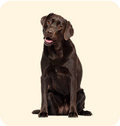
Labrador Retriever (65-90 lb, soft-mouth jaw, recreational chewer) Split elk or split deer, large. Labs are soft-mouth by jaw type and do not need whole-cut density. They mouth, carry, and work the marrow channel. A split piece gives them the surface they actually use, and it lasts longer because they are not brute-forcing through cortex.
Golden Retriever (55-80 lb, soft-mouth jaw, softer worker) Split deer, medium to large. Goldens are soft-mouth and do not benefit from the density whole elk offers. Split gives them immediate marrow access, which is the reward that keeps them engaged. Whole elk for a Golden is over-engineered for the jaw.
Cane Corso / Mastiff types (90+ lb, crusher jaw, patient but powerful) Extra-large elk, whole-cut, paired and rotated. One piece is rarely enough. These dogs earn a rotation.
Rescue mixes (variable: size by body weight, then adjust by jaw style) Start medium. Watch the first session. If the dog defeats it in under twenty minutes, size up. If the dog loses interest in ten, size down or switch to split.
Huskies, Malamutes, working Northerns (50-85 lb, moderate bite, episodic chewers) Large elk or split deer. Northerns tend to chew in bursts. They need a piece that stays interesting across sessions, which usually means elk.
How to Read an Antler Before You Buy
You can fit an antler without your dog in the room if you know what to look at.
Length: from the base of the crown to the tip. The dog should be able to set one paw on it and hold it down without the whole piece sliding.
Cross-section diameter: the thickness at the thickest point. Smaller than the dog's canine tooth and you have a swallowing risk. Larger than the dog can purchase with a molar and you have a chew they ignore.
Weight in hand: pick it up. A chew that feels light for its size is hollow or low-density. A chew that feels heavier than it looks is what you want.
Finish: Grade A antler has smooth, intact bark with visible growth rings. Cracks, chalking, or a gritty surface are lower grade and splinter faster.
Every Heartland piece passes those four checks before it goes in the box. For more on what Grade A means and how to inspect it, read the Grade A antler guide.
When to Size Up
Size up if your dog:
- Finished the antler in under one sitting
- Showed jaw fatigue but no surface wear on the chew (the piece is harder than the dog's output, which is rare)
- Outgrew the last size in the past four months (common in working-breed puppies between eight and eighteen months)
- Shares a chew with a second, larger dog
When to Size Down
Size down if your dog:
- Lost a tooth on the last piece. This means the fit was wrong, not the chew itself
- Is a senior with worn molars
- Is a puppy under ten months still cutting adult teeth
- Has never had an antler and needs a starter cut to learn the purchase point
Splits are the safe sizing-down move. They give the dog marrow access and a softer work surface without sacrificing the one-ingredient standard.
Senior dogs often need two adjustments at once: smaller size and split cut. The antler for senior dogs guide covers how to read enamel wear and when to switch from whole elk to deer split as a dog ages.
Signs You Got the Wrong Fit
The antler is too small if:
- The dog swallows a chunk larger than a quarter
- The piece disappears in one session
- You find splinters you did not expect (a too-small piece generates pressure points that fracture the antler)
The antler is too large if:
- The dog carries it but does not chew it
- The dog loses interest within a week
- You see no molar wear on the piece after two weeks of daily use
Either way, send it back, or rotate it to another dog in the house. A wrong fit is not a bad antler. It is a misplaced one.
Fit Is the Whole Game
An antler that lasts is not about the brand. It is about the match.
Grade A materials, hand-sorted sizing, and a supply counter that actually asks about your dog before it ships. That is how we run it. It is also why the answer for most Heartland customers is the same answer twice: the first fit is right, the second is a rotation, and after that, you stop shopping.
One ingredient. One chew. The right fit for your dog.
Frequently Asked Questions
What size antler should I get for a puppy?
Split cuts, small to medium, age ten months or older. Before ten months, most puppies are still cutting adult teeth and the roots are not set enough for whole elk density. Always supervise the first session. For the full puppy fit guide covering all three developmental phases, read the antler for puppies guide.
Is elk or deer antler better for a power chewer?
Elk. Higher density, longer work time, less risk of a one-sitting defeat. Elk antler outperforms deer by 2-4x under sustained grinding pressure from working-breed dogs. Deer is better suited to softer-jawed adults, seniors, and first-timers.
Can I give one antler to two dogs?
Size to the larger dog's jaw. Swap pieces between dogs rather than leaving one unsupervised with a chew sized for the other. Two dogs working the same piece at the same time is a vet-visit waiting to happen.
How long should a Grade A elk antler last?
On a working-breed adult, weeks, not minutes. A correctly sized Grade A whole elk antler typically lasts 3-6 weeks with regular daily sessions. If it is not lasting that long, the fit is wrong, the grade is wrong, or the dog is overdue for a size up.
What if my dog has a tooth problem from a previous chew?
Get the vet clear first. Then move to split deer or a smaller elk cut. Most tooth issues we see are from synthetic chews or bones marketed as power-chewer without the density to back it up.
Are antlers safe for all dogs?
Fit matters more than the answer to that question. The right antler for your dog is safer than the wrong chew sold as safe for everyone. Grade A elk, correctly fitted and supervised, is one of the safest long-duration chews available. For the full safety breakdown, read the are antlers safe for dogs guide.