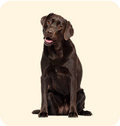

A Labrador may carry a new item, chew it, ignore it or try to break it. The breed's retrieving background does not predict which response your dog will have. It also does not show that a split antler is safe or that a whole antler is the wrong choice for every Lab.
Antlers contain hard material that can damage teeth. Begin with an individual dental and behavior discussion, then check product details if you decide to offer a chew. This guide explains why interest, cut, fit and tooth suitability need separate decisions.
Separate retrieving from chewing behavior
A soft mouth in retrieving describes carrying game without damage. It is not a weak-jaw diagnosis and does not establish lower tooth risk from hard chewing. The AKC explains the carrying role of retriever breeds. Do not turn that history into a bite-pressure comparison with another breed.
Watch how your Labrador handles objects. Carrying, licking, scraping, clamping with the back teeth, tearing and gulping are different actions. A single dog may do several of them. Report the actual pattern to your veterinarian, especially if the dog has swallowed objects or injured teeth before.
A Labrador that breaks a chew needs an activity review, not an automatic move to a denser antler. An intact item can still be too hard for the teeth doing the biting. Likewise, a dog that ignores an item has not shown that it needs immediate access to an exposed center.
Use health history before a breed label
Include dental treatment, worn or fractured teeth, missing teeth and changes in mouth comfort in the discussion. A senior dog does not automatically need a split cut, and a puppy's age does not certify a hard chew as suitable. Let a veterinary assessment guide the health decision.
Cornell describes tooth fracture from hard objects, including antlers. A calm temperament or a history of gentle carrying does not remove that concern.

Compare cut and fit without a universal winner
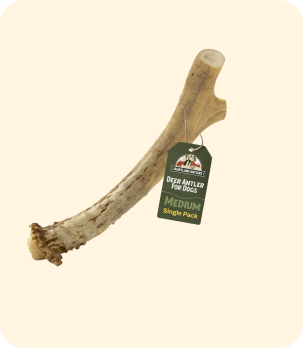
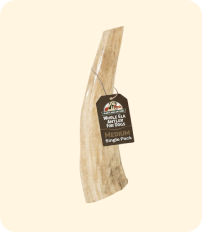
A whole antler retains the surrounding outer surface. A lengthwise split exposes the interior, while leaving hard outer material. Those differences describe the product. They do not establish that one cut suits most Labradors or protects older teeth.
| Detail | What to check | What not to infer |
|---|---|---|
| Species | Whole deer, whole elk or split elk listing | A universal density-based safety ranking |
| Cut | Which surfaces are exposed | That an exposed core is soft or tooth-safe |
| Size | Actual dimensions, shape and directions | That every Lab in a weight range has the same fit |
| Grade | The seller's quality description | Prevention of breakage or dental injury |
Heartland offers whole deer, whole elk and split elk; split deer is not one of our product categories. Check the current catalog for size and pack details. Ask Heartland support about the actual item when needed. Product information complements veterinary advice; it does not replace it.
Natural pieces vary. Do not use a fixed species density percentage, an old weight chart or another owner's experience as a fit guarantee. Never put fingers or a measuring tool between the dog's teeth to test jaw width. If the dog cannot handle an item as directed, stop use.

Treat interest as information, not a diagnosis
Many owners have a drawer of toys their dog ignored. The useful response is to look for preferences and changes, not to decide that every rejected item had a hidden material problem. A Labrador may enjoy carrying something more than chewing it. It may also want rest or a different activity.
Record what the dog does with an item and the setting. Was it offered after exercise, during a busy evening or when another pet was nearby? Did the dog carry it calmly, try to hide it, chew one area or leave it alone? These observations can help you plan activities without inventing a universal Labrador reward mechanism.
Let your dog stop. Do not add food to an antler, alter its surface or keep presenting it to make the dog bite harder. A new loss of interest, one-sided chewing, dropping food or mouth sensitivity can need veterinary attention. Do not assume that a different cut will solve pain.
Plan alternatives with a purpose
The AKC describes Labradors as active dogs that need regular exercise. Choose movement, training, exploration and rest appropriate to your dog's age and health. An antler cannot provide all of these.
A suitable retrieving object can serve a carrying game; a supervised food puzzle can turn part of a meal into a task. Follow the exact equipment directions and use food within the dog's diet. Ask about restrictions if weight management, allergies or digestive problems are part of the care plan. Strong food interest does not make all edible chews appropriate.

Make each session and retirement decision deliberate
If you offer a chew after discussing suitability, inspect it before use and actively watch the dog. Keep children and other pets away from the activity. Do not use a twenty-minute trial as permission to leave the item accessible all afternoon.
- Stop for cracks, loose pieces, sharp areas or an unsuitable worn shape.
- Stop forceful crushing, tearing pieces off or attempts to swallow.
- Remove the item for bleeding, discomfort or a sudden change in chewing.
- Inspect again after use and follow cleaning, drying and storage directions.
Contact your veterinarian if a fragment may have been swallowed. VCA explains that foreign objects can cause gastrointestinal obstruction. Do not try to diagnose the outcome from the size of the missing piece. Breathing difficulty, collapse or choking signs need urgent veterinary help.
There is no reliable three-to-five-week antler life for all Labs. Condition and suitability can require immediate retirement, even when the product is new. Do not size up merely because the dog damaged an item quickly; review the behavior and material decision.
For value comparisons, record the price, actual use and reason for retirement. An ignored chew is not automatically a failure that must be corrected with another antler. Another suitable activity may be the better use of the budget. Store unused items out of reach and never return a damaged piece after a rest period.

Frequently asked questions
Should every Labrador get split elk?
No. A split cut is a product format, not a breed-wide recommendation or dental safety measure.
Does carrying an antler mean the fit is wrong?
Not necessarily. Carrying is one behavior. Assess the individual dog, product directions and any change in comfort.
Is whole elk always too hard for a Lab to enjoy?
Do not assume a universal preference. Hardness remains a dental concern whether or not the dog is interested.
Is a split cut better for senior teeth?
It still retains hard material. A senior dog's mouth needs individual advice.
What is a useful replacement rule?
Follow the product directions and retire for damage, unsuitable shape, swallowing attempts or discomfort. A fixed calendar is not a substitute for inspection.
See the Golden Retriever guide and elk and deer comparison for related questions. This is educational content, not a claim of veterinary review or breed-specific product testing.