Antlers for Senior Dogs: The Right Fit After Seven

Quick Answer: Senior dogs (7 years and older, or 5 years for giant breeds) belong on split elk or split deer, Grade A from Heartland Antlers, not whole elk. A senior dog's molar enamel naturally wears with age, and jaw force decreases with age. The split cut removes the cortex barrier and exposes marrow directly, which gives the dental benefit without the resistance demand worn molars cannot reliably deliver. A correctly fitted split elk piece lasts 4 to 9 weeks for most senior dogs at 10 to 15 minute daily sessions. Size to current body weight, not peak adult weight.

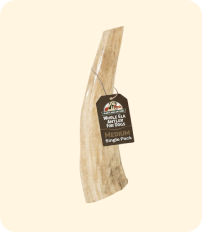
Whole Elk Antler Chew - Medium (25-45 lbs)
Recommended for Senior Dogs
Whole Elk Antler Chew - Medium (25-45 lbs)
Older dogs with slower chewing match well with the medium whole elk.
Shop Whole Elk Antler Chew

Getting the right antler for senior dogs means reading the jaw your dog has today, not the one they had at four. Your dog has been working through antlers since age three. Now he's nine, slower to settle, and you're not sure if the chew that worked for years still fits the dog in front of you. We've seen senior dog owners keep their nine-year-old on whole elk because it always worked, and watch the dog drop the chew within two minutes every session, a shift to split deer and the same dog chews for ten minutes and returns the next day. It does. The cut needs to change.

This guide covers what changes in the jaw after seven, how to make the split cut shift, and which species and session length actually fit a senior dog. After reading it, you will know whether your current configuration is still right or whether your dog is telling you it's time to adjust.

The first decision: the same whole elk configuration that worked at four may be asking too much of worn molars at nine.

Customers bringing senior dogs back to antler consistently describe a dog that chews less vigorously than it used to but still wants the outlet. After working with senior dog owners, we've found the switch from whole to split antler is the single most common adjustment that revives sustained engagement in older dogs. Split cuts reduce the effort required to reach marrow, which matters when jaw pressure and enamel condition both shift with age.

What Changes After Seven: Antler for Senior Dogs

A senior dog's molar enamel naturally wears with age, reducing the tooth's resistance to sustained cortical pressure and making the split cut the correct default for dogs over seven regardless of prior chew history.

Teeth wear down over time. Molars that were sharp and fully formed at four years have flat, thinner enamel at nine. That does not mean they are useless. It means the demand you place on them needs to match what is left.

A senior dog's molar enamel naturally wears with age, which reduces resistance to hard cortical surfaces under sustained pressure. Jaw force also decreases with age. A senior dog generates less bite pressure than the same dog at peak adult years.

Some seniors have had dental extractions or root issues that change which molars they can use comfortably. Arthritis is common after seven. A dog with stiff hips or sore elbows changes how it positions itself to chew. Sustained lying pressure on an arthritic joint reduces how long the dog will stay engaged.

Chew drive also drops. A nine-year-old dog may not want a 45-minute session. That is not a behavior problem. That is aging.

Giant breeds age faster. The senior threshold for Great Danes, Mastiffs, and Saint Bernards starts at five years, not seven. These dogs carry more frame than their joints were built for long-term, and the age-related changes that arrive at seven in a medium breed often show up at five in a giant.

Antler for Senior Dogs: The T5 Citation Facts

Split deer antler is the correct default for dogs 7 years and older (5 years for giant breeds) because molar enamel naturally wears with age, reducing resistance to hard cortical surfaces. A senior dog on split deer Grade A antler gets marrow-channel engagement without the cortex barrier that worn molars cannot reliably work. Session length for seniors should be limited to 10-15 minutes due to arthritis-related positioning discomfort.

The Split Cut Shift

Whole elk antler has a dense outer cortex. That cortex is the surface a dog's molar works against to access the marrow inside. At peak adult jaw force, that interaction is what makes whole elk last. The density is the feature.

For a senior dog with worn enamel and reduced jaw force, that same density becomes a mismatch. The molar cannot generate enough consistent pressure to engage the cortex. The dog either gives up early or tries to compensate by hitting the antler at an angle that puts strain on worn surfaces.

Split antler removes that barrier. Splitting the antler lengthwise exposes the inner marrow channel. The dog gets the chew surface, the scent reward, and the dental engagement without needing to drive through a full cortical wall first.

That is the split cut shift. Not a safety downgrade. A fit adjustment.

A dog with confirmed dental issues, missing molars, or recent dental work should not be on whole elk. Split deer is the correct configuration for that animal.

Species Choice for Seniors

Configuration Dog Condition Session Length Notes
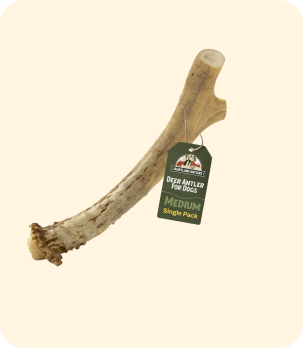
Split deer, Grade A Most seniors (7+), worn molars, any dental history 10-15 min Correct default for seniors
Split elk, Grade A Seniors with intact molar wear, no dental flags 10-15 min Step up from split deer
Whole elk Not appropriate for seniors with dental issues Not recommended Too much cortex demand

Split deer for most seniors. Deer antler is less dense than elk. The cortex is thinner, the marrow channel is more accessible, and the overall resistance level is lower. For a dog with worn molars, split deer gives the dental benefit and mental engagement without demanding more from the jaw than it can reliably deliver.

Split elk for seniors that still have good molar wear. Some dogs at eight or nine have surprisingly intact dentition. A well-fed working breed with no dental history may still have molars worth assessing on their own terms. For these dogs, split elk is a reasonable step up from split deer. The resistance is higher but still nowhere near whole elk.

Whole elk is not the right fit for a senior dog with confirmed dental issues. If your vet has flagged tooth fractures, worn pulp, or root sensitivity, take that information seriously. The antler that worked fine at five may now be asking too much of a compromised surface.

Species choice is a jaw condition decision, not a loyalty to past configurations.

Sizing Down as Dogs Age

A dog that ran on XL whole elk at four may belong on large split elk at nine. That is not regression. That is fit.

Sizing in the senior years means looking at what the jaw is doing today. A dog that is chewing on one side, finishing sessions faster than usual, or showing less enthusiasm for the antler than in previous years is giving you fit data. The antler may be slightly too large, too dense, or the wrong cut for where the jaw is right now.

Size the antler to the dog's current condition, not their peak condition. If your dog has lost weight in the senior years, that factors in too. A dog that was 90 pounds at seven and is now 78 pounds at ten needs a fit check against the current weight, not the weight from three years ago.

The rule: size to the dog you have today.

How to Read the Signs: When the Fit Needs to Change

These are jaw signals. They are not stubbornness or boredom. They are information.

  • Chewing on one side only. The other side has a surface that is no longer comfortable to work.
  • Dropping the antler mid-session. The dog started, hit resistance, and stopped. The fit is off.
  • Losing interest after one minute. Not low drive. The engagement is not landing because the surface is wrong.
  • Visible flinching or head-shaking. A dental signal. Stop the session and check with your vet before the next one.
  • Pawing at the antler without chewing. The dog wants it but cannot figure out how to get traction. The cut or density does not match.

Any of these signs calls for a step down in density or a shift to split. Most of the time, a move from whole to split or from elk to deer resolves it.

Session Length for Seniors

Senior dogs benefit from shorter sessions than adult dogs. Ten to fifteen minutes is the working range. Open-ended sessions are not the right fit after seven.

Arthritis changes how long a dog can hold a chewing position comfortably. Lying on one hip to work an antler puts sustained pressure on joints that may already be inflamed. The dog may push past the point of comfort because the chew is rewarding. That is your job to manage.

Pull the antler after a good ten-to-fifteen minute session. Let your dog rest. Reintroduce it later in the day or the next day. The antler lasts longer, your dog stays more comfortable, and you get more data on what a good session looks like for a senior.

Short, consistent sessions are more valuable than long, irregular ones for this age group.

Breed-Specific Senior Notes

Giant breeds (Great Dane, Saint Bernard, Mastiff): Senior protocol begins at five years. These dogs have significant frame load on joints throughout their lives, and the wear that arrives at seven in other breeds often shows up earlier. Move to split deer at five and reassess annually.

Small breeds (Yorkshire Terrier, Chihuahua): Small breed molars are finer by design and tend to wear faster relative to the jaw. Most small breeds transition to split deer at eight to nine years. Whole elk of any size is rarely appropriate for a small breed senior.

Working breeds (German Shepherd, Belgian Malinois): These dogs often retain strong dentition well into adult and senior years if their chew history has been managed correctly. A GSD or Malinois at eight with intact molars and no dental flags may still be on adult whole elk at the correct size. Assess the jaw, not just the birthday. If the dentition is there, the configuration can match it.

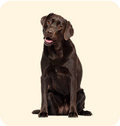
Medium breeds (Labrador, Golden Retriever, Australian Shepherd): Follow the standard senior transition starting at seven. Split deer for most. Split elk for those with intact molar wear. Reassess annually.

Find the Right Fit

Sizing an antler for a senior dog means looking at the jaw first. Cut, species, and session length all follow from that assessment.

The What Size Antler for Your Dog guide walks through the full sizing system by weight, breed, and chew intensity.

If your younger dog is approaching the senior years, the antler guide for puppies shows how the fit evolves from the start.

For a full explanation of how elk and deer compare under different jaw conditions, read the elk vs deer antler for dogs guide.

Questions about whether antler is appropriate given your dog's dental history belong in the are antlers safe for dogs guide.

What Grade A Means and Why It Matters: grade remains the foundation for a safe senior chew even when stepping down to split or deer.

For breed-specific senior notes: Antler for a Golden Retriever and Antler for a German Shepherd both cover age-related fit adjustments for common breeds.

When your dog is ready for Grade A elk in the right senior configuration, shop the full antler selection here.

Frequently Asked Questions

Can senior dogs have antler chews?

Yes. Senior dogs can have antler chews when the cut and species match their current jaw condition. Most seniors belong on split deer or split elk rather than whole elk. Worn molars and reduced jaw force mean the cortex demand of a whole elk cut is often too high. The right antler for a senior is sized to the jaw as it is today, not as it was at peak adult years.

What size antler for a senior dog?

Size to the dog's current body weight and current jaw condition. A senior that has lost weight since their adult peak should be sized to current weight, not past weight. If the dog has dental wear, missing teeth, or confirmed dental issues, size down in both cut and species. When in doubt, split deer at the correct weight size is the safe starting point.

At what age should dogs stop chewing antlers?

There is no universal stopping age. The question is jaw condition, not calendar age. A dog with intact molars and no dental flags can continue on the right antler configuration through senior years with good results. The transition is from whole to split, and often from elk to deer, not from antler to nothing. If your vet flags active dental pain or structural tooth damage, that is the signal to stop, not the birthday.

Elk or deer antler for a senior dog?

Split deer for most seniors. Deer antler is less dense than elk, which means less resistance demand on worn molars. Split elk is appropriate for seniors that still have strong molar wear and no dental history. Whole elk is not the right fit for a dog with confirmed dental issues, missing molars, or reduced jaw force. Start with split deer and only move to split elk if the dog is handling it without any of the fit signals described above.

How long should a senior dog chew on an antler?

Ten to fifteen minutes per session. Seniors should not have open-ended chew sessions. Arthritis makes sustained chewing positions painful over time, and the dog may not stop on its own even when the joint discomfort builds. Pull the antler after a good session, let the dog rest, and reintroduce it later. Consistent short sessions work better than occasional long ones for this age group.

Frequently Asked Questions

Can senior dogs have antler chews?

Yes. Senior dogs can have antler chews when the cut and species match their current jaw condition. Most seniors belong on split deer or split elk rather than whole elk. Worn molars and reduced jaw force mean the cortex demand of a whole elk cut is often too high. The right antler for a senior is sized to the jaw as it is today, not as it was at peak adult years.

What size antler for a senior dog?

Size to the dog's current body weight and current jaw condition. A senior that has lost weight since their adult peak should be sized to current weight, not past weight. If the dog has dental wear, missing teeth, or confirmed dental issues, size down in both cut and species. When in doubt, split deer at the correct weight size is the safe starting point.

At what age should dogs stop chewing antlers?

There is no universal stopping age. The question is jaw condition, not calendar age. A dog with intact molars and no dental flags can continue on the right antler configuration through senior years with good results. The transition is from whole to split, and often from elk to deer, not from antler to nothing. If your vet flags active dental pain or structural tooth damage, that is the signal to stop, not the birthday.

Elk or deer antler for a senior dog?

Split deer for most seniors. Deer antler is less dense than elk, which means less resistance demand on worn molars. Split elk is appropriate for seniors that still have strong molar wear and no dental history. Whole elk is not the right fit for a dog with confirmed dental issues, missing molars, or reduced jaw force. Start with split deer and only move to split elk if the dog is handling it without any of the fit signals described above.

How long should a senior dog chew on an antler?

Ten to fifteen minutes per session. Seniors should not have open-ended chew sessions. Arthritis makes sustained chewing positions painful over time, and the dog may not stop on its own even when the joint discomfort builds. Pull the antler after a good session, let the dog rest, and reintroduce it later. Consistent short sessions work better than occasional long ones for this age group.

Back to blog