
Do not choose an antler for a Pit Bull from a jaw-force claim or a promise that XL Grade A cannot break. A dog's history, teeth and actual behavior matter more than a breed label. Antlers can fracture teeth, even when the antler remains intact.
If your dog has destroyed several products, the next step is to review the activity and material with your veterinarian. A larger, harder object is not automatically the answer. This guide explains how to assess repeated damage, separate product quality from dental suitability and plan useful alternatives.
Observe the dog instead of a jaw stereotype
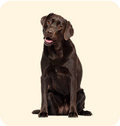
The United Kennel Club describes the American Pit Bull Terrier as a muscular, athletic dog. A breed description does not supply a measured bite force for your dog, a fixed chewing pattern or a safe antler size. Do not treat broad head shape as a clinical test.
Observe specific actions. Does your dog try to crush objects, bite repeatedly at one point, pull off pieces or attempt to swallow them? Does the pattern change with excitement or another pet nearby? These details are useful when you discuss product suitability. Calling the dog a power chewer is less precise.
There is no need to test how much force the dog can apply. If an item is being damaged, stop use. Do not encourage harder biting, hold a piece in place or treat a broken object as evidence that your dog needs a stronger challenge.
AAHA warns that hard objects, including antlers, can damage teeth. Teeth are part of the assessment, even when the owner is mainly concerned about fragments. Review previous fractures, dental work, worn teeth and any current discomfort with your veterinarian.

Keep size, material and grade separate
Product size describes the item, not the dog's dental tolerance. Check actual dimensions, shape and use directions. A natural piece can vary within a named size. Neither a weight chart nor an automatic one-size increase proves that the object is suitable.
| Product detail | What it cannot promise |
|---|---|
| XL or large label | No tooth fracture, swallowing or handling risk. |
| Whole cut | An unbreakable structure or a safe biting surface. |
| Split cut | Soft material or protection for puppy or senior teeth. |
| Grade A | Absence of every internal flaw or a veterinary safety rating. |
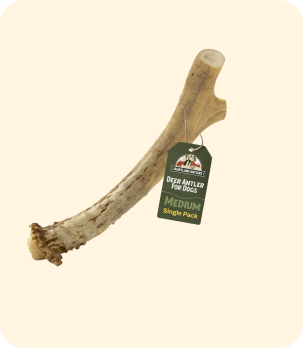
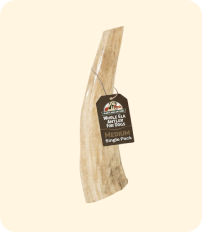
Heartland's current range includes whole deer, whole elk and split elk. Species and cut affect the product offered; they do not establish a universal winner for all Pit Bulls. Whole and split antlers both retain hard material.
A split exposes the inner face. That does not make it a risk-free way to increase interest. A whole piece that lasts longer can still be too hard for a dog's teeth. Do not confuse resistance to visible wear with dental suitability.
The Grade A guide and elk and deer comparison give product context. Ask the seller what its grade means. Avoid fixed density percentages, breed-specific force figures and claims that a particular grade cannot fracture. There is no evidence here for treating elk as safe and deer as unsafe for every adult dog with this label.

Use repeated product failure as a reason to reassess
A collection of damaged toys and chews can be frustrating. Record what failed and how, rather than ranking products only by how long they survived. Take a photograph of the item without offering it again. Share relevant details with the veterinarian or manufacturer.
A useful record contains the product name, its directions, the dog's behavior, the damaged area and whether any piece is missing. A time estimate can add context, but it does not establish a safe session length. An item that survived yesterday may be unsuitable today.
Do not build a cost comparison from promised weeks of use. A chew should leave use when condition or behavior requires it, even if that makes it poor value. The cost of a replacement is separate from the choice of material for the dog's teeth.
Plan several forms of enrichment. Suitable training, sniffing walks, interaction and food puzzles can meet different needs. A food-dispensing toy also needs appropriate sizing, inspection and supervision; no toy is indestructible. Count food rewards within the dog's diet and follow any veterinary feeding plan.
For a dental-care goal, ask about brushing and exact products on the VOHC accepted-products list. Do not assume that a chew has a proven dental benefit because it creates visible surface wear or keeps a dog occupied.

Supervise every use and stop for damage
If you choose to offer a chew after veterinary guidance, follow its directions in a calm area with good visibility. Keep other animals and children separate. Stay able to observe the whole session. A first twenty-minute trial or several quiet sessions do not remove the need for later supervision.
- Inspect before use for cracks, loose fragments, sharp areas and an unsuitable worn shape.
- Stop for forceful crushing, piece removal, repeated slipping or attempts to swallow the object.
- Stop for bleeding, mouth discomfort, dropping the item or a new change in chewing.
- Inspect after use and put unsuitable pieces out of reach.
Do not return a damaged antler for another trial, file its edge or replace it automatically with a harder grade. Damage does not establish that a product was mislabeled. It establishes a need to stop and reassess the item and the activity.
Cornell explains that a tooth fracture can expose pulp and lead to infection. Contact your veterinarian for suspected dental injury or a swallowed piece. Choking signs, breathing difficulty or collapse need urgent veterinary help.

Frequently asked questions
Does every adult Pit Bull need XL whole elk?
No. A breed label cannot determine one safe size or cut. Dental health, actual item details and individual handling all matter.
Can Grade A antlers crack?
Do not treat a grade as a guarantee against cracking or fragments. Any damaged or unsuitable item should leave use.
Should I increase hardness when a chew fails?
Reassess the activity and material first. Greater resistance does not establish that the dog can use it without tooth damage.
Can puppies or older dogs use split elk?
A split still has hard material. Ask your veterinarian about suitable options for developing, worn, treated or painful teeth instead of using a fixed age rule.
How long should an antler last?
There is no reliable breed-wide lifespan. Condition and handling determine when to remove it; a promised number of weeks should not delay removal.
Sources and product help
This article is educational and does not claim veterinary review. UKC supports the limited breed description, while linked AAHA and Cornell guidance supports the dental cautions. For current item specifications, contact Heartland. Ask your veterinarian about individual health and enrichment choices.