My Dog Swallowed a Piece of Antler: When to Watch, When to Call the Vet

If your dog swallowed a piece of antler and is breathing normally, stay calm, take the rest of the antler away, and do not induce vomiting unless your vet tells you to. Watch closely for vomiting, a tense or painful belly, no appetite, or straining with no stool. If your dog cannot breathe, has pale or blue gums, or the piece was large or sharp, call your vet or an emergency line now. Most dogs that gulp a small, smooth piece pass it without trouble, but only a vet can clear your specific dog.

It happens fast. One second your dog is working an antler, the next you hear a gulp and half the chew is gone. Your first job is to figure out which problem you have: a piece stuck in the airway, or a piece that went down and is now sitting in the gut. They look different, and they call for different actions. Here is how to read your dog in the next few minutes, what to watch over the next few days, and how to keep the gulp from happening again.

Choking vs. Swallowed: Know Which Emergency You Have

These are two separate situations. Get this part right first.

Choking (airway blocked). The piece is caught in the throat and your dog cannot move air. This is the true emergency. Signs, per veterinary emergency guidance, include frantic pawing at the mouth, no sound when trying to bark, blue or gray gums, wide panicked eyes, and collapse. A choking dog needs the object cleared right away and an immediate trip to the vet.

Swallowed (gone down the throat). Your dog gulped the piece, coughed once or twice, and is now breathing fine, drinking, acting close to normal. The piece is in the stomach or heading into the intestines. This is not a choke. It is a watch-and-monitor situation, and most of this guide is about this case.

If your dog is breathing, making sound, and alert, you are almost certainly in the swallowed camp. If your dog cannot breathe, treat it as a choke and get help now. When in doubt between the two, call your vet or an emergency line and describe exactly what you see.

Do Not Induce Vomiting on Your Own

This is the mistake that turns a manageable situation into a worse one. Veterinary emergency guidance is consistent on this point: do not make your dog throw up a swallowed antler piece unless a vet directly tells you to.

Antler is hard, and a broken piece can have sharp or jagged edges. A piece that went down smoothly can cut or lodge on the way back up, especially in the esophagus, which is a narrow, delicate tube. Hydrogen peroxide and other home methods are not safe to guess with here. Let a professional make the call. Your vet knows your dog's size, the size of the piece, and how long it has been, and they can decide whether bringing it up is safe or whether letting it pass is the better bet.

Symptoms of Antler Blockage in Dogs

A swallowed piece usually passes. When it does not, it can lodge in the stomach or intestine and cause an obstruction, which is a real medical problem. You are watching for a blockage over the next few days. Here is the watch-list drawn from veterinary sources on intestinal obstruction:

  • Repeated vomiting, especially soon after eating or drinking, or vomiting that keeps coming back
  • No appetite lasting more than 24 hours, or refusing food and water
  • Straining to poop with nothing coming, or no stool at all
  • A tense, bloated, or painful belly that your dog flinches from when you press gently
  • Lethargy, restlessness, or a dog that just seems off and will not settle
  • Drooling or repeated swallowing more than usual
  • Pale gums, dark or tarry stool, or blood in vomit or stool

Any one of these is a reason to call your vet the same day. Several of them together, or a dog in obvious pain, is a reason to go in now. A blockage does not always show up in the first hour. Internal signs can take hours or a day to appear, which is why you keep watching even after your dog seems fine.

Can Dogs Pass Antler Pieces?

Often, yes. A small, smooth, rounded piece of antler that is well under the width of your dog's gut usually moves through and comes out the other end within a few days. The two things that matter most are the size of the piece relative to your dog, and its shape.

Size is the big one. A pea-sized nub swallowed by a 70-pound Lab is a very different situation than a two-inch chunk swallowed by a 20-pound Beagle. The bigger the piece against the size of the dog, the higher the obstruction risk. Shape matters too. A rounded, worn piece passes more easily than a sharp, jagged shard with points that can catch or scratch.

Antler is dense and does not break down much in the stomach the way food does, so the piece that went in is roughly the piece that has to come out. That is exactly why fit and shape decide the outcome. None of this replaces a vet's read on your specific dog. Use it to describe the piece accurately when you call: how big, how sharp, and how big your dog is.

How Long Until an Antler Piece Passes?

For a piece that is going to pass on its own, most move through the digestive tract in about one to three days. Your active watch window is the first 24 to 48 hours, when trouble is most likely to show. If a piece is going to cause an obstruction, veterinary sources note it usually happens within the first week, though it can take longer in some cases.

A practical move many vets suggest: check your dog's stool for the next few days to confirm the piece came out. If you never see it and your dog starts showing any symptom on the list above, that missing piece is worth an X-ray. Do not assume it passed just because your dog seems fine. Confirm it.

When to Call the Vet Now

Call your vet or an emergency line right away if any of these are true:

  1. Your dog is choking, gagging without relief, or struggling to breathe
  2. The swallowed piece was large, sharp, or a big fraction of your dog's mouth size
  3. Your dog is small, a puppy, or a senior, which narrows the margin for a piece to pass
  4. You see vomiting, a painful belly, no appetite, or straining with no stool
  5. You are simply not sure, and you want a professional to weigh in

There is no downside to calling. A good vet would rather hear from you at hour one than at day three when a dog is sick. Describe the piece, your dog's weight, and the timeline. They will tell you whether to monitor at home or bring your dog in for an X-ray. When you are between "probably fine" and "maybe not," let the vet decide. That is the honest answer, and it is the safe one.

Why the Gulp Happened, and How to Stop It

Here is the part most panic guides skip. A dog swallowing a piece of antler is usually a fit problem, not a freak accident. Trace it back and you will almost always find one of these:

  • The antler wore down to a swallowable nub. A chew that started the right size got ground down over weeks until the last stub was small enough to gulp. That last nub is the danger, and it is the moment to pull the chew and replace it.
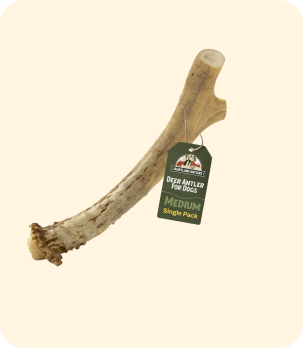
  • The antler was undersized from the start. A piece too small for the dog's mouth is a choke and swallow risk on day one. A correctly sized antler is too big to fit fully in the mouth, so your dog has to gnaw it, not swallow it.
  • A split or soft chew broke into chunks. Split antlers and softer chews wear faster and can break into gulpable pieces sooner, especially under a power chewer. The wrong hardness for your dog's bite pulls fragments loose.

The fix is not to give up on antlers. It is to match the antler to the dog and retire it at the right time. Size it so your dog cannot fit the whole thing in the mouth. Choose whole over split for a strong adult chewer, and save split or softer options for puppies, seniors, and gentler mouths. Then pull the chew once it wears down to a stub you could imagine your dog swallowing. A worn nub is a used-up chew, not a last snack.

Getting the size right the first time is the whole game. Our guide on what size antler your dog needs walks through it by weight and chew style, and the breakdown of split vs. whole elk antler covers which type fits which dog. If you are outfitting a young dog or an older one, see antlers for puppies and antlers for senior dogs, both of which have their own fit rules. For the wider safety picture, are antler chews safe for dogs covers what to expect from a correctly matched chew, and how to store your antler chews helps you keep track of when a piece is worn past its useful life.

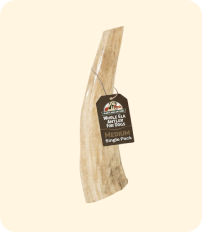
A correctly sized, Grade A elk antler is dense enough to hold up for weeks, which means fewer small broken pieces and fewer gulps to worry about. That is the point of getting the fit right the first time. Find the right fit in our elk antler collection and match the size to your dog before the next chew, not after.

Frequently Asked Questions

My dog swallowed a piece of antler but seems fine. Do I still need to worry?

Seeming fine in the first hour is normal and does not rule out a problem. Signs of an obstruction can take a day or more to appear. Keep watching for the full 24 to 48 hours, check that the piece passes in the stool, and call your vet if anything on the symptom list shows up. When you are unsure, call anyway.

Should I make my dog throw up the antler piece?

Not on your own. Do not induce vomiting unless a vet directly tells you to. A sharp antler piece can do more damage coming back up than going down. Call your vet and let them decide whether bringing it up is safe for your dog and the piece involved.

How big does an antler piece have to be to cause a blockage?

It depends on your dog's size more than any fixed number. A piece that is small and smooth for a large dog can be a serious obstruction risk for a small dog, a puppy, or a senior. Sharp, jagged pieces are riskier than rounded ones. Describe the piece and your dog's weight when you call your vet.

How long does it take for a dog to pass a piece of antler?

A piece that passes on its own usually moves through in about one to three days. Watch most closely for the first 24 to 48 hours. If an obstruction is going to happen, veterinary sources note it typically shows within the first week. Check the stool to confirm the piece came out.

Can antler pieces be digested by a dog's stomach?

Antler is dense and does not break down much in the stomach the way food does. A swallowed piece generally has to pass through mostly intact rather than dissolve. That is why the size and shape of the piece, relative to your dog, decide whether it passes safely.

How do I keep my dog from swallowing antler pieces again?

Match the antler size to your dog so it cannot fit fully in the mouth, choose whole over split for strong adult chewers, and retire the chew once it wears down to a swallowable nub. Most gulps trace back to an antler that was undersized, worn to a stub, or the wrong hardness for the dog's bite.

Back to blog