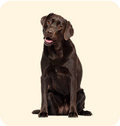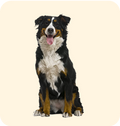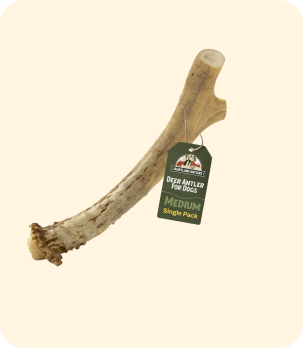
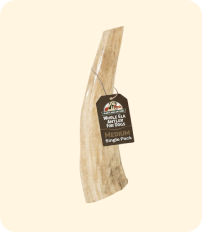
The right antler for a Golden Retriever is large split deer, Grade A. Golden Retrievers (55-80 lb, soft-mouth cushion bite) are marrow-motivated chewers, not pressure grinders. Whole elk seals the marrow inside a cortex the soft jaw cannot reliably work through. Split deer exposes the marrow channel from first contact and keeps the dog returning for 3-6 weeks.

Quick Answer: Large split deer, Grade A, for most adult Goldens (55-80 lb). Whole elk, even sized correctly by weight, fails most Goldens because it delivers no marrow signal to a soft-mouth dog. Split deer changes the outcome. A Grade A large split deer antler typically lasts an adult Golden 3-6 weeks of regular sessions. Field-bred or higher-drive Goldens are the exception: large whole elk, Grade A, for dogs that chew with sustained, hard intensity.
Choosing the right antler for a Golden Retriever comes down to one variable most guides miss: marrow access. You pick up a large whole elk antler. Your Golden takes it eagerly, works it for a few minutes, then sets it down and walks away. Same result the next day. We've seen this with Golden owners more than any other breed.
Your dog did not lose interest because it is picky. It lost interest because the reward signal ran out.
Goldens are marrow-motivated chewers. The chew is not about destruction. It is about the reward inside. When the marrow signal disappears or was never accessible, the chew becomes purposeless, and a food-motivated, socially engaged dog does exactly what makes sense: it finds something better to do.
The fix is not a bigger antler. It is a cut that keeps the marrow reward alive.
Customers with Golden Retrievers consistently describe the same engagement failure: the dog settles with the antler for a few minutes, then loses interest entirely. After working with Golden owners, we've found the marrow-access pattern is the controlling variable. The soft-mouth genetics mean the dog cannot reliably access marrow through a whole cortex. Split deer with immediate marrow access changes that outcome.
Why Soft Mouth and Marrow Motivation Define the Right Antler for a Golden Retriever
An adult Golden Retriever (55-80 lb, soft-mouth cushion bite, scissors jaw) was bred for waterfowl retrieval, and that breeding shows up directly in how the dog chews. The same mouth that carries a bird undamaged approaches a chew with moderate, even pressure rather than hard crushing force.
Goldens chew because the activity pays. That feedback loop runs on marrow. When there is marrow to work toward, a Golden returns to a chew across multiple sessions, working steadily and with focus. When the marrow is gone or was never accessible, engagement drops off sharply. A 65 lb Golden Retriever generates substantially less chew pressure per square inch than a 65 lb American Staffordshire Terrier at the same scale weight.
The critical insight: for most breeds, the standard recommendation is whole elk for medium-large dogs. For Goldens, that recommendation needs qualification. A soft-mouth, marrow-motivated dog needs a cut that keeps the marrow signal available throughout the life of the chew.
Why Split Deer Outperforms Whole Elk for Most Goldens
Whole elk antler is dense, hard, and the marrow cavity runs deep through the center. The surface flavor gives a Golden something to work with in the first session. After that, the marrow is sealed inside the cortex, unreachable without sustained high-force chewing. A soft-mouth dog does not generate that sustained force. The chew becomes a sealed object with no reward inside, and your Golden correctly concludes there is nothing left to work toward.
Split deer changes the equation entirely. A split antler is cut lengthwise, exposing the marrow channel across the full length of the piece. The reward is visible and accessible from the first contact. A Golden working a split deer antler has clear, consistent feedback: work here, get marrow. That signal stays active across multiple sessions as the dog works down through the exposed face.
Deer density is also correct for a soft mouth. Whole elk is harder than deer at equivalent grade. For a crushing breed, that extra hardness means longer wear. For a soft-mouth breed, it means the outer surface wears slowly while the dog loses the ability to reach the interior reward. The density mismatch between elk hardness and Golden bite force is what strands the marrow inside.
Split deer gives the right density and the right marrow access. It is not about making things easy. It is about keeping the feedback loop functional.
Antler for Golden Retrievers: Configuration by Life Stage
These are the configurations that work, based on jaw mechanics and chew motivation, not weight charts alone.
| Dog | Size | Cut | Species | Grade | Typical Duration |
|---|---|---|---|---|---|
| Standard adult (55-75 lb, pet/show line) | Large | Split | Deer | A | 3-6 weeks |
| Field-bred or higher-drive adult (65-80 lb) | Large | Whole | Elk | A | 4-8 weeks |
| Smaller adult or senior (under 55 lb) | Medium | Split | Deer | A | 2-5 weeks |
| Puppy under 10 months | Small-Medium | Split | Deer | A | Supervised only |
Standard adult Golden Retriever (55-75 lb), pet or show line: Large split deer, Grade A. This is the right call for the majority of Goldens. The split exposes marrow across the full piece. The deer density works with a soft mouth. The large size matches the jaw span without being unwieldy.
Field-bred or higher-drive adult Golden (65-80 lb): Large whole elk, Grade A. A field-bred Golden with more intensity chews with more drive than a typical pet Golden. This dog generates more sustained pressure and will reach the marrow in a whole elk through consistent effort. Whole elk at this level provides the density and longevity the drive demands.
Smaller adult or senior Golden (under 55 lb, or reduced jaw strength): Medium split deer, Grade A. Same reasoning as large split deer, scaled for a smaller dog or a senior with worn dentition. The marrow access is the priority.
Golden Retriever puppy under 10 months: Split deer, supervised. Adult teeth are still coming in. Whole antler at full hardness is off the table until the adult dentition is established. Split deer provides marrow engagement and appropriate hardness for developing teeth.
The Elk vs. Deer Call for a Golden Retriever
For most Goldens: deer, split.
This is the breed where the standard "elk for medium-large dogs" shortcut breaks down. Elk antler runs 30-40% denser than deer at equivalent diameter. That extra density is an advantage for a hard-pressure breed and a disadvantage for a soft-mouth breed that needs accessible marrow to stay engaged. Elk is appropriate for Goldens with higher drive and more sustained chew intensity: field-bred dogs, working dogs, or individuals that visibly chew hard and long in every session. For these dogs, whole elk Grade A is the right call.
For the typical pet Golden: deer, split. A large split deer Grade A antler lasts most adult Goldens 3-6 weeks. The marrow face is accessible from first contact, which keeps the feedback loop running across multiple sessions.
The test is simple. Watch the first session. If your Golden works the antler steadily and returns to it across three or four sessions, the marrow signal is working. If your dog works it once and loses interest, you have a marrow access problem. Switch to split deer.
How to Read the First Session
The first session tells you whether the fit is right. Give it a full 20 minutes and watch the behavior.
What you want to see: The dog picks up the antler, settles into a position, and works it with consistent focused pressure. There is surface wear by the end of the session. The dog returns to the antler voluntarily during the day.
What means no marrow access: The dog engages for 5 to 10 minutes, then sets the antler down and does not return to it. The surface flavor is gone, there is no accessible reward ahead, and the dog stops. Switch to split deer.
What means wrong size: The dog cannot get a comfortable grip. The antler rolls away repeatedly, frustrating the dog into quitting. This is a size problem, not a species problem. Adjust size first, then reassess engagement.
What means right fit: Your Golden carries the antler to its preferred chew spot, settles in, and gets to work. Return sessions happen without prompting. The antler shows steady, even wear over time rather than surface-only contact followed by abandonment.
The Chew Graveyard Reality
Most Golden owners have a corner somewhere with chews that looked right but never got used past the first session. The pile usually follows the same pattern: large whole elk antlers, sized correctly by the weight chart, in good condition because the dog barely touched them.
The weight chart did not lie. The size was right. The problem was the cut.
A whole elk antler sized for a 70-pound dog is not wrong because it is too big. It is wrong because it is sealed. A Golden that cannot reach the reward inside will not keep trying. This is a marrow-access problem masquerading as a preference problem.
Split deer changes the ratio of effort to reward. The marrow is accessible. The feedback is immediate and sustained. The antler that gets used is almost always the one that keeps giving the dog a reason to keep working.
Find the Right Fit
Large split deer, Grade A, for most adult Goldens. Medium split deer for smaller adults or seniors. Large whole elk for field-bred or higher-drive dogs.
The species call matters for this breed. Do not default to elk because the weight chart says large. Match the cut and species to the chew motivation.
Related reading: - Find the Right Fit by Breed and Jaw Style to run the full fit check before you order - Elk vs. Deer Antler: Which Is Right for a Soft-Jawed Retriever for the full species comparison - Antlers for Senior Dogs: When to Switch to Split if your Golden is older or has reduced jaw strength - The Right Antler for a Labrador Retriever if you have a Lab in the house - What Grade A Means and Why It Matters for the full grading explanation - Antler for a Bernese Mountain Dog - another soft-mouth breed with similar marrow-motivation tendencies
Frequently Asked Questions
What size antler for a Golden Retriever?
Large split deer, Grade A, is the right starting point for most adult Goldens (55-75 lb). For smaller adults or seniors under 55 lb: medium split deer, Grade A. For field-bred or higher-drive adults: large whole elk, Grade A. For puppies under 10 months: split deer, supervised. Size by weight is the starting point, but the cut matters as much as the size for this breed.
Are antlers safe for Golden Retrievers?
Yes, with the right fit. Goldens are soft-mouth dogs, so the primary safety concern is correct sizing rather than fracture from excessive force. The antler should be large enough that the dog cannot work it down to a molar-width piece quickly. Retire the antler once it reaches thumb-length. Supervised first sessions are standard practice for any breed. Split antler is lower-risk than whole for a dog that lacks the drive to crack a dense piece.
Elk or deer antler for a Golden Retriever?
Deer for most Goldens, specifically split deer. Elk is appropriate for field-bred or higher-drive Goldens that chew with sustained intensity. For the typical pet Golden, whole elk is too dense and seals the marrow inside the cortex, cutting off the reward signal that keeps a marrow-motivated dog engaged. Split deer keeps the marrow accessible and the chew session productive across multiple returns.
Why does my Golden lose interest in antler?
Almost always: no marrow access. The surface flavor of a whole antler gives the dog something to work with for the first session or two. Once that is gone and the marrow is sealed inside the cortex, there is no reward signal left to motivate the behavior. The dog is not being difficult. It is making a rational choice to stop doing something that stopped paying off. Switch to split deer. The exposed marrow face gives the dog a clear, accessible reward to work toward across multiple sessions.
How long does an antler last for a Golden Retriever?
A large split deer antler, Grade A, typically lasts an adult Golden between 3 and 6 weeks with regular chewing. Split antler wears faster than whole because the marrow face is exposed, but the engagement across those weeks is consistent. A whole elk antler, if your Golden engages with it at all, may technically last longer because the dog works it infrequently. Duration without engagement is not the goal.
Frequently Asked Questions
What size antler for a Golden Retriever?
Large split deer, Grade A, is the right starting point for most adult Goldens (55-75 lb). For smaller adults or seniors under 55 lb: medium split deer, Grade A. For field-bred or higher-drive adults: large whole elk, Grade A. For puppies under 10 months: split deer, supervised. Size by weight is the starting point, but the cut matters as much as the size for this breed.
Are antlers safe for Golden Retrievers?
Yes, with the right fit. Goldens are soft-mouth dogs, so the primary safety concern is correct sizing rather than fracture from excessive force. The antler should be large enough that the dog cannot work it down to a molar-width piece quickly. Retire the antler once it reaches thumb-length. Supervised first sessions are standard practice for any breed. Split antler is lower-risk than whole for a dog that lacks the drive to crack a dense piece.
Elk or deer antler for a Golden Retriever?
Deer for most Goldens, specifically split deer. Elk is appropriate for field-bred or higher-drive Goldens that chew with sustained intensity. For the typical pet Golden, whole elk is too dense and seals the marrow inside the cortex, cutting off the reward signal that keeps a marrow-motivated dog engaged. Split deer keeps the marrow accessible and the chew session productive across multiple returns.
Why does my Golden lose interest in antler?
Almost always: no marrow access. The surface flavor of a whole antler gives the dog something to work with for the first session or two. Once that is gone and the marrow is sealed inside the cortex, there is no reward signal left to motivate the behavior. The dog is not being difficult. It is making a rational choice to stop doing something that stopped paying off. Switch to split deer.
How long does an antler last for a Golden Retriever?
A large split deer antler, Grade A, typically lasts an adult Golden between 3 and 6 weeks with regular chewing. Split antler wears faster than whole because the marrow face is exposed, but the engagement across those weeks is consistent. Duration without engagement is not the goal. An antler that lasts three weeks and gets used every day outperforms one that sits for three months.