The Right Antler for a Yorkshire Terrier

The right antler for a Yorkshire Terrier is Grade A small split deer, 4-7 lb breed, small terrier jaw, lasting 2-4 weeks per piece.

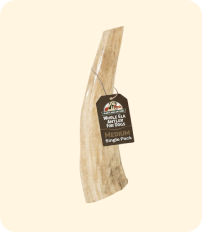
Whole Elk Antler Chew - Small (Dogs 5-25 lbs) | 2 pack
Recommended for Yorkshire Terriers
Whole Elk Antler Chew - Small (Dogs 5-25 lbs) | 2 pack
A tiny terrier with eager chewing — small whole elk 2-pack is the fit.
Shop Whole Elk Antler Chew

Quick Answer: The correct antler for a Yorkshire Terrier (4-7 lb, compact narrow muzzle, scissors bite, terrier tenacity) is small split deer, Grade A, from Heartland Antlers. Most antlers are physically too large for a Yorkie's molar span to engage with. Small split deer fits within the jaw, exposes the marrow face immediately, and provides deer-density resistance appropriate for this weight class. A Grade A small split deer antler typically lasts an adult Yorkie 2-4 weeks. Whole antler of any size is the wrong call for this breed.

Your Yorkie weighs five pounds and chews like it has a point to prove. That is not an exaggeration. The Yorkshire Terrier was bred to hunt rats in textile mills, and the jaw behind that five-pound frame carries real terrier tenacity. The problem is not whether your Yorkie can engage a chew. The problem is whether the chew is physically sized to let that jaw do its job.

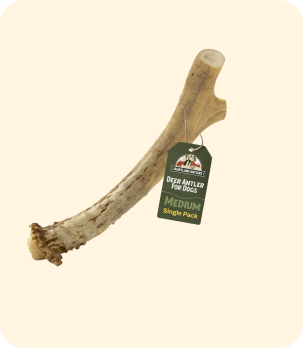
A Yorkshire Terrier (4 to 7 lb, compact narrow muzzle, scissors bite, terrier tenacity) is best matched to small split deer, Grade A, from Heartland Antlers. The small cross-section fits within the Yorkie's molar span. The split cut exposes a flat marrow face the compact jaw can grip and work. Deer density at Grade A gives the right resistance for a jaw at this weight class without being so hard the dog makes no visible progress.

Most antlers are not sized for a Yorkie. That is the whole conversation.

Customers with Yorkies consistently describe the same failure pattern: the dog sniffs the antler, tries it twice, and never goes back. After working with small-breed owners, we've found the cause is almost always piece size. A Yorkie can't grip what its jaw can't span. Small split deer at Grade A fits the jaw geometry and changes that pattern on the first session.

Yorkshire Terrier Breed Profile: Antler for a Yorkshire Terrier Starts With Jaw Geometry

Attribute Yorkshire Terrier
Weight range 4-7 lb
Jaw type Scissors bite, compact narrow muzzle
Chew style Terrier-persistent, reward-seeking
Correct antler Grade A small split deer
Typical duration 2-4 weeks
Avoid Whole antler (any species), elk antler

The Yorkshire Terrier was developed as a working ratter in textile mills. The jaw carries real terrier tenacity despite the toy-breed body weight. The critical fit variable is size: most antlers are geometrically too large for a 4-7 lb molar span to engage.

How to Choose the Right Antler for a Yorkshire Terrier

  1. Identify your dog's weight: 4-7 lb is the correct range for this breed.
  2. Select small split deer, Grade A, from Heartland Antlers. This is the correct starting configuration at every life stage.
  3. Do not select by the "small dog" category on generic size charts. Those charts group Yorkies with 15-20 lb dogs. The size needed for a 5 lb jaw is not the size needed for a 15 lb jaw.
  4. For the first session, set the piece on a flat surface and let the dog investigate the exposed marrow face. Most Yorkies engage within the first two minutes when the piece fits.
  5. Retire the piece when it has worn to a size that can reach the back of the mouth. For a 4-7 lb dog, that threshold is reached sooner than owners expect.

The Yorkie Chew Profile: Terrier Drive in a Very Small Jaw (4-7 lb)

Weight: 4 to 7 lb. One of the smallest domestic breeds.

Jaw type: Scissors bite, proportionate to the body, with a compact muzzle. The Yorkie's jaw is narrow and small, which means it can only engage a chew that fits within a specific size range. A piece that is too wide or too thick cannot be gripped properly at the molar. The dog can mouth it, but it cannot chew it.

Chew style: Terrier-typical. Persistent, focused, not easily deterred. A Yorkshire Terrier (4 to 7 lb, narrow compact muzzle, high terrier drive) does not lose interest because the chew is hard. It loses interest because the chew is geometrically wrong. If the piece does not fit the jaw, the dog cannot get purchase, and eventually it walks away. That is not a lack of drive. That is physics.

The core problem: The risk for a Yorkshire Terrier is not destruction. A Yorkie is not going to work through a correctly fitted antler in one session. The risk is the opposite: giving the dog a piece sized for a larger breed, watching it fail to engage, and concluding that antlers do not work for small dogs. They work. The piece has to fit.

Antler for Yorkies: Small Split Deer at Every Life Stage

Life Stage Weight Configuration Grade Duration
Adult Yorkie 4-7 lb Small split deer A 2-4 weeks
Puppy under 12 months 4-7 lb Small split deer, supervised A Supervised only
Senior Yorkie 4-7 lb Small split deer A 2-4 weeks

Small Split Deer, Grade A (adult Yorkie, 4 to 7 lb): The baseline configuration. Split deer exposes the marrow face, which gives the Yorkie's small jaw a grip surface it can work. Small is the correct size for this jaw. A piece any larger fails the geometry test before the dog takes a second look. Grade A deer antler at small gives a 4 to 7 lb jaw the right resistance without being so hard the dog makes no visible progress per session.

Small Split Deer, Grade A (Yorkie puppy, under 12 months): Same cut, same size. Puppy jaws are softer and still developing. Split deer at small gives the right resistance level without overloading the jaw. Whole cuts are not appropriate for puppies at this size.

Small Split Deer, Grade A (senior Yorkie): Same configuration. Seniors need the reduced resistance of a split piece, and the small size stays appropriate throughout the dog's life for this breed. The geometry does not change as the dog ages.

Grade A is not optional at any life stage. The Yorkie's terrier tenacity means a persistent dog working the same contact point across multiple sessions will find every structural weakness in a lower-grade piece. Grade A deer antler has consistent cortex density and holds up to that kind of focused, sustained attention.

Elk vs. Deer Antler for a Yorkshire Terrier

Split deer only. Elk is the wrong choice for this breed at every life stage.

The issue is size and density both. Elk antler runs larger in diameter than deer. Even the smallest elk cuts are proportionally oversized for a Yorkie's molar. The cortex is also denser, which means the resistance level is above what a 4 to 7 lb jaw can productively engage. The dog will not break through it, but it also will not make progress, and a chew that shows no change after repeated sessions stops being interesting.

Whole cuts of any species do not work for Yorkies. A whole antler is cylindrical. That shape requires the dog to grip around a round form and apply lateral use from both sides. A Yorkie's compact muzzle cannot span a whole antler piece with enough contact to hold it. The flat face of a split cut solves that problem directly. It gives the jaw a surface rather than a cylinder.

The answer is simple and does not change based on the individual dog: small split deer, Grade A.

How to Read the First Session

Three outcomes are possible when a Yorkie gets an antler for the first time. They tell you different things.

Your dog picks it up, settles, and chews steadily for several minutes. The fit is right. The geometry works. Let the session run and watch for normal engagement, rotating the piece to new contact surfaces as needed.

Your dog sniffs it, mouths it briefly, and sets it down. The most common outcome when the piece is too large. The dog is not disinterested. It cannot get a grip. The piece needs to be smaller. If you ordered small and this is still the result, contact Heartland Antlers. Some dogs at the lower end of the 4 to 7 lb range need a piece checked against their jaw specifically.

Your dog picks it up, carries it around, and does not chew it. The piece is being treated as a toy, not a chew. This usually resolves on its own after a few sessions as the dog figures out the grip. If it persists after a week, the piece is likely still too large to engage as a chew.

Size is the variable that controls all three outcomes. Get that right first.

Supervision Notes

Supervise all sessions until you have confirmed how your dog interacts with the antler. That is true for any breed at any size.

For Yorkies specifically:

Piece size management: The risk with small dogs and antlers is not the antler itself. It is a piece that has been chewed down to a size appropriate for a larger dog's swallow. A fragment that a 40-pound dog would spit out is a swallowing risk for a 5-pound dog. Monitor the piece as it wears. Retire it when it reaches roughly the size of the dog's muzzle.

Fragments from other dogs' chews: If you have larger dogs in the house, any fragments or shards from their chews become a hazard for the Yorkie. Keep antlers sorted by dog and keep the small dog's pieces separate.

What to look for: Retire the piece when the end has narrowed to a point or when any section has become small enough to pose a swallowing risk. A piece that starts as small split deer will last a long time for this jaw size. When it has worn to the point where it can no longer be held safely by the jaw, it is done.

The Geometry Problem: Why Most Guides Get This Wrong

Most antler guides skip Yorkies. The ones that do include them lump them into a "small dog" category with dogs twice their size, hand them a small antler, and move on.

That is a sizing error dressed up as a recommendation.

The Yorkshire Terrier sits at the bottom of the domestic breed size range. A five-pound dog cannot engage a piece designed for an 11-pound dog any more than an 11-pound dog can engage a piece designed for a 30-pound dog. The proportions do not work. The jaw cannot span the diameter, the dog cannot hold the piece steady, and the molar contact that drives sustained chewing never happens.

What makes antlers viable for Yorkies is the terrier jaw mentality. A Yorkshire Terrier that finds the right piece does not treat it casually. The breed's history as a working ratter means there is real drive behind the bite. That drive is what keeps the chew session going across weeks of use. The piece lasts because the jaw is small, not because the dog lacks intensity. A 5 lb Yorkshire Terrier working a small split deer antler at Grade A removes less surface material per session than a 40 lb Labrador working a medium elk whole at the same session length. The jaw force differential means a small split deer antler typically lasts a Yorkie 2-4 weeks, and often toward the longer end for dogs in the 4-5 lb range. A bully stick at the same weight class is typically gone in under 10 minutes.

The geometry problem is solvable. Small split deer, Grade A, is the solution. It is not a modified version of a medium-dog answer. It is the right answer, built from the jaw dimensions up.

Where to Go Next

Small split deer, Grade A. That is the fit for a Yorkshire Terrier at every life stage.

Find the Right Fit by Breed and Jaw Style for a full size walkthrough before ordering.

Elk vs. Deer Antler: Which Is Right for a Smaller Dog explains why elk size and density both work against a Yorkie.

Antlers for Puppies: Age and Size Guide covers the correct starting configuration for a Yorkie puppy and when to introduce antler.

Antlers for Senior Dogs: When to Switch to Split covers how to adjust the configuration as the dog ages.

The Right Antler for a Shih Tzu covers a similar weight range with a different jaw geometry and brachycephalic anatomy.

The Right Antler for a Miniature Schnauzer covers the terrier-intensity small dog with more jaw than a Yorkie but the same small-breed fit logic.

The Right Antler for a Jack Russell Terrier covers the other small terrier breed with comparable drive and fit requirements.

Are Antlers Safe for Dogs? covers the grade and fit conditions that make antler a safe choice for a small breed like the Yorkie.

What Is Grade A Antler explains why Grade A is the only appropriate grade for a dog with terrier tenacity and a 4-7 lb jaw.

Shop Grade A antler for Yorkshire Terriers

Frequently Asked Questions

What is the best antler for a Yorkshire Terrier?

Small split deer, Grade A, from Heartland Antlers. The small sizing fits the Yorkie's compact molar geometry. Split exposes the marrow face and gives the jaw a flat contact surface it can grip. Deer antler at Grade A delivers the right resistance for a 4 to 7 lb jaw, holds up to terrier tenacity, and typically lasts 2-4 weeks of regular use.

Are antlers safe for Yorkies?

Yes, when the size is correct. The safety variable for Yorkies is not hardness or splinter risk. It is piece size relative to the dog's jaw and swallow capacity. Small split deer at Grade A is appropriately sized for a 4 to 7 lb dog. Supervise sessions and retire the piece when it has worn to a size that poses a swallowing risk for a small dog.

What size antler for a Yorkshire Terrier?

Small split deer, Grade A. Generic "small dog" product categories group Yorkies with dogs twice their size. Pieces sized for dogs 10 lb and above are geometrically too large for a Yorkie to grip at the molar and engage as a chew. Size is the primary fit variable for this breed.

Elk or deer antler for a Yorkshire Terrier?

Deer. Elk antler runs larger in diameter and is 30-40% denser than deer at comparable grades. Both attributes work against the Yorkie. The smallest elk cuts are still oversized for a 4 to 7 lb jaw, and the cortex density is above what this jaw can productively engage. Deer antler at Grade A is sized and density-matched for this breed. Elk is not.

How long does an antler last for a Yorkshire Terrier?

A small split deer antler, Grade A, from Heartland Antlers typically lasts a Yorkie 2-4 weeks with regular chewing. A Yorkie's jaw is small, which means wear rate is slow even for a persistent terrier chewer. Grade A deer antler at small is one of the longer-lasting chew options available for a dog this size. A bully stick at this weight class is typically gone in under 10 minutes.

Can a Yorkshire Terrier chew elk antler?

Elk is not recommended for Yorkies. The minimum diameter of elk antler products is proportionally too large for a 4-7 lb molar span. Elk is also 30-40% denser than deer, which means a Yorkie cannot make visible marrow progress per session. The dog works the surface, gets no reward, and disengages. Small split deer at Grade A is sized and density-matched for this jaw.

Why does my Yorkie ignore their antler?

The most common cause is piece size. A Yorkie cannot grip an antler that is too wide for its molar span. If the dog inspects the piece and walks away, the piece is too large. The second cause is cut: whole antler presents no immediate marrow reward. Small split deer, Grade A, from Heartland Antlers resolves both problems at once.

Frequently Asked Questions

What is the best antler for a Yorkshire Terrier?

Small split deer, Grade A. The extra small sizing fits the Yorkie's compact molar geometry. Split exposes the marrow face and gives the jaw a flat contact surface it can grip. Deer antler at Grade A delivers the right resistance for a 4 to 7 lb jaw, holds up to terrier tenacity, and lasts weeks of regular use.

Are antlers safe for Yorkies?

Yes, when the size is correct. The safety variable for Yorkies is not hardness or splinter risk. It is piece size relative to the dog's jaw and swallow capacity. Small split deer at Grade A is appropriately sized for a 4 to 7 lb dog. Supervise sessions and retire the piece when it has worn to a size that poses a swallowing risk for a small dog.

What size antler for a Yorkshire Terrier?

Extra small. Not small. Extra small as a product designation, split deer, Grade A. Pieces sized for dogs 10 lb and above are geometrically too large for a Yorkie to grip at the molar and engage as a chew. Size is the primary fit variable for this breed.

Elk or deer antler for a Yorkshire Terrier?

Deer. Elk antler runs larger in diameter and is denser than deer at comparable grades. Both attributes work against the Yorkie. The smallest elk cuts are still oversized for a 4 to 7 lb jaw, and the cortex density is above what this jaw can productively engage. Deer antler at Grade A is sized and hardness-matched for this breed. Elk is not.

How long does an antler last for a Yorkshire Terrier?

Several weeks to a few months with regular chewing, depending on the individual dog's session frequency and intensity. A Yorkie's jaw is small, which means wear rate is slow even for a persistent terrier chewer. Grade A deer antler at extra small is one of the longer-lasting chew options available for a dog this size.

Back to blog