How Long Do Antler Chews Last for Dogs? (The Math That Changes Your Mind About the Price)

How Long Do Antler Chews Last for Dogs? (The Math That Changes Your Mind About the Price)

You saw the price. You did a double-take. Twenty-five, thirty, even forty dollars for a dog chew - when rawhide is three bucks at the grocery store and bully sticks run eight dollars a pop.

That sticker shock is real. And it's the reason most owners never try antler chews, or try one and write it off as overpriced.

Here's the thing: the price is not the problem. The math is the problem. Nobody's done it for you yet. This post does.

How long do antler chews last for dogs? The honest answer: weeks to months, depending on your dog's size, chewing style, and the type of antler. A moderate Lab on a split elk antler? Four to eight weeks. A power-chewing Pit Bull on a deer antler? Four to eight weeks of hard daily chewing - the same clock as twenty-plus bully sticks.

Let's break it down by dog profile, then run the actual numbers.


How Long Do Antler Chews Actually Last?

Range by dog profile - based on Grade A, naturally shed antlers sized correctly:

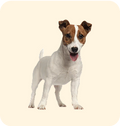
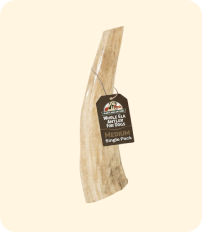
Moderate chewer, 30 - 45 lbs (think: Cocker Spaniel, Beagle, smaller Lab mix) A split elk antler lasts 4 - 8 weeks with daily chewing. These dogs chew with purpose but don't destroy. Split elk is the right call here - the exposed marrow keeps them engaged without requiring jaw strength to access it.

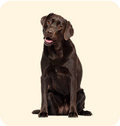
Aggressive chewer, 45 - 65 lbs (think: Lab, Golden Retriever, GSD)

  • Split elk antler: 3 - 5 weeks
  • Whole elk antler: 3 - 6 weeks
  • Deer antler: 6 - 10 weeks

At this weight class, type matters. A Lab who chews 30 minutes a day will wear through a split elk noticeably faster than a whole elk. If your 55-lb GSD is intense about chewing, go deer antler - the extra density earns you those additional weeks.

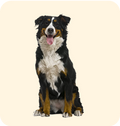
Power chewer, 65+ lbs (think: Pit Bull, Rottweiler, Cane Corso)

  • Whole elk antler: 2 - 4 weeks
  • Deer antler: 4 - 8 weeks

Power chewers are the category where antler type choice has the biggest impact on cost. A Rottweiler on a whole elk might chew through it in under a month. The same dog on a correctly sized deer antler chew? You're looking at 4 - 8 weeks. That's a meaningful difference in monthly spend.

One important note: these estimates assume Grade A antlers. Low-grade or sun-bleached antlers - the ones sold cheap in big-box bins - are more brittle, less dense, and go significantly faster. They also splinter more readily. Grade A is the floor, not a marketing claim.


What Affects How Fast Your Dog Goes Through an Antler

Four variables, in order of impact:

1. Chewing intensity, not just size Two 50-lb dogs can have completely different wear rates. One chews hard for 20 minutes and walks away. The other settles in for a 90-minute session every evening. Intensity is the single biggest driver of how long an antler lasts. Aggressive chewers who are also frequent chewers will run through antlers faster than size charts suggest.

2. Antler type and hardness Deer antler is the hardest antler available. It's extra-dense cortex with minimal marrow exposure - no easy entry point for your dog to exploit. Whole elk is slightly less dense but still excellent for aggressive chewers. Split elk has marrow exposed from the start, which makes it more appealing to dogs who are new to antlers - but that access point also accelerates consumption.

Order of longevity, longest to shortest: Deer antler > Whole elk antler > Split elk antler

3. Grade quality Grade A antlers are fresher, denser, and structurally sounder than lower-grade alternatives. They were recently shed, dried at the right rate, and haven't spent time baking in the sun on a warehouse shelf. All Heartland antlers are Grade A - not because it's a tagline, but because lower-grade antlers create safety risks (splintering) that aren't worth the $5 savings.

4. Dog size and jaw strength Bigger jaws apply more pressure per chew. A 90-lb Rottweiler simply removes more material per session than a 40-lb Cocker Spaniel, even if both are "aggressive" chewers by temperament. Right-sizing your antler - matching the diameter and density to your dog's weight - is the most underrated factor in getting the lifespan you paid for.


The Cost Math - What You're Actually Spending on Dog Chews Per Month

Let's do what the antler price tag won't do for you: the actual math.

Chew Type Upfront Cost Duration Cost Per Week
Bully stick (6" standard) $8 - 12 20 - 45 min (one session) $32 - 48/month
Rawhide (standard roll) $3 - 5 1 - 3 sessions $12 - 20/month
Squeaky toy $10 - 15 Days to 1 week (power chewer) $40 - 60/month
Split elk antler (Heartland) $19.99 - 40.99 4 - 8 weeks $5 - 10/week
Whole elk antler (Heartland) $18.49 - 64.99 3 - 8 weeks $4 - 12/week
Deer antler (Heartland) $19.99 - 39.99 4 - 10 weeks $4 - 8/week

The bully stick line is the one that gets owners. Eight to twelve dollars a stick sounds reasonable until you realize your 60-lb Lab inhales one in under 30 minutes and you're buying three or four a week without thinking about it. That's $30 - 48 per month on chews that are gone before you've finished your coffee.

An aggressive chewer who goes through a $30 deer antler in 6 weeks is spending $5 per week on chews. The dog doing $10 bully sticks three times a week is spending $30 per week on chews.

Same dog. Same need. Six times the monthly spend.

Most owners who are sticker-shocked by antler prices have been quietly running a $120-per-month bully stick habit without ever sitting down to add it up. The antler seems expensive because the number is larger and singular. The bully sticks feel cheap because they come one at a time.

One $30 antler versus $120 in bully sticks over the same six weeks. Run the math once. You don't need to run it again.


Deer Antler vs Elk Antler: Which Lasts Longer for Your Dog?

This is worth its own section because the answer is not the same for every dog.

Deer antler lasts longer - but it's not always the right choice.

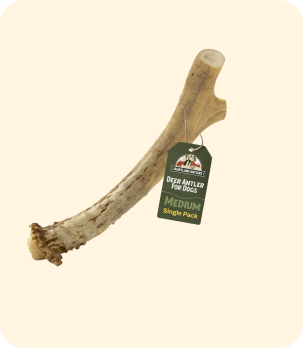
Deer antler is the hardest antler available. The outer cortex is denser than elk, the marrow is less accessible, and it wears down slower under sustained chewing pressure. For power chewers and large breeds, deer antler is the longest-lasting option in the lineup.

For dogs new to antler chews, however, deer antler's density can be a frustration point. If your dog can't find easy access to the marrow, they may lose interest. This is where split elk earns its place - the exposed marrow draws dogs in from the first session, building the habit before you graduate to denser options.

A practical guide by dog profile:

  • First-time antler users (any size): Start with split elk. Let your dog get hooked on the marrow before asking them to work for it.
  • Moderate chewers under 50 lbs: Split elk antler works well long-term. No need to force the upgrade.
  • Aggressive chewers, 45 - 65 lbs: Whole elk for most. Deer antler if your dog finishes whole elk in under 3 weeks.
  • Power chewers over 65 lbs: Deer antler. Full stop. Whole elk becomes an expensive short-term chew at this chewing intensity.

The size guide on our site walks through weight-to-antler matching in detail. Getting the size right matters as much as getting the type right - a correctly sized deer antler will outlast an undersized one by weeks.


How to Make Your Antler Chew Last as Long as Possible

Three things that actually work:

Dampen the end before each session. A quick pass under the tap or a 30-second soak gives your dog a taste reward right away and slightly softens the surface for engagement. This does not meaningfully accelerate wear - it redirects your dog to the right end and keeps early chew sessions productive.

Rotate between two antlers. If you have two antlers in the rotation, each one gets rest time. Chewing generates micro-surface compression. Giving the antler a day off between sessions helps it recover slightly and reduces concentrated wear in one spot. It also refreshes the novelty factor - your dog re-engages with each antler more actively when it hasn't been sitting in front of them all week.

Supervise and limit sessions. For aggressive chewers, 20 - 30 minutes per sitting is the standard recommendation. Not because antlers are dangerous - Grade A, naturally shed antlers don't splinter - but because a dog who is allowed to chew for 3 hours straight simply removes more material. Cap the session, and the antler lasts longer. It also means your dog is never unsupervised with any chew, which is good practice regardless of type.

Never leave an antler with a dog who is home alone. This is true for every chew type, not just antlers.


When to Replace an Antler Chew

The antler is done when it's a choking hazard. Simple test: if it can fit completely inside your dog's mouth, it's time for a new one.

For large dogs (65+ lbs), that replacement threshold is roughly the size of a tennis ball or smaller. For medium dogs (30 - 65 lbs), replace when it's smaller than a golf ball. For small dogs, replace when it's smaller than a large grape.

Three other signs it's time:

Visible cracks along the shaft. A surface nick is normal wear. A crack that runs lengthwise or deepens with each session is a structural failure. Pull it.

Surface worn completely smooth. When there's no texture left, the chew doesn't clean teeth effectively and your dog has less purchase to work with. It's done its job - replace it.

Any splintering. Grade A antlers don't splinter under normal wear. If you're seeing sharp shards, the antler was not Grade A quality. Replace it and don't buy from that source again.

For safety guidance on chew sessions and supervision, our Are Antler Chews Safe for Dogs? post covers the full picture - including who should not use antlers (dogs with dental disease, puppies under 6 months).


Frequently Asked Questions

How long do antler chews last for dogs?

Antler chews last 4 weeks to 6+ months depending on your dog's size, chewing intensity, and antler type. Grade A, correctly sized antlers last measurably longer than cheap alternatives. A moderate chewer (30 - 45 lbs) on a split elk antler can expect 4 - 8 weeks. A power chewer (65+ lbs) on a deer antler should see 4 - 8 weeks of hard daily use.

How long do deer antler chews last?

Deer antler is the hardest antler type, making it the longest-lasting option for aggressive chewers. For a 45 - 65 lb dog, expect 6 - 10 weeks. For power chewers over 65 lbs, plan on 4 - 8 weeks of daily chewing. The dense cortex of deer antler is what sets it apart - it wears slowly even under sustained pressure.

How long do elk antler chews last?

Whole elk antler typically lasts 3 - 6 weeks for aggressive chewers (45 - 65 lbs) and 6 - 12 weeks for moderate chewers. Split elk antler goes faster due to exposed marrow - expect 4 - 8 weeks for a moderate chewer under 45 lbs. Elk antlers are slightly less dense than deer antler, which makes them a good starting point for first-time antler users.

Are antler chews worth the price?

Yes, when you do the math. A $25 - 35 antler lasting 6 weeks costs roughly $4 - 6 per week. A bully stick habit for the same dog runs $8 - 12 per week, or $30 - 48 per month. Most owners who switch from weekly bully sticks to antlers save $20 - 40 per month. The upfront number is higher. The monthly spend is lower.

What makes one antler last longer than another?

Grade quality is the biggest factor most buyers overlook. Grade A antlers are freshly shed, properly dried, and structurally dense - they resist splintering and last longer under chewing pressure. Low-grade antlers that have been sun-bleached or improperly stored are more brittle and wear faster. After grade quality, the order is: antler type (deer > whole elk > split elk), then correct sizing for your dog's weight, then chewing intensity.

When should I replace my dog's antler chew?

Replace it when the antler reaches roughly the size of a tennis ball for large dogs, or when it can fit entirely inside your dog's mouth. Also replace it if you see any lengthwise cracking, or if the surface has worn completely smooth.

How do I make an antler chew last longer?

Dampen the end slightly before each session, rotate between two antlers so each gets rest time, and limit sessions to 20 - 30 minutes for aggressive chewers. Supervision is non-negotiable - never leave any chew with an unsupervised dog.


The Bottom Line

Antler chews are not an expensive chew habit. They're a one-time purchase that replaces a rolling weekly expense most owners have stopped noticing.

One correctly sized, Grade A deer antler or elk antler from Heartland lasts your aggressive chewer 4 - 8 weeks minimum. The bully sticks, rawhide, and toys you've been replacing every few days add up to significantly more than that over the same period.

The math works. The chew works. The only thing that doesn't work is buying an antler that's too small, too low-grade, or the wrong type for your dog - which is why we built the size guide and why all Heartland antlers are Grade A, naturally shed, and sorted by dog weight.

Shop by your dog's size and chewing style:

Free shipping on orders over $50. Veteran-owned. 1,000+ five-star reviews.


Related reading:

Back to blog