You've seen the price tag. Twenty-five, thirty, forty dollars for a stick of antler. And you're now googling "are antler chews worth it" because that number gave you pause.

Fair. It should.
Here's the honest answer: for aggressive chewers, antler chews are not expensive - they just look expensive at checkout. The math changes completely when you calculate what you're actually spending month-to-month on chews that disappear in minutes. This guide runs the numbers and lays out exactly what you're paying for when you buy Grade-A.
How Long Do Antler Chews Actually Last?
This is the question the price comparison lives or dies on.
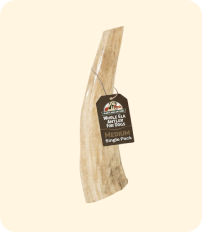
For power chewers - the dogs that reduce a bully stick to a nub in under twenty minutes - a properly sized deer antler typically lasts 4 - 10 weeks. Whole elk antlers run longer: 6 - 12 weeks for most aggressive chewers, and several months for moderate ones.
Variables that affect the lifespan:
- Antler type: Deer antler is denser and harder. Whole elk is slightly softer. Split elk antler exposes the marrow and goes faster - better for dogs newer to antlers or lighter chewers.
- Dog size and jaw strength: A 90-lb Rottweiler chews faster than a 45-lb Lab. Size the antler up accordingly.
- Chew sessions per day: 30-minute sessions daily will wear an antler down faster than occasional chewing.
- Grade: This one matters more than people realize. More on it below.
The bottom line: one antler replaces weeks of daily chew sessions. That's the foundation of the value math.
The Cost Comparison: Antler vs. Bully Stick vs. Rawhide per Month
Here's what the numbers actually look like for an aggressive chewer.
| Chew Type | Cost per Unit | Lasts (Power Chewer) | Monthly Cost |
|---|---|---|---|
| Rawhide | $3 - $6 | 1 - 3 sessions | $60 - $180/month |
| Bully stick | $8 - $12 | 1 - 2 sessions | $240 - $360/month |
| Cheap antler | $10 - $15 | 1 - 3 weeks | $20 - $60/month |
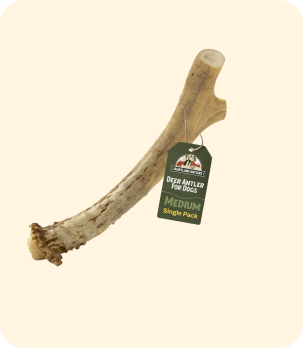
| Heartland Grade-A deer antler | $19.99 - $39.99 | 4 - 10 weeks | $13 - $35/month |
Read that bully stick line again. If your dog gets a bully stick every day - which is what it takes to keep a power chewer busy - you're spending $240 to $360 a month. That's the hidden cost of "cheap" chews.
One $25 - $35 deer antler from Heartland, sized right for your dog, covers the same period for roughly $13 - $35.
The antler is cheaper. It just doesn't feel that way at checkout because you're paying it all at once instead of $8 at a time.
The 5 Things You're Actually Paying For
When you buy a Grade-A antler chew, the price covers five things that cheaper alternatives simply don't have.
1. Duration
Density is what makes antlers last. Grade-A antlers are recently shed, still brown, heavy with moisture and marrow. That density translates directly to chew time. A low-grade antler is dried out and brittle - it splinters fast, wears down unevenly, and often needs to be thrown out before your dog finishes it.
2. Naturally shed - no animals harmed
Deer and elk shed their antlers naturally every year. Nothing is killed. Nothing is slaughtered. That matters if you care what goes in your dog's mouth and where it came from.
3. Mineral nutrition
Antlers are bone. As your dog chews, they absorb calcium and phosphorus - the same minerals that build strong bones and support healthy teeth. That's actual nutritional value. Rawhide, Nylabones, and synthetic chews deliver none of it.
4. Odor-free, mess-free
Bully sticks smell. Ask anyone who's had a dog chew one on the couch. Rawhide leaves a wet, slimy mess. Antlers don't. No odor. No residue. Your dog can chew one on the couch, in the car, in the bedroom - wherever. That's not a small thing if you live with a dog who chews daily.
5. No chunk-swallowing risk from rawhide
This is the hidden cost most people don't price in. Rawhide softens into large, slick chunks that dogs swallow whole. Emergency vet visits for blockages run $1,500 - $5,000. The "cheap" rawhide has a tail risk that Grade-A antlers don't carry. Antlers wear down gradually from the outside - they don't break off in dangerous pieces.
Why Cheap Antlers Let You Down (And Why Grade Matters)
Not all antlers are equal. This is important.
You can find $10 antlers at big-box pet stores. Some of them are bleached white, lightweight, and chalky. Those antlers splinter. They're often old sheds that sat in the sun, dried out, and lost structural integrity. When your dog bites down hard, they can crack - leaving sharp edges that are a real hazard.
Grade-A antlers are hand-selected from recently shed, brown antlers. Fresh. Dense. Heavy for their size. That density is what makes them wear down gradually and safely, rather than snapping.
At Heartland Antlers, every antler goes through a grading process before it ships. We're a veteran-owned operation - that means the quality standard isn't negotiable. The cheap antler that splinters on day two isn't saving you money. It's creating risk.
Explore our deer antler collection →
Who Antler Chews Are Worth It For (And Who They're Not)
Antler chews are worth it for:
- Aggressive chewers and power chewers. If your dog destroys every other chew, antlers are built for them. This is exactly the use case where the cost math is most decisive.
- Moderate chewers with a daily habit. If your dog chews for 20 - 30 minutes most days, an antler will last months and cost far less than rotating through bully sticks.
- Dog owners who care about what goes in the food bowl. No chemicals. No processing. Naturally shed, Grade-A, clean.
- Anyone tired of smelly chews. Odor-free matters more than people admit until they've had a bully-stick-scented living room for a month.
Antler chews are not worth it for:
- Puppies under 6 months. Their teeth aren't fully developed. Antlers are too hard.
- Dogs with existing dental disease. A dog with compromised teeth or gum issues should not be on hard chews. Talk to your vet first.
- Very gentle chewers who rarely chew. If your dog sniffs a chew and walks away, an antler will sit untouched. You need a dog that actually chews.
That's the honest picture. Most power chewer owners will do the math and find it a straightforward decision. If your dog is in one of those exception categories, antlers are not the right product - and we'd rather tell you that than have you buy something that doesn't work for your dog.
The 30-Day Guarantee - Why There's No Risk
We back every antler with a 30-day return policy. If your dog ignores it, if it doesn't hold up the way we said it would, if you're not satisfied - send it back.
That's not a common offer in the antler category. Most brands don't back their product like that because they're not confident in the grade. We are.
Free US shipping on orders over $50. No subscription trap. No auto-ship you forget to cancel.
Frequently Asked Questions
Are antler chews worth the price?
For aggressive and moderate chewers, yes. One Grade-A deer antler ($25 - $35) typically lasts a power chewer 4 - 10 weeks. At $8 - $12 per bully stick consumed daily, that's $240 - $360/month in alternatives versus roughly $13 - $35/month for an antler. The math strongly favors antlers for dogs that chew frequently.
Why are antler chews so expensive?
Antlers are naturally shed once per year and must be hand-collected across vast wilderness areas. Grade-A antlers - fresh, recently dropped, with maximum density - represent a small fraction of total sheds. They require sorting, grading, sizing, and cleaning before they reach your dog. The premium price reflects genuine scarcity and labor-intensive sourcing, not a marketing markup.
How long do antler chews actually last for dogs?
For power chewers: 4 - 10 weeks per deer antler, 6 - 12 weeks per whole elk antler. For moderate chewers: 3 - 6 months is common. Variables include the dog's size, chew intensity, and whether the antler is whole (lasts longer) or split (lasts shorter but easier for new chewers). Grade-A density is the single biggest factor in longevity.
Are antler chews good for dogs?
For most healthy adult dogs with an active chewing habit, yes. Antlers are naturally shed, odor-free, mess-free, and deliver calcium and phosphorus that support bone and dental health. They are not appropriate for dogs under 6 months, dogs with existing dental problems, or very gentle chewers who show little interest.
Do vets recommend antler chews?
Most veterinary guidance cautions against very hard chews as a category due to tooth fracture risk. The real nuance: risk is largely a function of antler grade and size matching. Cheap, old, or bleached antlers are more brittle. Grade-A antlers properly sized to your dog's weight carry significantly lower risk. Supervision is always recommended. Read more in our full are antler chews safe for dogs guide.
What are the downsides of antler chews?
Higher upfront cost than rawhide or bully sticks. Not suitable for puppies under 6 months, dogs with dental disease, or very gentle chewers. Tooth fracture risk exists if the antler is too hard for the dog's jaw strength - which is why grade, size matching, and supervision matter. Antlers are not the right chew for every dog.
Are cheap antler chews safe?
No - and this is where the price difference matters most. Low-grade antlers are often bleached, dried out, and structurally weak. They splinter instead of wearing down gradually, creating sharp edges and choking hazards. Grade-A antlers from reputable sources are denser, cleaner, and wear down predictably. The $10 savings on a cheap antler is not worth the risk.
Related reading: