The Right Antler for a Bloodhound

The right antler for bloodhound owners passes the nose test before the mouth ever gets a turn.

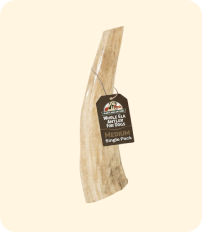
Whole Elk Antler Chew - Large (45-65 lbs)
Recommended for Bloodhounds
Whole Elk Antler Chew - Large (45-65 lbs)
Large scent hounds match well with the large whole elk for long chew sessions.
Shop Whole Elk Antler Chew

Quick Answer: For a Bloodhound (80-110 lb, long soft muzzle, moderate bite force, scent-driven engagement style), the correct antler is large whole elk, Grade A. Elk antler carries more marrow fat and a stronger scent profile than deer antler, and a Bloodhound reads that signal through the end grain and porous cortex of the whole piece before committing to chew. A Grade A large whole elk antler typically lasts a Bloodhound 4-8 weeks. The nose approves the chew before the mouth gets a turn. Heartland Antlers Grade A whole elk is sourced for marrow density and cortex integrity, both matter for a breed that leads with its nose.

Bloodhound + Large Whole Elk: The Nose Decides Before the Mouth Does

An adult Bloodhound (80 to 110 lb, long soft muzzle, moderate bite force, nose-first engagement style) is best matched to a large whole elk antler, Grade A. In our experience fitting antler for bloodhound customers, we've found that elk species selection is the controlling variable for this breed. Elk antler carries significantly more marrow fat than deer antler, and that fat content produces a stronger scent signal through the end grain and porous cortex of the whole piece. A Bloodhound reads that signal on approach and commits. Deer antler, which is drier and lower in marrow fat, produces a weaker signal. Many Bloodhounds pass on deer without a second investigation.

A Bloodhound that walks past a deer antler is not disinterested in chewing. It is the nose making a sound decision.

The antler has to speak to the nose before the mouth gets involved. Grade A whole elk does that. Deer antler often does not.

The Bloodhound Chew Profile: What You Are Fitting

The Bloodhound is a large breed, typically 80 to 110 pounds, built for endurance over raw power. The muzzle is long and droopy. The bite is soft relative to working breeds of comparable size. A Bloodhound's jaw pressure falls well below what you see in a Malinois or a working-line Lab.

Chew drive in this breed is low to moderate. What looks like disinterest is usually a scent problem, not a motivation problem.

The Bloodhound's olfactory surface area is roughly 40 times larger than a human's, and approximately four times the surface area of a German Shepherd. The nose is the primary decision-making organ. A Bloodhound does not commit to a chew unless the scent tells it the effort is worth making. A Grade A whole elk antler carries dense marrow that signals through the end grain and the porous outer cortex. That signal is real and sustained. Deer antler, which is drier and lower in marrow fat, registers as a weak signal. The Bloodhound reads the exterior, gets an insufficient return, and moves on.

The right chew must clear the nose test before the jaw gets a turn. Grade A whole elk clears it. Deer often does not.

Antler for Bloodhound: What We Ship by Weight Class

Grade A whole elk antler. That is the call for this breed, every time.

Bloodhound Size Weight Correct Antler Grade Avg. Duration
Standard adult 80-100 lb Large whole elk Grade A 4-8 weeks
Heavy / wide muzzle 100-110 lb XL whole elk Grade A 4-8 weeks
Puppy (10+ months) Any Medium whole elk, supervised Grade A Supervised
Senior Bloodhound Any Large split elk Grade A 3-6 weeks

Grade A whole elk carries dense, fatty marrow that produces a strong scent signal through the end grain and porous cortex. The nose gets the full signal and engagement follows.

The marrow in elk is denser and fattier than deer marrow. It holds scent far longer. For a breed that needs olfactory confirmation before committing to a task, that sustained scent signal matters. One ingredient. No coating, no flavor spray, no artificial scent added to compensate for a weak product. The real marrow does the work.

For a Bloodhound in the 80 to 110 pound range, a large whole elk is the right configuration. The piece is sized to the jaw span so your dog works the piece steadily and the chew lasts weeks, not a single session.

Why Whole Elk Is the Only Format That Passes a Bloodhound's Nose Test

Deer antler is lighter, drier, and lower in marrow fat than elk. It works well for moderate chewers that engage by sight and habit. A Bloodhound is not that dog.

Elk antler is 30-40% denser than deer antler and carries a significantly higher marrow-fat content. A large whole elk antler typically lasts a Bloodhound 4-8 weeks. For a nose-driven breed, the difference in marrow fat is not minor. It determines whether the chew gets picked up at all. Grade A elk antler carries dense, active marrow that signals through the end grain and the porous outer cortex. The Bloodhound's nose reads that signal and the dog commits.

Deer antler fails this test. It is drier, lower in marrow fat, and produces a weaker scent profile at the surface. A Grade A whole elk antler from a properly sourced rack carries the marrow signal that clears the Bloodhound's olfactory filter.

Whole elk succeeds here. The marrow signal is real, not sprayed on. The engagement begins at first approach and sustains across weeks of regular sessions.

How to Read the First Session

Set the whole elk antler on the floor. Watch your dog's approach.

A Bloodhound will nose the end grain and the sides first. That is the breed working correctly. Give it a full minute before drawing any conclusions.

If your dog sniffs and walks, the scent signal has not landed yet. Some Bloodhounds need the antler to come to room temperature before the marrow scent is strong enough through the cortex. Leave it out for 20 minutes, then reintroduce it.

Active investigation and surface licking within the first few minutes is confirmation. Your dog has found the scent signal and is beginning to work the piece. Early sessions typically run 15 to 30 minutes. The dog earns access to marrow over time as the cortex surface is worked down, which sustains engagement across weeks.

Expect session interest to deepen as your dog establishes a working groove on the surface. The sustained marrow scent keeps the Bloodhound returning even between active chew sessions.

Supervision Notes for a Gnawing, Low-Force Breed

Antlers are hard. A Bloodhound's bite pressure is relatively gentle compared to power-chewer breeds, which reduces the fracture risk significantly. Standard supervision rules still apply to every dog.

Check the antler after the first two sessions. Look for sharp edges or fracture lines. A quality Grade A antler shows smooth wear, not splintering.

If the antler has been reduced to a piece smaller than your dog's muzzle width, pull it. Pieces that fit fully in the mouth become a swallow risk.

Bloodhounds do not tend to bite aggressively through antler the way a high-drive working dog would. Most of the wear is licking and gnawing. That pattern is safe and extends the life of the piece considerably.

The Nose-First Problem

Most chew products are designed for dogs that engage visually or by habit. Rawhide smells strong. Bully sticks off-gas immediately. Those products work for most breeds because sight and familiarity drive the pick-up.

The Bloodhound is built differently. A Bloodhound's olfactory surface area is roughly 40 times larger than a human's, giving it one of the most capable noses in the canine world. The nose is not a secondary input. It is the primary decision-making organ.

A chew without real scent appeal is not a chew your Bloodhound will use. The nose rejects it before the mouth gets a turn.

Grade A whole elk succeeds because it works within the breed's actual biology. The dense elk marrow produces a sustained scent signal through the end grain and cortex. The signal is real, not sprayed on. The nose approves, the dog engages, the chew lasts.

Deer antlers often fail this test because the marrow is lighter and drier. Synthetic chews with applied flavoring fail this test because the scent front is sharp and then gone. Real elk marrow in a whole antler, sourced for density and marrow activity, is the format that holds up across a full session with a Bloodhound.

Find the Right Fit

A large whole elk antler fits a Bloodhound in the 80 to 110 pound range.

If your dog is on the lighter end, around 80 pounds, a standard large whole elk works. If your Bloodhound runs closer to 110 pounds or has a wider muzzle, size up to an extra large. The goal is a piece your dog can hold with both paws and work at a natural angle. Too small and the piece moves around the floor and never gets worked properly.

Also worth reading: - Find the Right Fit by Breed and Jaw Style - Elk vs. Deer Antler: Which Is Right for Your Dog's Size - What Grade A Means and Why It Matters -- the marrow quality and density factors that drive engagement for scent-driven breeds - Antlers for Aggressive Chewers: What Grade A Handles -- useful context for where Bloodhounds fall on the chew intensity spectrum - Antlers for Puppies: Age and Size Guide - Same Hound Family: Antler for Beagle - High-Endurance Hound Comparison: Antler for Rhodesian Ridgeback

Heartland Antlers Grade A whole elk is sourced for marrow density and cortex integrity, not just size. One ingredient: naturally shed elk antler, no artificial scent applied. For a Bloodhound, that real marrow signal through the whole piece is the difference between a chew that gets picked up and one that gets walked past.

Find the Right Fit for your Bloodhound

Frequently Asked Questions

What is the best antler for a Bloodhound?

Large whole elk, Grade A, is the correct fit for a Bloodhound in the 80 to 110 lb range. Elk antler carries dense, fatty marrow that produces a strong scent signal through the end grain and cortex of the whole piece, which is the signal a Bloodhound needs before it will engage with a chew. Deer antler is drier and lower in marrow fat and produces a weaker scent signal. Most Bloodhounds pass on deer antler without sustained investigation.

Are antlers safe for Bloodhounds?

Yes. Bloodhounds have a soft bite relative to high-drive breeds, which puts them at lower fracture risk than dogs like Malinois or American Bulldogs. The standard supervision rules apply: check the antler after the first few sessions, look for sharp edges, and pull the piece when it reaches a size small enough to swallow. Grade A elk antler does not splinter under normal licking and gnawing use.

What size antler for a Bloodhound?

Large whole elk fits most Bloodhounds in the 80 to 110 pound range. Dogs on the heavier end or with a wider muzzle should size up to extra large. The piece should be long enough that your dog can hold it down and work it without the antler fitting fully into the mouth.

Elk or deer antler for a Bloodhound?

Elk. Elk antler carries more marrow and holds a stronger scent profile than deer antler. For a scent-driven breed like the Bloodhound, that difference determines whether your dog engages at all. Deer antler is drier, lighter, and lower in marrow fat. Most Bloodhounds will pass on it. Whole elk, Grade A, is the correct format for adult Bloodhounds.

How long does an antler last for a Bloodhound?

A large whole elk antler, Grade A, typically lasts four to eight weeks with a Bloodhound. Bloodhounds are low-to-moderate pressure chewers, which means the piece accumulates sessions without rapid surface loss. The exact duration depends on session length and how often your dog returns to it. Grade A elk holds structure across the full duration; lower-grade material degrades unevenly and may need earlier retirement.

Schema (do not paste into Shopify body_html)

Frequently Asked Questions

What is the best antler for a Bloodhound?

Large whole elk, Grade A, is the correct fit for a Bloodhound in the 80 to 110 lb range. Elk antler carries dense, fatty marrow that produces a strong scent signal through the end grain and cortex, which is the signal a Bloodhound needs before it will engage with a chew. Deer antler is drier and lower in marrow fat and produces a weaker scent signal. Most Bloodhounds pass on deer antler without sustained investigation.

Are antlers safe for Bloodhounds?

Yes. Bloodhounds have a soft bite relative to high-drive breeds, which puts them at lower fracture risk than dogs like Malinois or American Bulldogs. The standard supervision rules apply: check the antler after the first few sessions, look for sharp edges, and pull the piece when it reaches a size small enough to swallow. Grade A elk antler does not splinter under normal licking and gnawing use.

What size antler for a Bloodhound?

Large whole elk fits most Bloodhounds in the 80 to 110 pound range. Dogs on the heavier end or with a wider muzzle should size up to extra large. The piece should be long enough that your dog can hold it down and work it without the antler fitting fully into the mouth.

Elk or deer antler for a Bloodhound?

Elk. Elk antler carries more marrow and holds a stronger scent profile than deer antler. For a scent-driven breed like the Bloodhound, that difference determines whether your dog engages at all. Deer antler is drier, lighter, and lower in marrow fat. Most Bloodhounds will pass on it. Whole elk, Grade A, is the correct format for adult Bloodhounds.

How long does an antler last for a Bloodhound?

A large whole elk antler, Grade A, typically lasts four to eight weeks with a Bloodhound. Bloodhounds are low-to-moderate pressure chewers, which means the piece accumulates sessions without rapid surface loss. The exact duration depends on session length and how often your dog returns to it.

Back to blog