The right antler for an English Bulldog is Grade A split deer (40-55 lb, undershot jaw, brachycephalic) lasting 2-5 weeks, or Grade A split elk for higher-drive dogs lasting 4-8 weeks. Bite geometry, not weight, determines fit for this breed.

Quick Answer: For an adult English Bulldog (40-55 lb), the correct antler is Grade A large split deer or split elk. The Bulldog's extreme underbite and compressed airway make whole antler a poor fit: the lower jaw cannot grip a cylinder, and sustained jaw effort has a breathing cost. Split antler provides a flat face for the protruding lower jaw to work against and delivers immediate marrow access within the first session. Grade A elk runs 30-40% denser than deer, so split deer is the right starting point for most Bulldogs, with split elk for higher-drive dogs. A Grade A split deer antler from Heartland Antlers typically lasts an English Bulldog 2-5 weeks; split elk lasts 4-8 weeks for dogs with stronger chew focus.
Bulldog owners know this scene. You hand over a whole antler. Your dog picks it up immediately, carries it to their spot, sets it down, sniffs it, picks it up again, and carries it to a different spot. The antler gets deposited in three locations around the living room. No chewing happens.
The dog is not uninterested. The dog wants to chew. The geometry is wrong. From customers with English Bulldogs, the carrying-without-chewing pattern is the single most common complaint before they switch to split antler.
An English Bulldog (40 to 55 lb, extreme underbite, wide flat bite surface, brachycephalic skull) is best matched to medium split deer, Grade A. The flat face of a split antler gives the protruding lower jaw a surface to set against and press into. A cylindrical whole antler rolls against that jaw. The dog cannot get set. So it carries the antler instead of working it. This is not a Bulldog problem. This is a cut problem.
Customers with English Bulldogs consistently describe the same session failure: the dog picks up the whole antler, carries it to three different spots around the house, and sets it down without chewing. After working with Bulldog owners, we've found the switch to split antler resolves the carrying pattern in the first session in most cases. The flat marrow face gives the underbite jaw the grip surface the cylinder was denying. That is the outcome we see consistently with this anatomy.
English Bulldog at a glance: 40-55 lb companion breed. Extreme underbite (lower jaw protrudes 0.5-1 inch past upper), wide flat bite surface, brachycephalic skull with compressed airways. AKC non-sporting group. The bite geometry and breathing physiology together determine antler fit for this breed. Requires Grade A large split deer or split elk antler.
The English Bulldog Chew Profile: Extreme Underbite and Brachycephalic Physiology
The English Bulldog carries the most pronounced underbite of any common breed. The lower jaw extends significantly in front of the upper. The muzzle is short, wide, and compressed. The bite surface is large and flat.
Most chew guides treat the Bulldog as a medium-weight dog with moderate chew drive and leave it at that. That framing misses the two factors that actually determine antler fit for this breed: extreme underbite geometry and brachycephalic physiology.
An English Bulldog (40 to 55 lb, lower jaw protruding 0.5 to 1 inch forward of the upper, muzzle significantly compressed relative to skull length) cannot produce a stable grip on a cylindrical whole antler at any size. The lower jaw leads, the upper sits back, and the round surface rolls. Getting purchase requires a flat face to work against.
Brachycephalic means flat-faced, with short, compressed airways. Active physical effort, including chewing, requires more breathing work for a Bulldog than for a dog with a standard muzzle. This is not a disqualifying factor. It is context that shapes the right configuration: lower jaw effort per session, accessible marrow from the start, and shorter sessions than you would allow for a standard-muzzle breed.
Antler for an English Bulldog: Why Split Is the Only Correct Cut
Split antler changes the geometry of the chew.
A split elk or split deer antler has a flat face on one side with exposed marrow and the natural outer surface on the other. That flat face is what a Bulldog's underbite jaw needs. The wide, flat lower jaw gets a surface to set against and press into. The dog can grip, apply pressure, and actually work the piece. The antler stays in place rather than rolling.
An English Bulldog (40 to 55 lb, extreme underbite, wide flat lower jaw) working a split deer antler will show visible marrow progress within 2 to 3 sessions. The same dog working a whole antler will carry it from room to room without making contact. The flat face of the split cut is not a convenience feature. It is the geometric requirement for this breed's bite anatomy.
Immediate marrow access is a secondary advantage. With a split cut, the reward is right there at the surface. The dog does not need to spend the first several sessions working through the outer layer of a whole piece to reach anything rewarding. That shorter path to marrow matters more for a brachycephalic dog, where sustained jaw effort has a breathing cost.
A Grade A medium split deer antler typically lasts an English Bulldog 2-5 weeks of regular sessions, compared to a whole antler that often sits untouched for weeks because the underbite jaw cannot find purchase on the cylinder. Grade A density keeps the piece from fracturing under the Bulldog's wide, flat bite surface, which applies pressure differently than a scissor-bite breed. The split cut and Grade A together are both required. One without the other does not solve the fit problem for this breed.
The Brachycephalic Factor: Short Sessions, High Reward Density
Short-muzzled dogs work harder to breathe during physical activity. Chewing is physical activity.
For most dogs, this is a non-issue. A Labrador can work a whole antler for 45 minutes and breathe easily throughout. A Bulldog working the same piece may hit a breathing threshold well before that. The session becomes labor rather than reward, and the dog disengages.
Split antler with its immediate marrow access and stable grip produces shorter sessions with more reward density. The dog chews, gets the payoff quickly, and disengages before hitting a breathing threshold. That is the session structure that works for a brachycephalic breed.
Five to ten minutes of productive chewing is a good session for a Bulldog. Not an hour. The chew does not need to occupy a long stretch to be valuable. It needs to deliver the right reward density in the time the dog can comfortably work.
Bulldog owners know how much effort goes into finding chews that actually get used. The whole antlers that got carried around and deposited in the corner. The bully sticks that took one session. The rubber toys that hit the floor and stayed there. A correctly fitted split antler, Grade A, is the first chew most Bulldog owners find that the dog returns to voluntarily after the first session.
What We Ship for English Bulldogs
These configurations are based on jaw type, breathing physiology, and weight. Not weight alone.
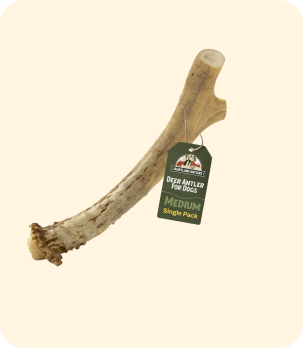
Standard adult Bulldog (40 to 55 lb): Medium split deer, Grade A. Split deer is the primary recommendation for most adult Bulldogs. The lower density of deer antler means less sustained jaw effort, which fits the brachycephalic physiology. The flat face of the split cut gives the underbite jaw a surface to work. Medium size fits the wide jaw: enough cross-section to grip, not so large the dog cannot position it.
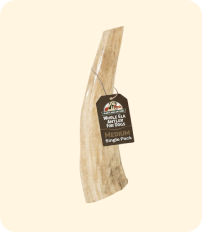
Adult Bulldog, higher chew drive: Medium split elk, Grade A. Elk antler is denser than deer. For Bulldogs that chew with more focus and frequency, split elk holds up longer and provides more sessions before the piece is worked down. The split cut is still the correct call regardless of species.
Bulldog under 10 months: Small split deer, supervised. Developing teeth on a wide underbite jaw still need the flat purchase surface. Small split deer keeps the density low and the piece correctly sized. Supervision is not optional at this stage.
Senior Bulldog: Medium split deer. Marrow access without demanding sustained bite pressure. The split format keeps the dog engaged without the jaw effort that whole antler or denser elk requires.
The Elk vs. Deer Call for an English Bulldog
For most Bulldogs, split matters more than species. Either elk or deer antler in split format will work. The underbite jaw geometry and brachycephalic physiology are the primary variables. Species is secondary.
Deer antler is the preferred starting point. Deer antler is less dense than elk. Less density means less sustained jaw effort per session. For a flat-faced dog where chewing has a breathing cost, lower jaw effort per unit of reward is the right trade.
Split elk is the right call for Bulldogs that chew with more frequency and focus, or for owners who want a piece that holds up across more sessions. If your Bulldog is methodical and consistent, split elk will last longer.
Split deer to start. Split elk if your Bulldog has demonstrated chew focus and you want more durability from each piece.
How to Read the First Session
Twenty minutes tells you most of what you need to know.
What you want to see: The dog takes the split antler to their spot, positions it flat-face-up, and starts working the marrow surface. Consistent chewing rhythm. Some surface wear visible after the session but the piece is intact. This is correct fit.
What means the cut is wrong: You started with whole and the dog keeps picking it up, carrying it, setting it down. No productive chewing. The underbite cannot find grip on the cylinder. Switch to split. This is exactly what split is for.
What means adjust size: The dog works the antler but cannot get a stable hold on it, constantly shifting position. The piece may be too small for the wide jaw to grip securely, or too large to position at all. Size up or down depending on which way the problem runs.
What means go up in density: The piece is visibly shorter after one session. Deep gouges. Edges getting sharp. This is a grade or density problem. Verify Grade A and consider split elk instead of split deer.
Supervision Notes
First session: stay in the room.
Watch for labored breathing. If your Bulldog is working the antler hard and you hear increased respiratory effort, end the session. Short sessions are the goal anyway. Five to ten minutes of productive chewing is a good session for a Bulldog.
Check the piece after each session. When the antler reaches roughly molar width, retire it. A piece that small can shift into the back of the mouth and create a choking risk for any dog, and brachycephalic dogs have less margin to manage a lodged piece.
Beyond those two points, chewing antler is not a high-risk activity for a Bulldog that has the right cut and size. The risks that exist are the same risks that apply to any chew: wrong size, wrong grade, unsupervised early sessions.
English Bulldog Antler Size and Cut Reference
| Dog | Weight | Recommended Antler | Duration |
|---|---|---|---|
| Standard adult Bulldog | 40-55 lb | Medium split deer, Grade A | 2-5 weeks |
| Higher-drive adult Bulldog | 40-55 lb | Medium split elk, Grade A | 4-8 weeks |
| Bulldog puppy | Under 10 months | Small split deer, supervised | Varies |
| Senior Bulldog | Any | Medium split deer, Grade A | 3-6 weeks |
Where to Go Next
Medium split deer for most adult Bulldogs. Medium split elk for higher-drive Bulldogs or owners who want more durability per piece. Both configurations address the underbite geometry and the brachycephalic physiology that make whole antler a poor fit for this breed. Finding the right antler for an English Bulldog is a geometry problem first and a density problem second.
Find the Right Fit by Breed and Jaw Style to confirm sizing against your dog's weight and chew style.
Elk vs. Deer Antler: Which Is Right for a Smaller Dog explains why deer density is the right starting point for brachycephalic breeds.
Antlers for Senior Dogs: When to Switch to Split covers how to adjust the fit as jaw strength decreases with age.
The Right Antler for a French Bulldog covers the same brachycephalic and underbite factors in a lighter-bodied breed.
What Grade A Means and Why It Matters -- the density standard that keeps a split antler from fracturing under a Bulldog's wide, flat bite.
Antlers for Aggressive Chewers: How We Grade -- relevant for the occasional Bulldog with higher-than-expected chew drive.
Frequently Asked Questions
What size antler for an English Bulldog?
Medium split deer or medium split elk for most adult Bulldogs in the 40 to 55 lb range. The wide jaw needs enough cross-section to grip without being so large the dog cannot position the piece. Split is more important than size: the flat face of a split antler gives the underbite jaw a purchase surface that a whole antler cylinder cannot provide.
Are antlers safe for English Bulldogs?
Yes, with the right cut, size, and grade. The main consideration for Bulldogs is not bite force but jaw geometry and breathing physiology. Split antler in the correct size addresses both. Supervise the first session, keep sessions short, and retire the piece when it reaches molar width. Grade A antler is denser and less prone to splintering than lower-grade antler.
Split or whole antler for a Bulldog?
Split, consistently. The extreme underbite jaw cannot get grip on a cylindrical whole antler. The flat face of a split antler gives the lower jaw a surface to press against and work. A Bulldog that carries a whole antler without chewing it is not uninterested. The geometry is preventing purchase. Switch to split and watch the behavior change in the first session.
Can Bulldogs have elk antler?
Yes. Split elk antler is a good choice for Bulldogs with higher chew drive or owners who want more durability per piece. Deer antler is the preferred starting point because the lower density means less jaw effort per session, which fits the brachycephalic physiology. Split is the required cut for either species.
How long does an antler last for an English Bulldog?
A medium split deer antler typically lasts a Bulldog between 2 and 5 weeks with regular chewing. Split elk will last longer, often 4 to 8 weeks. Duration depends on chew frequency and individual focus. If the piece is significantly reduced after one session, switch to Grade A and consider split elk for higher density. If the dog loses interest quickly, verify you are using split and not whole, and check that the cross-section is wide enough for the jaw to grip comfortably.
Schema (do not paste into Shopify body_html)
Frequently Asked Questions
What size antler for an English Bulldog?
Medium split deer or medium split elk for most adult Bulldogs in the 40 to 55 lb range. The wide jaw needs enough cross-section to grip without being so large the dog cannot position the piece. Split is more important than size: the flat face of a split antler gives the underbite jaw a purchase surface that a whole antler cylinder cannot provide.
Are antlers safe for English Bulldogs?
Yes, with the right cut, size, and grade. The main consideration for Bulldogs is not bite force but jaw geometry and breathing physiology. Split antler in the correct size addresses both. Supervise the first session, keep sessions short, and retire the piece when it reaches molar width. Grade A antler is denser and less prone to splintering than lower-grade antler.
Split or whole antler for a Bulldog?
Split, consistently. The extreme underbite jaw cannot get grip on a cylindrical whole antler. The flat face of a split antler gives the lower jaw a surface to press against and work. A Bulldog that carries a whole antler without chewing it is not uninterested. The geometry is preventing purchase. Switch to split and watch the behavior change in the first session.
Can Bulldogs have elk antler?
Yes. Split elk antler is a good choice for Bulldogs with higher chew drive or owners who want more durability per piece. Deer antler is the preferred starting point because the lower density means less jaw effort per session, which fits the brachycephalic physiology. Split is the required cut for either species.
How long does an antler last for an English Bulldog?
A medium split deer antler typically lasts a Bulldog between 2 and 5 weeks with regular chewing. Split elk will last longer, often 4 to 8 weeks. Duration depends on chew frequency and individual focus. If the piece is significantly reduced after one session, switch to Grade A and consider split elk for higher density. If the dog loses interest quickly, verify you are using split and not whole, and check that the cross-section is wide enough for the jaw to grip comfortably.