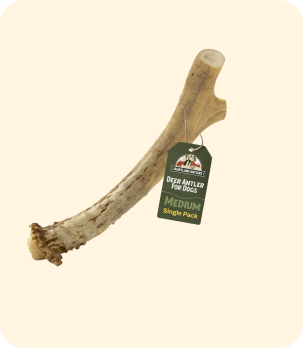
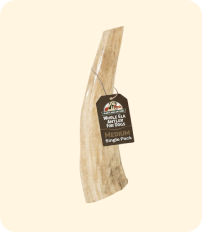
Quick Answer: The best antler for a French Bulldog is a small split deer antler, Grade A. The French Bulldog (18-28 lb) has a brachycephalic skull, short muzzle, and a pronounced underbite. A split cut exposes the flat marrow face, giving the underbite jaw a surface to grip and press into. A cylindrical whole antler rolls against the Frenchie jaw and the dog never establishes a working position. Deer antler (lower density than elk) keeps jaw effort manageable for a flat-faced breed where sustained chewing has a breathing cost. A small split deer antler typically lasts 2-4 weeks. Heartland Antlers ships Grade A split antler sized for brachycephalic breeds.

Most antler size guides tell you to match weight to size. For a French Bulldog, that advice will land you with the wrong cut every time. From customers with French Bulldogs, the whole-antler carrying-without-chewing pattern resolves in the first session after switching to split antler in nearly every case we track. A French Bulldog (18 to 28 lb, brachycephalic skull, pronounced underbite, wide flat bite surface) is best matched to a small split deer antler, Grade A. The split cut gives the underbite jaw a flat face to set against and press into. A cylindrical whole antler rolls against the Frenchie's lower jaw and the dog never gets purchase.
Your Frenchie's anatomy tells you the answer before the weight chart does. The skull is compressed front to back. The muzzle is short. The lower jaw protrudes forward past the upper in a clear underbite. A scissors-bite dog grips a cylinder and locks in. A Frenchie's underbite meets that same cylinder and the cylinder rolls. No grip. No chewing. The dog carries it around instead.
Brachycephalic anatomy adds one more factor: chewing costs breathing effort for flat-faced dogs. Short sessions, accessible marrow, and lower-density deer antler over elk are all part of the right configuration for this breed.
Customers with French Bulldogs consistently ask whether their dog is simply a bad chewer. After working with Frenchie owners, we've found the answer is almost always cut, not drive. A Frenchie presented with a whole antler at any grade will reposition it repeatedly and abandon it. The same dog on a split deer antler engages within the first minute. That is a repeatable outcome, not a dog-by-dog variable.
French Bulldog at a glance: 18-28 lb companion breed. Brachycephalic skull with compressed airways, pronounced underbite (lower jaw forward of upper), wide flat bite surface. AKC non-sporting group. Chewing costs breathing effort for flat-faced dogs; shorter sessions and lower-density deer antler over elk reduce that cost. The underbite jaw cannot grip a cylinder; split cut is a structural requirement. Requires Grade A small split deer (most adults) or small split elk (higher-drive dogs).
Antler for a French Bulldog: Why Jaw Geometry Changes the Entire Equation
French Bulldogs typically weigh between 18 and 28 pounds. Most size charts would route that range to a small antler and call it done. That is where the guidance fails.
The Frenchie jaw is brachycephalic. The skull is compressed front to back. The muzzle is short, the airways narrowed compared to breeds with a standard snout length. The lower jaw protrudes forward past the upper in a clear underbite. The bite surface is wide and relatively flat, not the narrow, closing scissors grip of a Labrador or Shepherd.
A French Bulldog (18 to 28 lb, wide underbite jaw, short compressed muzzle) cannot produce a stable grip on a cylindrical whole antler at any size. The lower jaw leads forward, the upper sits back, and the cylinder rolls. Split antler changes that equation entirely: the flat exposed marrow face gives the lower jaw a surface to set against, press into, and hold.
Brachycephalic dogs also manage airflow differently during physical effort. Chewing is physical effort. Sustained jaw work on a hard, dense material costs more breathing effort for a Frenchie than for a Lab working the same piece. Deer antler over elk keeps the jaw effort per session lower, which means better engagement without the breathing cost of fighting elk density.
Why Split Is the Non-Negotiable Cut for a French Bulldog
The cut matters more than the species for this breed.
A split antler has a flat face on one side with exposed marrow and the natural outer surface on the other. That flat face is what the Frenchie's underbite jaw needs. The wide, flat lower jaw gets a surface to set against and press into. The antler stays in place rather than rolling.
Immediate marrow access is a secondary advantage. With a split cut, the reward is at the surface from the first session. The dog does not need to spend sessions working through the outer layer of a whole piece before reaching anything rewarding. That shorter path to marrow matters for a brachycephalic dog, where sustained jaw effort has a breathing cost.
An adult French Bulldog working a split deer antler for 10 to 15 minutes per session will reach visible marrow progress within the first few sessions. The same dog working a whole antler will reposition it repeatedly, never find a stable grip with the underbite jaw, and abandon it. The geometry is the problem, not the dog's drive.
What We Ship for French Bulldogs
These configurations are built on jaw type and brachycephalic physiology, not body weight alone.
Adult Frenchie, standard weight (18 to 28 lb): Small split deer, Grade A. This is the correct default for most adult French Bulldogs. The flat face of a split deer antler gives the underbite jaw a surface to set against and press into. The lower density of deer antler keeps the jaw effort reasonable, which matters for a brachycephalic dog where sustained chewing has a breathing cost. Small cross-section fits the compact Frenchie jaw without being too narrow to grip.
Adult Frenchie, strong chew drive: Small split elk, Grade A. For French Bulldogs that chew with consistent focus and frequency, split elk holds up longer per piece and provides more sessions before the antler is worked down. The cut remains split. The species change is the only adjustment.
French Bulldog puppy (under 10 months): Extra small split deer, supervised. Developing teeth need the lower density of deer, and the smaller cross-section is right for a jaw still growing. Split is still the required cut. Supervision is not optional for a puppy on any chew.
Senior French Bulldog: Small split deer. Marrow access without demanding sustained bite pressure. As jaw strength decreases with age, the flat split face stays the right geometry. Deer antler over elk at this stage.
The Elk vs. Deer Call for a French Bulldog
The cut matters most. Split is the non-negotiable. That said, deer antler is the right starting point for most French Bulldogs.
Deer antler is less dense than elk. Elk antler runs 30-40% denser than deer at equivalent diameter, which means more jaw effort per session to reach the marrow. For a flat-faced dog where chewing costs breathing effort, less work per payoff is the correct trade. A Frenchie working split deer will reach the marrow reward in fewer sessions and with less respiratory strain than a Frenchie working split elk.
Elk antler is denser, and a small split elk Grade A piece typically lasts 4-7 weeks for a French Bulldog vs. 2-4 weeks for split deer. For Frenchies with focused, consistent chew habits, split elk is worth the switch. The flat face of the split cut still solves the underbite geometry problem regardless of species.
Start with split deer. Move to split elk if your Frenchie demonstrates that it chews consistently and the deer piece is going down faster than you want.
How to Read the First Session
Give the session fifteen to twenty minutes and watch what happens.
Right fit: Your dog takes the split antler to its spot, positions the flat face where it can get purchase, and settles into a consistent chewing rhythm. You see some wear on the marrow surface after the session and the piece is still solid. This is the fit you want.
Go up in size: Your dog chews enthusiastically but cannot hold the piece steady. It keeps shifting and repositioning. The cross-section is too small for the jaw to grip with confidence. Move to the next size up and observe again.
Cut is the problem: You handed over a whole antler, or the Frenchie is picking up a split and carrying it around without working it. If it is a whole antler, the geometry is the problem. Switch to split. If it is already split and the dog is not engaging, check the size and verify you are working with Grade A and not a lower-grade piece.
Supervision Notes
Stay in the room for the first session. This applies to any dog on any new chew.
For French Bulldogs specifically: watch breathing. Brachycephalic dogs work harder to breathe during physical effort. If you hear labored or noticeably increased respiratory sounds during the session, end it. Ten to fifteen minutes of productive chewing is a full session for a Frenchie, not a warmup.
Check the piece after every session. When the antler gets worked down to roughly the width of your dog's molar, retire it. A piece that small can shift to the back of the mouth. Brachycephalic dogs have less room to manage a lodged piece, so the retirement point is firm.
Frenchies can and should chew. The supervision notes here are not about fragility. They are about fitting the session to the breed's physiology so the chew works as intended.
Why Most Frenchie Chews Fail
Most chews on the market are shaped for a scissors-jaw dog. The cylindrical whole antler. The rope toy sized for a standard snout. The dental chew tapered for teeth that close top over bottom. All of it is built around a jaw geometry that French Bulldogs do not have.
The result is a Frenchie that ignores the chew after the first few minutes, or carries it around as an object rather than working it. Owners read that behavior as disinterest or difficulty level. It is neither. It is jaw geometry meeting a shape that was never designed for that jaw.
Grade A split elk and split deer solve the geometry problem directly. The flat exposed face of a split antler gives the wide, forward underbite jaw a surface to press against, hold, and work. One ingredient. No flavor spray, no filler, no synthetic surface. The antler is the chew. For a dog with a Frenchie's compact jaw, the shape of that chew is what determines whether it works.
French Bulldog Antler Size and Cut Reference
A small split deer antler typically lasts a French Bulldog 2-4 weeks with regular sessions. Split elk lasts 4-7 weeks because elk antler is 30-40% denser than deer at equivalent diameter. The split cut is non-negotiable for this breed regardless of species.
| Dog | Weight | Recommended Antler | Duration |
|---|---|---|---|
| Standard adult Frenchie | 18-28 lb | Small split deer, Grade A | 2-4 weeks |
| Higher-drive adult Frenchie | 18-28 lb | Small split elk, Grade A | 4-7 weeks |
| French Bulldog puppy | Under 10 months | Extra small split deer, supervised | Varies |
| Senior French Bulldog | Any | Small split deer, Grade A | 3-5 weeks |
Where to Go Next
For most adult French Bulldogs: small split deer, Grade A. For consistent chewers who go through deer quickly: small split elk, Grade A.
Find the Right Fit by Breed and Jaw Style to run the full fit check against your dog's weight and chew style.
Elk vs. Deer Antler: Which Is Right for a Smaller Dog explains why deer density is the right starting point for brachycephalic breeds.
Antlers for Senior Dogs: When to Switch to Split covers how to adjust the configuration as jaw strength changes.
The Right Antler for an English Bulldog covers the same underbite and brachycephalic factors in a heavier-bodied breed.
Antlers for Puppies: Age and Size Guide covers the right configuration for French Bulldog puppies still in development.
The Right Antler for a Yorkshire Terrier covers another small breed with compact jaw geometry.
Frequently Asked Questions
What is the best antler for a French Bulldog?
Small split deer antler, Grade A. The split cut is the critical variable: the flat exposed face gives the Frenchie's underbite jaw a surface it can grip and press against, which a cylindrical whole antler cannot provide. Deer antler's lower density keeps jaw effort manageable for a brachycephalic breed where sustained chewing has a breathing cost. For Frenchies with strong, consistent chew habits, small split elk is the right upgrade.
Are antlers safe for French Bulldogs?
Yes, with the correct cut, size, and grade. The main considerations for French Bulldogs are jaw geometry and brachycephalic physiology, not bite force. Split antler in the right size addresses the geometry. Short supervised sessions address the breathing physiology. Grade A antler is denser and less prone to splintering than lower grades. Retire the piece when it reaches molar width.
What size elk antler for a French Bulldog?
Small. The French Bulldog jaw is compact, and the cross-section of the antler needs to match the jaw width so the dog can grip it without constantly repositioning. Small split elk fits most adult Frenchies in the 18 to 28 lb range. Do not size up based on weight alone; the compact jaw structure is the determining factor, not body mass.
Elk or deer antler for a French Bulldog?
Deer antler to start. Deer is less dense than elk, which means less jaw effort per session to reach the marrow reward. For a flat-faced dog where chewing requires more breathing effort, lower resistance per payoff is the right fit. Move to split elk if your Frenchie chews consistently and you want a piece that holds up longer before it is worked down. Either species works; split is the required cut for both.
How long does an antler last for a French Bulldog?
A small split deer antler typically lasts a French Bulldog between two and four weeks with regular chewing. Small split elk will last longer, often four to seven weeks, because elk antler is denser. Duration depends on chew frequency and individual focus. If a piece is heavily reduced after one session, confirm you are using Grade A and consider moving to split elk. If your Frenchie loses interest quickly, verify the cut is split and the cross-section is wide enough for the jaw to grip without repositioning.
Frequently Asked Questions
What is the best antler for a French Bulldog?
Small split deer antler, Grade A. The split cut is the critical variable: the flat exposed face gives the Frenchie's underbite jaw a surface it can grip and press against, which a cylindrical whole antler cannot provide. Deer antler's lower density keeps jaw effort manageable for a brachycephalic breed where sustained chewing has a breathing cost. For Frenchies with strong, consistent chew habits, small split elk is the right upgrade.
Are antlers safe for French Bulldogs?
Yes, with the correct cut, size, and grade. The main considerations for French Bulldogs are jaw geometry and brachycephalic physiology, not bite force. Split antler in the right size addresses the geometry. Short supervised sessions address the breathing physiology. Grade A antler is denser and less prone to splintering than lower grades. Retire the piece when it reaches molar width.
What size elk antler for a French Bulldog?
Small. The French Bulldog jaw is compact, and the cross-section of the antler needs to match the jaw width so the dog can grip it without constantly repositioning. Small split elk fits most adult Frenchies in the 18 to 28 lb range. Do not size up based on weight alone; the compact jaw structure is the determining factor, not body mass.
Elk or deer antler for a French Bulldog?
Deer antler to start. Deer is less dense than elk, which means less jaw effort per session to reach the marrow reward. For a flat-faced dog where chewing requires more breathing effort, lower resistance per payoff is the right fit. Move to split elk if your Frenchie chews consistently and you want a piece that holds up longer before it is worked down. Either species works; split is the required cut for both.
How long does an antler last for a French Bulldog?
A small split deer antler typically lasts a French Bulldog between two and four weeks with regular chewing. Small split elk will last longer, often four to seven weeks, because elk antler is denser. Duration depends on chew frequency and individual focus. If a piece is heavily reduced after one session, confirm you are using Grade A and consider moving to split elk. If your Frenchie loses interest quickly, verify the cut is split and the cross-section is wide enough for the jaw to grip without repositioning.