The Right Antler for a Doberman

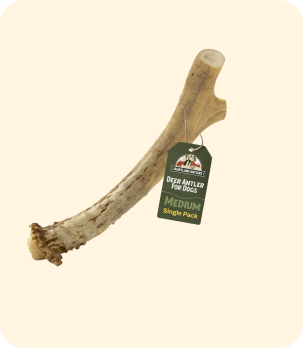
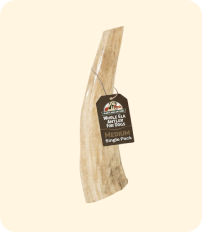
The right antler for a Doberman is large whole elk, Grade A, sized for substantial cross-section at both ends: the long narrow jaw concentrates bite force at antler tips, and Grade A elk's consistent density from center to tip is what prevents first-session tip failure that plagues lower-grade or tapered pieces.

Whole Elk Antler Chew - Extra Large (65-85 lbs)
Recommended for Dobermans
Whole Elk Antler Chew - Extra Large (65-85 lbs)
Lean working dogs with strong jaws — XL whole elk is the safe, lasting option.
Shop Whole Elk Antler Chew

Quick Answer: The right antler for a Doberman is selected for tip cross-section, not just total length. For a standard adult Doberman (65-90 lb), the correct antler is large whole elk, Grade A, selected for substantial cross-section at both ends. The Doberman's long, narrow jaw applies concentrated pressure at the antler's tips, not the middle. A Grade A large whole elk antler with adequate end-diameter typically lasts an adult Doberman 3-6 weeks at daily sessions. Heartland Antlers selects large whole elk for tip cross-section, not just total length.

You had a chew that held up fine for the other dog in the house. The Lab worked it for six weeks. The Boxer left it mostly intact after a month.

The Doberman finished it in one session. And not by pulverizing it the way a Pit Bull would. It broke at the tip. We've tracked this pattern in orders from Doberman owners for years: tip failure on the first session is nearly always a cross-section problem, not a grade problem.

For a standard adult Doberman (65-90 lb), the correct antler is large whole elk, Grade A, sized for substantial cross-section at both ends. That is the Doberman pattern. Not the most powerful chewer on paper, but the one that finds the endpoint, applies sustained pressure, and defeats the chew from the outside in.

Customers with Dobermans consistently describe the same failure pattern: the antler holds up through steady sessions, then gets finished in one concentrated burst when drive is high. After working with Doberman owners, we've found the endpoint-pressure jaw style is the key variable. The dog does not grind across the surface. It finds the hardest line of attack and focuses there. Grade A elk holds that contact point where lower-grade material does not.

The Doberman Chew Profile: Endpoint Pressure Jaw

The Doberman jaw is long and narrow. Precision-built. Engineered for reach and grip, not crushing.

Weight: 60-100 lb

Jaw type: Scissor bite, long and narrow. Strong bite force, but the geometry is the key factor. The Doberman generates significant pressure at whatever endpoint it grips. It is not built like a wide-jawed crusher. It is built like a precision instrument.

Chew style: Methodical and patient. A Doberman does not attack a chew randomly. It works it like a project, returning to the same spot, the same angle, the same contact point. And that contact point is usually the tip or the end of the piece, not the middle.

The pattern: a Doberman will often leave the mid-section of an antler in decent condition while the tips show serious wear or failure. That is not random. That is jaw geometry doing what it was designed to do. A Grade A large whole elk antler with adequate tip cross-section typically lasts an adult Doberman 3 to 6 weeks of daily chewing. A tapered or lower-grade piece under the same dog fails at the tips within the first session. Grade A elk antler maintains consistent density from center to tip, which is the structural requirement for a jaw that applies concentrated endpoint pressure.

Elk antler is 30-40% denser than deer at equivalent grades, and that density holds at the tips as well as the center. Grade A elk maintains consistent density from center to tip, unlike lower-grade antler where tip sections frequently have internal inconsistencies that the Doberman's concentrated endpoint pressure finds and exploits in the first session.

Why Endpoint Pressure Breaks Antlers at the Tips

This is the part most sizing guides miss.

A long, narrow jaw applied to the end of an antler creates a lever. The narrow jaw contacts a small surface area at the tip. The bite force concentrates on that point. The mechanical advantage at that contact area is disproportionately high relative to what the dog's body weight would suggest.

A wide jaw spreads force across a broad contact surface. A narrow jaw concentrates that same force into a much smaller zone. Applied to an antler tip, the pressure per square inch is higher than a heavier but wider-jawed dog would produce at the same point.

This is why Dobermans break antlers at the tips. The antler's cross-section at the endpoints is narrower. The density is lower. And the Doberman is applying concentrated pressure directly to those weaker zones.

The fix is not simply buying a longer antler. It is buying an antler with substantial cross-section diameter at both ends, not just in the middle. A large whole elk antler with good end-diameter absorbs that focused pressure. An antler that tapers sharply at the tips gives the Doberman a mechanical advantage it will use.

Grade A matters here as much as size. Grade A elk has consistent density from center to tip. Lower grades have more variation, and that variation will yield to the Doberman's pressure before the end of the first session.

Antler for a Doberman: What Size and Grade Does the Endpoint Jaw Need

These are the configurations that hold up. Not weight-chart recommendations. Configurations based on jaw geometry and endpoint chew focus.

Standard adult Doberman (65-90 lb): Large whole elk, Grade A. Sized for full cross-section at both ends, not just the middle diameter. This is the starting configuration for most adult Dobes.

Performance, working, or Doberman over 90 lb: XL whole elk, Grade A. If your dog is over 90 lb, in protection sport, or worked through a large whole elk in under two weeks, go XL.

Doberman under 10 months: Split deer, supervised. Adult teeth are still forming. Split gives the marrow access without the hardness pressure on a developing bite.

Senior Doberman or dog with worn teeth: Split elk. Keeps the dog engaged without putting full endpoint pressure on teeth that have taken years of wear.

Elk vs. Deer Antler for a Doberman

Short answer: elk for adults.

Deer antler is lower density than elk. The endpoint pressure a Doberman applies will find the low-density failure points in deer antler faster than in elk. What takes a Lab six weeks to work through on a deer antler, a Doberman can break at the tip in a single session.

Grade A elk handles the concentrated endpoint pressure. Deer, even Grade A, does not. The density difference between elk and deer at the tip cross-section is what separates a chew that holds from a chew that splinters in the first session.

Split deer remains a reasonable option for puppies under 10 months, where the goal is marrow access rather than chew duration. But for any adult Doberman, elk is the correct call.

How to Read the First Session

The first session tells you whether the fit is right. Watch the dog for at least 20 minutes.

What good looks like: The dog is engaged, working the antler methodically. At the end of the session, the antler is the same basic shape it started. Surface wear is visible but the structure is intact, including at the tips.

What means wrong fit: Tip damage. A noticeably shorter piece. Any sharp edges developing at the endpoints. If the tip shows structural failure while the mid-section looks fine, the cross-section at the ends was too narrow. Go up one size and confirm Grade A.

What means try split: The dog sniffs it, works it for a few minutes, and walks away. Some Dobes are marrow-driven more than chew-driven. Split elk provides the marrow reward while still giving density and duration.

The Chew Graveyard Reality

Doberman owners know this scene. You buy a chew rated for a dog twice the size. You hand it over. You come back and it is in pieces. Not because the dog is the most powerful chewer alive, but because it found the weakest point and worked it with patience and geometry.

The bully stick graveyard. The rubber toy graveyard. The "it looked like it would hold up" chew that did not.

Doberman owners who have been through the chew graveyard with a serious chewer know what tip failure looks like: a piece that was fine in the middle, broken at both ends. Not destroyed, just defeated at its weakest points. That is the endpoint pressure pattern. Grade A whole elk antler sized for tip cross-section is built specifically to hold against that approach.

A Grade A large whole elk antler, correctly sized for endpoint cross-section, typically lasts an adult Doberman 3 to 6 weeks with daily chewing. That depends on the individual dog's intensity and how often you rotate the chew. But it holds up to the endpoint pressure pattern in a way that most chews do not.

The right fit is a chew that works with what the Doberman's jaw does. Not against it.

Doberman Antler Size and Cut Reference

Dog Weight Recommended Antler Duration
Standard adult Doberman 65-90 lb Large whole elk, Grade A 3-6 weeks
Working or large Doberman 90+ lb XL whole elk, Grade A 4-8 weeks
Doberman puppy Under 10 months Split deer, supervised Varies
Senior Doberman Any Split elk, Grade A 4-9 weeks

Find the Right Fit for a Doberman

Large whole elk, Grade A, for most adult Dobermans. XL if your dog is over 90 lb or working.

Read these next:

Shop Now

Frequently Asked Questions

What size antler for a Doberman?

Large whole elk, Grade A, for most adult Dobermans (65-90 lb). XL whole elk for dogs over 90 lb or working dogs. The key sizing factor for a Doberman is not just overall length or middle diameter. The cross-section at both ends needs to be substantial enough to absorb the endpoint pressure the Doberman's long, narrow jaw generates.

Are antlers safe for Dobermans?

Yes, with correct fit and grade. The specific risk for a Doberman is antlers with narrow, tapered tips. The breed's jaw geometry concentrates force at the endpoint, which can cause a tip to fracture on an undersized or low-grade piece. Grade A whole elk in the right size manages this risk. Avoid deer antler for adults, and retire any piece once it reaches molar width.

Elk or deer antler for a Doberman?

Elk for adults. Deer antler is lower density, and the endpoint pressure a Doberman applies will find the failure points in deer faster than in elk. Grade A elk maintains consistent density from center to tip, which is what you need against a jaw that works the ends systematically.

Why does my Doberman break antlers at the tips?

Because the Doberman's long, narrow jaw applies concentrated pressure at the endpoint of whatever it bites. A narrow jaw on a tapered antler tip creates a mechanical advantage that is disproportionate to body weight. The tip's smaller cross-section means less material absorbing more concentrated force. Sizing to ensure substantial endpoint diameter, not just middle diameter, addresses this directly.

How long does an antler last for a Doberman?

A Grade A large whole elk antler typically lasts an adult Doberman 3 to 6 weeks with daily chewing. If the antler shows tip failure or is gone in one session, the grade was wrong, the size was wrong, or both. Go up one size and confirm Grade A. The right fit holds up to the endpoint-use chew pattern.

Schema (do not paste into Shopify body_html)

Frequently Asked Questions

What size antler for a Doberman?

Large whole elk, Grade A, for most adult Dobermans (65-90 lb). XL whole elk for dogs over 90 lb or working dogs. The key sizing factor for a Doberman is not just overall length or middle diameter. The cross-section at both ends needs to be substantial enough to absorb the endpoint pressure the Doberman's long, narrow jaw generates.

Are antlers safe for Dobermans?

Yes, with correct fit and grade. The specific risk for a Doberman is antlers with narrow, tapered tips. The breed's jaw geometry concentrates force at the endpoint, which can cause a tip to fracture on an undersized or low-grade piece. Grade A whole elk in the right size manages this risk. Avoid deer antler for adults, and retire any piece once it reaches molar width.

Elk or deer antler for a Doberman?

Elk for adults. Deer antler is lower density, and the endpoint pressure a Doberman applies will find the failure points in deer faster than in elk. Grade A elk maintains consistent density from center to tip, which is what you need against a jaw that works the ends systematically.

Why does my Doberman break antlers at the tips?

Because the Doberman's long, narrow jaw applies concentrated pressure at the endpoint of whatever it bites. A narrow jaw on a tapered antler tip creates a mechanical advantage that is disproportionate to body weight. The tip's smaller cross-section means less material absorbing more concentrated force. Sizing to ensure substantial endpoint diameter, not just middle diameter, addresses this directly.

How long does an antler last for a Doberman?

A Grade A large whole elk antler typically lasts an adult Doberman 3 to 6 weeks with daily chewing. If the antler shows tip failure or is gone in one session, the grade was wrong, the size was wrong, or both. Go up one size and confirm Grade A. The right fit holds up to the endpoint-use chew pattern.

Back to blog