
Quick answer: A Dalmatian's antler choice needs separate checks for diet, dental health, product fit and chewing behavior. One ingredient does not prove that a chew fits a urinary diet or is low in purines. Breed stamina also does not establish a safe cut, size or session length. Discuss any prescribed diet with the veterinarian before adding a chew.
Heartland can explain its antler species, cuts and current product details. We cannot certify an antler as appropriate for a specific medical diet or promise that a large whole elk piece suits every Dalmatian.
Keep dietary questions separate from ingredient count
VCA explains that Dalmatians can have a genetic tendency related to urate bladder stones and that affected dogs may need a specific dietary plan. Your dog's history and the clinician's advice determine the relevant restrictions. A breed label alone does not diagnose a condition.
An ingredient list is useful, but it answers only one part of the question. It does not measure how much material a dog consumes or establish the item's purine content. We do not have product-specific testing here that supports calling antler a low-purine or urinary-safe option.
If your dog has a therapeutic diet, give the veterinarian the exact chew description, ingredient information and manufacturer directions. Ask whether that item is permitted. Keep approved treats and chews consistent with the plan. Do not introduce an extra simply because it is naturally shed or has no added flavor.
Straining to urinate or blood in the urine requires prompt veterinary advice. Inability to pass urine is an emergency. A chew change is not a treatment for urinary signs. These symptoms should not be attributed to a product without assessment.

Check the exact dog and product
Use current weight, mouth health and observed behavior rather than a fixed breed table. A long muzzle does not prove that whole antler is the right shape, and endurance on a walk does not predict chewing force. A dog can be energetic and still have a preference for a gentle food task.
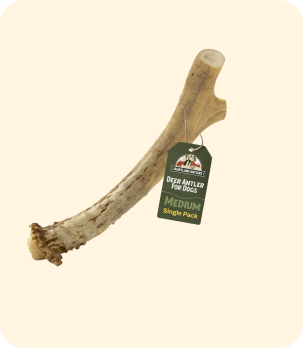
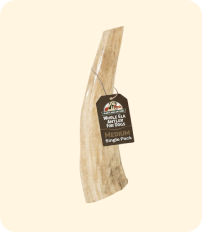
Heartland's range includes whole deer, whole elk and split elk. A lengthwise split reveals the interior but leaves hard material. The range does not include split deer. Check the product's actual dimensions and current size guidance before making a purchase decision.
| Check | Question to ask |
|---|---|
| Diet | Does the individual care plan permit this exact item? |
| Teeth | Is there pain, previous damage or recent dental treatment? |
| Fit | What are the product dimensions and the dog's current weight? |
| Behavior | Does the dog crush, break or try to swallow objects? |
| Directions | What supervision, care and retirement guidance applies? |
AAHA identifies tooth damage and swallowed pieces among chew risks. Natural origin, a grade label or active supervision does not remove those risks. Puppies, seniors and dogs with a painful mouth need individual alternatives rather than an age-based hard-chew recommendation.

Watch condition instead of a lifespan promise
We cannot give a reliable four-to-ten-week antler lifespan for all Dalmatians. Product condition, the individual piece and how the dog uses it matter. Nor can a breed's energy level justify long sessions or infrequent checks.
If an antler is included in the dog's plan, stay close enough to observe the mouth and object throughout use. Inspect before, during and after access. Stop for cracks, sharp edges, loose material, a piece that could be swallowed or repeated forceful biting. Stop for discomfort too. A piece can become unsuitable before it looks heavily worn.
Use a calm trade to remove an item. Store it out of reach, follow care directions and keep each dog's items separate. If a dog guards an object or rushes because another dog is nearby, review the setup and seek appropriate behavior guidance.
Record the reason for retirement instead of trying to reach a promised number of weeks. An item that needs to be removed early has reached the end of suitable use. Contact a veterinarian about suspected tooth damage or a swallowed piece, and get urgent help for choking or breathing difficulty.

Build a flexible enrichment routine
A Dalmatian's routine can include sniffing, learning, movement and rest. Match the activity to the individual dog's current health and response. A harder chew is not a substitute for all of those needs.
Food puzzles can use part of an approved daily ration if the care plan allows them. Short cue practice and scent tasks can offer a different kind of engagement. Introduce one manageable task, observe the response and let the dog leave. Avoid making an activity more difficult just because the breed is described as athletic.
New loss of interest, difficulty eating or a change in normal behavior deserves attention. Do not assume the problem is insufficient flavor or the wrong antler grade. Keep a short note of the change so the care team has useful information if a check is needed.
The practical aim is a routine the dog can use comfortably and the owner can supervise. It may include no antler at all. Product information helps with a choice; it does not replace the dog's diet and health plan.

Frequently asked questions
Are antlers low in purines?
We do not have product-specific evidence here to make that claim. One ingredient or bone composition does not establish suitability for a urinary diet.
Does every adult Dalmatian need large whole elk?
No. Check the individual dog's weight, teeth, diet and behavior, plus current product dimensions and directions.
Is split antler suitable for a puppy?
A split cut still contains hard material. Ask the veterinarian about options for that puppy's developing mouth rather than using a fixed age rule.
Does one ingredient mean allergy-safe?
No. Follow the veterinarian's permitted list during a diet trial or other prescribed feeding plan.
Read the antler safety guide and size guide. For product facts, contact Heartland or view the current catalog.