
A Beagle's interest in smells is useful when planning enrichment. It does not identify a best antler cut or establish that the dog has a gentle bite. Start with your own dog's teeth, size and behavior, then decide whether a hard chewing object belongs in the routine.
The AKC describes the Beagle's hunting and pack background. That history can suggest activities to try. It cannot provide a tested antler lifespan, a fixed chewing force or a universal product size.
Use scent interest to plan the activity
A sniffing walk or simple search can give a Beagle a way to explore without needing to bite a hard object. Keep outdoor activity controlled with a suitable lead or secure area. Set up a food search where the dog will not also pick up rubbish or small objects.
Start with easy-to-find food from the measured daily allowance, if it fits the dog's diet. Increase the search area only when the dog is comfortable with the activity. The aim is an enjoyable task, not a competition to keep the dog occupied for a set time.
A Beagle that ignores an antler does not necessarily need its scent “activated.” Do not assume that a whole cut is an unsolvable puzzle or that switching to a split cut will guarantee engagement. The dog may simply prefer another activity.
In a home with several dogs, separate food searches and valued-item activities when competition is possible. Pack ancestry is not evidence that all Beagles comfortably share resources.

Review teeth, size and actual chewing behavior
Ask the veterinarian about hard materials, especially if the dog has damaged teeth, mouth discomfort or a history of swallowing objects. AAHA warns that antlers can fracture teeth. A smaller breed is not exempt from this risk.
Use the current weight and the actual product label rather than buying “medium for every Beagle.” Look at the individual piece and how the dog uses objects. A package label does not establish dental suitability.
Do not infer swallowing intent from carrying an item to a different place, or infer safety because the dog settles quickly. These actions need context. Attempts to take the whole piece into the mouth, hard biting or item damage are reasons to stop and reassess.
Do not put the item into the mouth to test fit. Check it away from the dog. If it is small enough to swallow, cracked or sharp, retire it where pets cannot retrieve it.

Compare the cuts without a breed formula
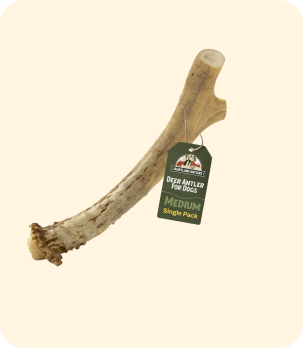
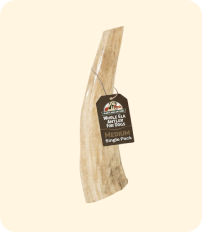
Heartland offers whole deer, whole elk and split elk. Split deer is not part of this range. A split elk piece exposes the interior, but the hard exterior remains.
| Product fact | What it does not establish |
|---|---|
| Whole or split cut | That a Beagle's teeth can tolerate the material. |
| A size category | That every Beagle falls in that category. |
| Grade or natural origin | A guarantee against fracture or swallowing hazards. |
| Past interest in one piece | A predictable number of weeks for the next piece. |
There is no required progression from deer to elk or from split to whole. Do not use a harder item to extend an activity that the dog completes quickly. A suitable flexible toy, measured-food activity or interactive session may meet the goal better.
Check the catalog for exact product details. Our cut comparison explains material differences without assigning a cut from breed alone.

Manage valued items and food rewards
Count food-search portions, training rewards and meal extras together. One shared container for the day's allowed rewards can help caregivers avoid adding food repeatedly. Do not assume an antler supplies a verified zero-calorie alternative.
Stay present during any chew activity. A few uneventful sessions do not create permission for unattended antler access. Inspect the item before and after use and stop if its condition or the dog's response causes concern.
Plan collection before the activity starts. If the dog guards an item, keep people away and get help with a safe plan. Do not chase a Beagle or reach into its mouth to recover a valued object. Report a suspected swallowed piece to the veterinarian.
For puppies, seniors or dogs after dental care, follow individual guidance. A smaller split piece is not an established way to protect developing or sensitive teeth.

Frequently asked questions
What is the best antler for a Beagle?
There is no universal best cut. Review the individual dog, hard-material risk and the actual product before choosing.
Does Heartland sell split deer for Beagles?
The range described here is whole deer, whole elk and split elk. Check the current catalog for available cuts.
Will a split antler keep a scent hound interested?
Interest varies. Exposing the interior does not guarantee engagement or establish safety.
How many weeks will it last?
There is no verified Beagle-specific lifespan in this guide. Condition and behavior determine when to stop use.
Read when to retire a worn piece and what to ask your veterinarian. For catalog questions, contact Heartland.