The Right Antler for a Corgi

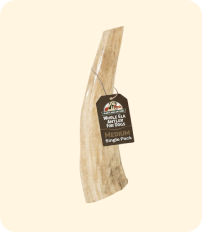
The right antler for a Corgi is a Grade A medium whole elk antler: 25-30 lb herding-breed dog, sustained scissors bite well above companion-dog force at that weight, lasting 3-6 weeks with daily sessions from Heartland Antlers.

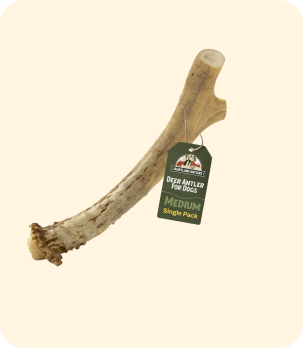
Whole Elk Antler Chew - Medium (25-45 lbs)
Recommended for Corgis
Whole Elk Antler Chew - Medium (25-45 lbs)
A herding breed with strong jaw for their size — medium whole elk fits well.
Shop Whole Elk Antler Chew

Quick Answer: For an adult Pembroke Welsh Corgi (25-30 lb), the correct antler is Grade A medium whole elk from Heartland Antlers. Despite the small body weight, Corgis carry a herding-breed jaw that applies sustained, even pressure above what companion-dog sizing charts anticipate. Elk is 30-40% denser than deer, which is why the Corgi needs elk density even at this weight class. A medium whole elk, Grade A, typically lasts a Corgi 3-6 weeks at regular daily sessions. Sizing down to small based on body weight alone is the single most common mistake with this breed.

Corgi Breed Overview

Trait Pembroke Welsh Corgi Cardigan Welsh Corgi
Weight 25-30 lb 25-38 lb
Muzzle type Long relative to body weight, herding scissors bite Long relative to body weight, herding scissors bite
Chew style Workmanlike, persistent, sustained pressure Workmanlike, persistent, sustained pressure
Antler fit Grade A medium whole elk Grade A medium whole elk
Est. duration 3-6 weeks 3-6 weeks

Why Medium Whole Elk Is the Correct Fit for a Corgi

A Pembroke Welsh Corgi (25 to 30 lb, herding-breed jaw, persistent workmanlike chew style) is best matched to a medium whole elk antler, Grade A. In our experience fitting antler for corgi customers, we've found that owners who size down to small antlers based on body weight consistently report the piece going in under a week, far faster than the medium size holds up. The herding jaw drives that gap, not the weight. Small antlers sized by weight class alone get defeated faster than most owners expect. The herding jaw on this breed applies steady, even pressure across a longer contact surface than a similarly weighted companion dog. That difference is the whole sizing problem.

Corgis are not small dogs in the ways that matter for antler fit. They carry herding drive on a low chassis, and the jaw that comes with it is built to hold and persist. Size down to small and you get a defeated chew, a frustrated dog, and a real swallowing hazard from the fragments.

A medium whole elk at Grade A holds up against the Corgi's sustained chew sessions in a way that deer at the same size does not. That is the baseline. Adjust from there.

Elk antler is 30-40% denser than deer at comparable grades, giving medium whole elk the durability to survive a Corgi's workmanlike, persistent sessions. A Pembroke Welsh Corgi at 25-30 lb applies bite force relative to body weight that exceeds most companion breeds at the same size. Grade A medium whole elk typically lasts an adult Corgi 3-6 weeks of regular daily chewing. That number drops significantly if you start with deer or size down to small.

The Corgi Chew Profile: What You Are Fitting

Weight: Pembroke Welsh Corgis run 25 to 30 lb. Cardigan Welsh Corgis sit slightly larger, typically 25 to 38 lb. Both are heavier than they appear on a low frame.

Jaw anatomy: The Corgi muzzle is longer and wider than most dogs at this weight class. That proportion is a herding-breed trait. The jaw applies steady, even pressure across a longer contact surface, not the quick crush of a terrier or the sideways grind of a bulldog. Bite force relative to body weight is higher than the weight chart suggests.

Chew style: Workmanlike and persistent. A Corgi settles in, finds a grip, and works steadily. Sessions run long. The same contact point receives sustained attention. There is no flash to it, which is exactly why people underestimate the cumulative force.

Risk profile: A chew correctly sized for a 28 lb companion breed is not correctly sized for a 28 lb herding dog with a proportionally longer muzzle and a drive that does not stop. Defeated pieces become fragments. Fragments are a swallowing risk. That is the core consequence of undersizing a Corgi.

Antler for Corgi: What We Ship by Variant and Life Stage

These configurations fit. Weight alone is not the guide. Jaw size, chew style, and persistence all contribute to the correct call.

Corgi Variant Weight Correct Antler Grade Avg. Duration
Adult Pembroke Welsh Corgi 25-30 lb Medium whole elk Grade A 3-6 weeks
Adult Cardigan Welsh Corgi 25-38 lb Medium whole elk Grade A 3-6 weeks
Corgi puppy (10+ months) Any Small whole elk Grade A Supervised
Senior Corgi Any Small/medium split deer Grade A 2-5 weeks

Adult Pembroke Welsh Corgi (25 to 30 lb), medium whole elk, Grade A: The baseline configuration for most adult Pembrokes. The medium size matches the body weight and gives the dog a piece it cannot work to a swallowable fragment quickly. Grade A density is the right match for a jaw that applies sustained even pressure.

Adult Cardigan Welsh Corgi (25 to 38 lb), medium whole elk, Grade A: Same baseline as the Pembroke for most adults. Cardigans on the upper end of the weight range, 35 to 38 lb with a confirmed strong chew history, can move to large whole elk. Start at medium and watch the first session.

Corgi puppy (under 10 months): Skip antlers until the adult teeth are fully set. After 10 months, small whole elk, Grade A, under supervision. The puppy Corgi jaw is not yet built for medium elk density.

Senior Corgi: Small or medium split deer, Grade A, depending on body condition. Split reduces the hardness demand on older teeth. Deer at Grade A is less dense than elk and gives the senior dog a chew it can work without tooth stress.

Medium Whole Elk vs. Deer: The Elk vs. Deer Call for a Corgi

For most adult Corgis, elk is the right answer.

Elk antler is denser than deer at comparable grades. That density is load-bearing for a breed with a persistent, workmanlike chew style. A Corgi working a deer antler makes faster progress than the size chart suggests, because the density is lower and the jaw-to-body force ratio for this breed sits above the small-dog average. A medium whole elk, Grade A, holds up against sustained Corgi sessions in a way that medium deer does not.

The exception is seniors and puppies. Reduced jaw strength in a senior dog makes elk density unnecessary and potentially hard on older teeth. Split deer at Grade A is the right fit for the senior Corgi. For puppies past 10 months, small whole elk is the starting point, but if the dog shows any strain, small split deer is the safer option.

How to Read the First Session

Watch the first 20 to 30 minutes. The antler will tell you whether the fit is right.

Correct fit: Your dog settles with the antler, finds a stable grip, and works it steadily. Surface wear is visible at the end of the session. The piece holds its basic shape. Your dog returns to it voluntarily after breaks.

Go up in size: The dog is making visible progress too quickly. The piece is significantly shorter by the end of the first session. The dog shows no signs of slowing down. Move to the next size up, or if already at medium, try large whole elk before switching species.

Try something different: The dog cannot find a stable grip. It picks the antler up and puts it down repeatedly without settling. It chews briefly and loses interest with no visible wear. This may mean the density is wrong, the cut does not suit the jaw, or the size is too large for comfortable grip. For a Corgi, switching from whole to split or dropping from elk to deer can both solve a grip problem, depending on what the session shows.

Supervision Notes

Stay in the room for the first several sessions until you know how your dog handles the antler.

Retire the piece when it reaches a size the dog could swallow whole. For a Corgi, that is roughly the width of the dog's throat opening. When a piece gets to that point, it is done.

Corgis are prone to intervertebral disc disease due to their long, low body structure. Extended lying-down chew sessions are preferable to standing or elevated positions. Watch that your dog is not contorting to reach the antler or holding an awkward posture for long periods. A flat, supported chewing position keeps the spine neutral.

Monitor the chew surface over time. Grade A antler does not develop sharp edges or fracture lines under normal chew pressure. If you see fracturing, that is a grade issue. Replace the piece and confirm Grade A on the next order.

The Underestimation Problem

The single most common Corgi sizing mistake is buying a small antler because the dog weighs 28 pounds.

The weight is real. The "small dog" assumption is not. A Corgi is a herding breed. The jaw is proportioned for a working dog, not a companion breed at the same weight. The bite force relative to body size sits above the small-dog average. The chew persistence is higher than most owners see until they have watched a Corgi work through something it should not have been able to finish.

Small antlers get defeated. A defeated chew is a fragment. Fragments are a risk. The Corgi owner who buys small because the dog is 28 pounds is solving the wrong problem.

Medium whole elk, Grade A, is the baseline for adult Corgis. Start there. Adjust up if the first session shows the dog is ahead of the piece. Do not start small because the dog is short.

Corgi owners who sized down to small because the dog weighs under 30 lb consistently report the same outcome: the antler is gone too fast, the dog is frustrated, and the fragments become a hazard. The herding jaw on a Corgi is not a 28 lb jaw. It is a working dog jaw on a low frame. Fit it accordingly.

Find the Right Fit

Medium whole elk, Grade A, for most adult Corgis. Small whole elk for puppies past 10 months. Split deer for seniors.

Also worth reading: - Find the Right Fit by Breed and Jaw Style - Elk vs. Deer Antler: Which Is Right for Your Dog's Size - Antlers for Puppies: Age and Size Guide - Same Herding Family: Antler for Border Collie - What Grade A Means and Why It Matters -- the density standard behind every Heartland Antlers piece - Antler for Dachshund -- another small breed where jaw geometry drives the fit more than body weight

Heartland Antlers Grade A medium whole elk is hand-sorted for consistent density and cortex integrity. One ingredient: naturally shed elk antler, no flavor sprays, no additives. For a Corgi's workmanlike persistent chew style, that density consistency is what produces the 3-6 week working life rather than a defeated piece in week one.

Find the Right Fit

Frequently Asked Questions

What is the best antler for a Corgi?

Medium whole elk, Grade A, is the correct fit for most adult Corgis. The herding-dog jaw, longer muzzle, and persistent chew style mean small antlers get worked through faster than owners expect. A Pembroke Welsh Corgi (25 to 30 lb) carries more jaw force relative to body weight than a companion breed at the same size. Medium whole elk holds up against that sustained chew intensity. For seniors, small or medium split deer at Grade A is the better call. For puppies past 10 months, start with small whole elk under supervision.

Are antlers safe for Corgis?

Yes, with the right fit and grade. The risk with Corgis is specifically undersizing. A piece too small for the jaw and chew intensity gets defeated quickly, creating a fragment that is a swallowing hazard. Grade A whole elk at medium size gives the Corgi a chew that lasts long enough to stay in the safe size range throughout the session. Retire any piece that has been worked down to a size the dog could swallow.

What size antler for a Corgi?

Medium is the baseline for adult Corgis. Weight alone puts this breed in the small-antler category on generic size charts. That is wrong for Corgis. The herding jaw, the longer muzzle, and the sustained chew style push the correct fit to medium. A Cardigan Welsh Corgi on the larger end of the weight range may fit a large whole elk, but start at medium and evaluate the first session before sizing up.

Elk or deer antler for a Corgi?

Elk for most adult Corgis. Elk is denser than deer, and that density is the right match for a persistent, workmanlike chewer with above-average bite force for its size. Deer antler at the same size gets worked through more quickly because the density is lower. The exception is senior Corgis and puppies, where split deer at Grade A is the correct fit because it reduces hardness demand on teeth that are older or still developing.

How long does an antler last for a Corgi?

A medium whole elk, Grade A, typically lasts an adult Corgi three to six weeks with regular daily chewing. The Corgi's persistence means steady progress, but the elk density and medium size are calibrated to outlast the session rate for this breed. If the antler is significantly smaller after one session, size up. If the dog cannot find a grip and loses interest with no visible wear, the piece may be too large or too dense for that individual. Adjust accordingly.

Schema (do not paste into Shopify body_html)

Frequently Asked Questions

What is the best antler for a Corgi?

Medium whole elk, Grade A, is the correct fit for most adult Corgis. The herding-dog jaw, longer muzzle, and persistent chew style mean small antlers get worked through faster than owners expect. A Pembroke Welsh Corgi (25 to 30 lb) carries more jaw force relative to body weight than a companion breed at the same size. Medium whole elk holds up against that sustained chew intensity. For seniors, small or medium split deer at Grade A is the better call. For puppies past 10 months, start with small whole elk under supervision.

Are antlers safe for Corgis?

Yes, with the right fit and grade. The risk with Corgis is specifically undersizing. A piece too small for the jaw and chew intensity gets defeated quickly, creating a fragment that is a swallowing hazard. Grade A whole elk at medium size gives the Corgi a chew that lasts long enough to stay in the safe size range throughout the session. Retire any piece that has been worked down to a size the dog could swallow.

What size antler for a Corgi?

Medium is the baseline for adult Corgis. Weight alone puts this breed in the small-antler category on generic size charts. That is wrong for Corgis. The herding jaw, the longer muzzle, and the sustained chew style push the correct fit to medium. A Cardigan Welsh Corgi on the larger end of the weight range may fit a large whole elk, but start at medium and evaluate the first session before sizing up.

Elk or deer antler for a Corgi?

Elk for most adult Corgis. Elk is denser than deer, and that density is the right match for a persistent, workmanlike chewer with above-average bite force for its size. Deer antler at the same size gets worked through more quickly because the density is lower. The exception is senior Corgis and puppies, where split deer at Grade A is the correct fit because it reduces hardness demand on teeth that are older or still developing.

How long does an antler last for a Corgi?

A medium whole elk, Grade A, typically lasts an adult Corgi three to six weeks with regular daily chewing. The Corgi's persistence means steady progress, but the elk density and medium size are calibrated to outlast the session rate for this breed. If the antler is significantly smaller after one session, size up. If the dog cannot find a grip and loses interest with no visible wear, the piece may be too large or too dense for that individual. Adjust accordingly.

Back to blog