
You read ingredient labels on your own food. It makes sense you read them on your dog's chews too.

So when you flip over a bag of bully sticks or yak chews and try to figure out what's actually in there - or why the ingredient list on rawhide is somehow longer than the ingredients in your lunch - you're asking exactly the right questions.
Here's what you may not have considered: the chew with the shortest possible ingredient list isn't a specially formulated product. It's an antler. The ingredient is the antler. That's it. Nothing added, nothing processed out, nothing removed except a quick clean and cut.
This guide breaks down what "single ingredient" actually means across the major chew categories, why naturally shed antlers are the most sustainable option in the category, and which antler is right for your dog.

What Is a Single-Ingredient Dog Chew?
A single-ingredient dog chew is exactly what it sounds like: a chew where the ingredient list contains one item. No preservatives. No flavor enhancers. No processing agents. No binders or coatings.
The reason this matters goes beyond label-reading preference. For dogs with food sensitivities or allergies, every additional ingredient is a potential trigger. Grain, gluten, dairy proteins, beef proteins, artificial flavorings - any of these can cause digestive upset, skin reactions, or ear issues in sensitive dogs.
Single-ingredient chews eliminate that variable entirely. You know exactly what your dog is putting in their body because there's only one thing to know.
For allergy-prone breeds - including Retrievers, Bulldogs, German Shepherds, and Pit Bull types - this is not a minor perk. It's the whole point.
Are Antler Chews Really Single Ingredient?
Yes. And they may be the most literally single-ingredient chew available.
When you buy a naturally shed antler from Heartland Antlers, the ingredient list reads: "elk antler" or "deer antler." That's the complete list. The antler is cleaned to remove debris from the forest floor, cut to size, and shipped. No dehydration, no heat treatment, no preservatives, no coatings, no odor-reduction chemicals.
Compare that to the other options that often carry a "single ingredient" claim:
| Chew Type | Actual Ingredients | Processing Level | Animal Harm? | Allergens | USA-Made Option? |
|---|---|---|---|---|---|
| Deer/Elk Antler | Antler | None - cleaned + cut | No (naturally shed) | None | Yes (Heartland Antlers) |
| Bully Stick | Beef pizzle | Dehydrated; some treated | Yes (slaughterhouse) | Beef | Varies by brand |
| Yak Chew | Yak milk, cow milk, salt, lime | Boiled + dried + smoked | Dairy process | Dairy | No (Himalayan region) |
| Rawhide | Cowhide | Chemical processing (lye, bleach, hydrogen peroxide) | Yes (slaughterhouse) | Beef/chemical | Varies |
| Nylabone | Nylon, artificial flavoring | Petroleum-based manufacturing | No | Synthetic compounds | Yes |
Yak chews frequently market themselves as a natural chew, but the standard formulation is yak milk, cow milk, salt, and lime juice - a minimum of three or four ingredients, processed through boiling, drying, and smoking. They're not a single-ingredient product.
Bully sticks are made from beef pizzle, which is genuinely one animal-derived ingredient - but the dehydration process often involves additional treatments, and the beef source itself is a common allergen. For a dog with a beef sensitivity, a bully stick is not the clean-label solution.
Rawhide is in a category of its own. Conventional rawhide processing uses sodium sulphide, bleach, and hydrogen peroxide to clean and preserve the hide. The finished product may look like a natural chew, but the processing chain is anything but. We covered this in detail in our rawhide safety guide.

What Does "Naturally Shed" Mean for a Dog Chew?
Elk and deer shed their antlers every year. This is a normal biological process - not an injury, not a result of farming, and not something that requires human intervention to trigger.
Each spring, a combination of hormonal changes and increasing daylight causes the velvet (the soft skin that feeds antler growth through the winter) to dry out. The antlers loosen from the pedicle - the attachment point on the skull - and fall off, usually within a day or two. The animal walks away unaffected. A new set of antlers begins growing almost immediately.
Shed antlers are collected by hand from forest floors across the Rocky Mountain West. The collectors - many of them out on foot during early spring - locate fresh sheds before other animals find them. The antlers are brought in, inspected, cleaned of any dirt or organic material, and cut to usable sizes.
No animals are trapped. No animals are restrained. No animals are harmed. The antler simply fell off, was collected, and ended up as a chew for your dog.
This is meaningfully different from every other major chew category. Bully sticks, rawhide, and yak chews all involve either slaughterhouse processing or active farming. Naturally shed antlers exist entirely outside that chain.
Are Antler Chews Eco-Friendly?
Of the major dog chew categories, naturally shed antlers have the lightest environmental footprint by almost every measure.
The sourcing footprint: Antlers are a renewable annual resource. Every elk and every deer produces a new set every year, and those antlers would otherwise decompose on the forest floor or be gnawed by rodents for the calcium. Collecting them creates no additional demand on animal populations and causes no habitat disruption.
The processing footprint: The antler supply chain is: collected from forest → cleaned → cut → packed → shipped. There is no chemical bath, no industrial drying process, no overseas manufacturing, and no multi-stage treatment. Compare this to:
- Bully sticks: Sourced from beef cattle slaughter (often in South America or Asia), dehydrated via high-heat industrial equipment, sometimes treated for odor reduction, packaged, and shipped internationally.
- Rawhide: Involves sodium sulphide soaking, bleaching, and hydrogen peroxide treatment in conventional processing - a significant chemical load before the product even reaches a retail shelf.
- Yak chews: Produced in the Himalayan region, boiled in large vats, dried, smoked, and shipped to North America. Multiple energy-intensive steps, plus long-haul international transport.
- Nylabones: Petroleum-based nylon formed through industrial polymer manufacturing. Non-biodegradable, contributing to the estimated 300 million pounds of pet toy and chew waste that enters landfills annually.
The waste footprint: The entire antler is used. The thickest sections become whole chews for large dogs. The thinner tip sections go to smaller dogs. Split cuts expose the inner marrow and create gentler chews for first-timers. There is no scrap, no off-cut waste, no by-product requiring disposal.
Antlers are also fully biodegradable. When your dog finally finishes one - which, depending on the chew type and the dog, can take weeks to months - any remaining fragment can go in the compost or yard rather than a landfill.
Best Single-Ingredient Chews for Dogs with Allergies
If your dog has a diagnosed food allergy or you're working through an elimination diet to find a trigger, the chew question matters as much as the food question.
Here's how the major chews stack up for allergy-prone dogs:
Antlers - lowest allergen risk. No beef, no dairy, no grains, no gluten, no artificial flavoring, no processing chemicals. Antlers are genuinely hypoallergenic for the vast majority of dogs. They're suitable for dogs on restricted protein diets, raw diets, and elimination protocols.
Yak chews - dairy allergen risk. Standard yak chews are made with yak milk and cow milk. Dairy protein (casein) is a recognized allergen for some dogs. If your dog reacts to dairy, yak chews are off the table despite their natural reputation.
Bully sticks - beef allergen risk. Bully sticks are made from beef. Beef is one of the most common protein allergens in dogs. If your dog has a beef sensitivity or is on a novel protein diet to identify allergens, bully sticks are not a safe chew. Some are also treated with natural or artificial odor-reduction compounds, adding another variable.
Rawhide - chemical processing risk. Beyond the beef protein issue, rawhide goes through a significant chemical treatment process in conventional manufacturing. Dogs with sensitivities to chemical residues or with compromised GI tracts have reported adverse reactions. See our full rawhide breakdown here.
An honest note on who antlers aren't for: Antlers are a hard chew. They are not appropriate for puppies under 6 months, dogs with existing dental fractures, or seniors with significantly worn teeth. For those dogs, a split elk antler (softer, marrow-exposed) may be a gentler option - but if there's any dental concern, consult your vet before introducing any hard chew.
What Makes Heartland Antlers Different?
Heartland Antlers is a veteran-owned brand built around a single standard: Grade A, naturally shed antlers, USA-sourced, no exceptions.
Grade A means the antlers are selected for density, integrity, and appropriate hardness for the stated size category. Not every shed antler that comes off a forest floor meets that standard - some are brittle from age, some show internal damage, some are undersized for their listed weight class. Grade A antlers are the ones that pass.
Every antler Heartland ships is naturally shed - collected after the annual shed cycle, never cut from a living animal. The sourcing is domestic: the Rocky Mountain West, not overseas. The processing is minimal: clean, cut, inspect, pack.
The veteran-owned foundation is not a marketing tag. It reflects a straightforward operating standard: know what you're selling, stand behind it, don't cut corners. That applies to every Grade A antler that ships.

Which Antler Is Right for Your Dog?
Not all antlers are the same hardness, and matching the right type to your dog makes the difference between a chew that lasts weeks and one your dog ignores after five minutes.
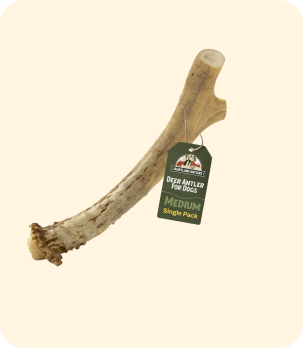
Deer antler is the densest and hardest option. It's the right choice for true power chewers - dogs who demolish bully sticks in under ten minutes, destroy rubber toys, and generally treat softer chews as a minor inconvenience. Breeds like Rottweilers, Pit Bulls, and working-line German Shepherds are typically deer antler candidates.
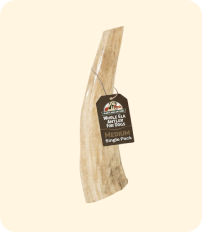
Whole elk antler is slightly softer than deer, making it a better fit for moderate-to-heavy chewers. Most medium and large dogs do well with whole elk. It's also a good option for dogs who haven't chewed antlers before but are clearly strong chewers based on their track record with other products.
Split elk antler is elk antler cut lengthwise to expose the inner marrow. The marrow scent is a strong engagement trigger for dogs who are new to antlers, and the exposed surface is softer than whole elk. Split elk is the right starting point for first-time antler dogs, gentler chewers, and dogs over 7 years old. It's also the go-to recommendation for dogs coming off softer chews like yak or bully sticks who need to work up to the harder options.
For full size-matching guidance - weight ranges, antler thickness by dog size, and how to tell if your dog is getting the right fit - see the Heartland size guide.
FAQ
Are antler chews good for dogs with food allergies?
Yes. Antler chews are grain-free, gluten-free, dairy-free, and free from beef proteins - the most common dog allergens. They contain no added flavoring, preservatives, or processing chemicals. For dogs with diagnosed food allergies or sensitivities, naturally shed antlers are one of the safest chew options available. The only dogs who should avoid antlers are very young puppies (under 6 months) and senior dogs with significant dental wear.
Are antler chews sustainable?
Yes. Naturally shed antlers are among the most sustainable pet products available. Elk and deer shed their antlers every year as part of their natural growth cycle - no animals are harmed, no farming is required, and no slaughterhouse processing is involved. The antlers simply fall in the forest and are hand-collected. Compared to bully sticks (slaughterhouse byproduct with chemical dehydration), rawhide (heavy chemical processing), or plastic toys (petroleum-based, non-biodegradable), antlers have the smallest sourcing and processing footprint of any major dog chew.
What is the most eco-friendly dog chew?
Naturally shed antler chews have the strongest eco-friendly profile of any popular dog chew. They require no animal slaughter, no chemical processing, no overseas manufacturing, and no plastic packaging. The entire antler is used - different cuts yield different products, so there is no waste. They are also fully biodegradable. For comparison, bully sticks and rawhide involve slaughterhouse sourcing and chemical treatment; yak chews require multi-stage boiling, drying, and smoking; Nylabones are petroleum-based nylon.
Are antler chews grain-free?
Yes. Antler chews contain no grain, no gluten, and no starchy fillers of any kind. The ingredient is the antler - nothing added. This makes them suitable for dogs on grain-free diets, raw diets, or elimination diets for allergy investigation.
Are bully sticks single ingredient?
Some bully sticks are marketed as single ingredient, but the reality is more complex. Most bully sticks are dehydrated beef pizzle - a high-heat drying process that can involve added preservatives or odor-reduction treatments depending on the brand. They are also sourced largely from non-US cattle and processed internationally. Antlers, by contrast, require no dehydration, no heat treatment, and no additives - they are cleaned and cut, full stop.
Is deer antler or elk antler better as a single-ingredient chew?
Both deer antler and elk antler are genuinely single-ingredient chews. The difference is density and difficulty. Deer antler is denser and harder - best for power chewers who blast through everything. Elk antler is slightly softer, making it a better fit for moderate chewers. Split elk antler is the softest option of the three: the antler is cut lengthwise to expose the inner marrow, making it easier to engage and ideal for first-time antler dogs, seniors, and gentler chewers. All three are Grade A, naturally shed, and USA-sourced at Heartland Antlers.
Ready to Try the Most Literal Single-Ingredient Chew?
If you want a chew where the ingredient list is the name of the product - and nothing else - naturally shed antlers are the answer.
- Shop Deer Antler Chews - densest option, built for power chewers
- Shop Split Elk Antler Chews - marrow-exposed, the right starting point for first-timers
- Find the right size for your dog - weight-based size guide
Free shipping on orders over $50. Grade A. Naturally shed. No chemicals.
Related reading:
- Antler Chew vs. Yak Chew - Which Is Right for Your Dog?
- Are Antler Chews Safe for Dogs?
- Is Rawhide Bad for Dogs?
- Split vs. Whole Elk Antler - Which Should You Buy?