
Antlers and raw bones can damage teeth. Raw bones also require a food-safety assessment. Neither natural origin nor a soft marrow center establishes that the hard outer material is safe to chew.
This antler vs raw bone guide covers anatomy, dental risks, handling and buying questions. It does not report a controlled test of lifespan, fracture rates or bacterial load. Heartland sells antlers, but this is not evidence of safety superiority.
Antler, raw bone and rawhide are different
An antler is bone grown by a member of the deer family. A raw marrow bone is an uncooked bone, often sold with marrow or attached tissue. Rawhide is animal hide, not bone. Check the antler vs rawhide guide if that is the comparison you need.
| Check | Antler | Raw bone |
|---|---|---|
| Material | Antler bone, sold whole or split | Uncooked bone; tissue and marrow vary |
| Dental risk | Hard material can fracture teeth | Hard material can fracture teeth |
| Breakage | Do not assume it cannot break or splinter | Do not assume raw bone cannot break or splinter |
| Handling | Follow product care and inspect condition | Raw animal material needs food-safety controls |
| Duration | No fixed lifespan verified here | No universal safe storage or chewing period given here |
The National Park Service describes antler anatomy. Anatomy is useful for identifying material. It cannot establish chewing safety or nutrition.

Both retain hard material
Cornell advises avoiding antlers, hooves and bones because they can break teeth or splinter and cause digestive problems. A raw bone's moist tissue does not prove that the bone is gentle on enamel. A split antler still retains hard material.
This guide has no comparative fracture data to rank raw bone and antler. Do not treat “raw,” “Grade A,” “whole” or “split” as a safety rating. The dog's force, dental health, the actual item and how it is used all belong in the discussion with your veterinarian.
Our split vs whole elk guide explains the cut. It does not make split antlers a treatment for worn or injured teeth. See the antler safety guide for inspection and stop-use signs.

Raw bones need a food-safety assessment
The CDC does not recommend raw pet food or treats, and lists uncooked bones among raw pet food ingredients. Raw animal material can carry germs that make pets and people sick. Freezing does not kill every germ.
If you already handle raw pet food, discuss your household with your veterinarian. Consider people and pets at greater risk of illness and the extra cleaning needed. Keep raw products separate from human food. Follow storage instructions, wash your hands and clean items and surfaces that contact raw material.
A dry antler is not proof of sterility. This comparison has no product-specific microbial test that supports “no bacteria” or “no cleanup.” Inspect the product and follow its care instructions.
Do not use this guide as a schedule for keeping a raw bone. It does not verify a universal number of minutes per session or days in a refrigerator. Food handling cannot remove the dental risk from hard bone.

Compare care, cost and alternatives
A chew that lasts longer is not automatically a better choice. First decide whether the material is appropriate. Then compare the current price, pack count, care instructions and actual use before retirement.
Observed cost per session = price per piece ÷ sessions used before retirement. This is a household record, not a lifespan promise. Never extend use of a damaged or unsuitable item to reach a cost target. Our long-lasting chew guide and natural chew guide cover related product questions.
Ask your veterinarian about a flexible food toy or a suitable edible product. For a dental goal, use the Veterinary Oral Health Council's current product list and check the exact accepted claim. Do not use raw bone or antler as a substitute for a dental-care plan.
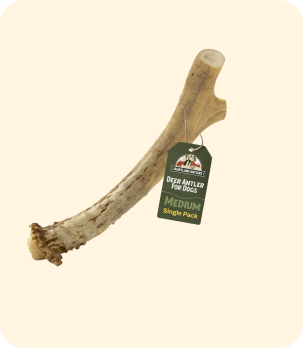
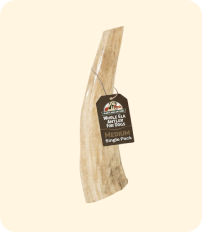
If you want Heartland product details after that discussion, compare whole deer, whole elk and split elk options. Read the Grade A guide and ask about product dimensions and care. A catalog label does not establish suitability for your dog.

Frequently asked questions
Is raw bone the same as rawhide?
No. Raw bone is uncooked bone. Rawhide is processed animal hide. Check the exact material and ingredient list.
Is a raw bone softer on teeth than an antler?
Do not infer dental safety from moisture or soft marrow. Both retain hard material. This guide has no clinical comparison that proves a safer choice.
Can a split antler break a tooth?
Yes. Splitting changes access to the inner structure but leaves hard material. It does not remove fracture risk.
How long can I keep a raw bone?
This guide does not establish a universal safe period. Follow product-specific food handling advice and discuss raw feeding with your veterinarian. Cold storage does not make hard bone safe for teeth.
Are antlers bacteria-free?
No such guarantee is established here. A dry appearance or natural origin is not evidence of sterility.
Which suits an aggressive chewer?
Do not select either solely because it survives a strong bite. Describe crushing and swallowing behavior to your veterinarian and ask about other options.