
Quick answer: Antler and Benebone's durable nylon chews differ in material and shape, but both involve hard material. Neither is a universal choice for aggressive chewers or dogs with weak teeth. Compare the exact product, the dog's dental condition and behavior, and the maker's replacement instructions. There is no verified head-to-head result here that establishes a safer or longer-lasting winner.
This guide compares Heartland's antler range with Benebone's durable nylon line, including the Wishbone. Benebone also offers other product lines. Do not apply facts about its nylon toys to every product sold under the brand.
Compare the material and intended use
| Factor | Heartland antlers | Benebone durable nylon chews |
|---|---|---|
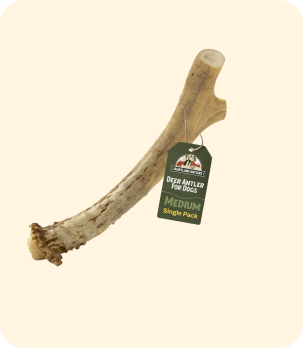
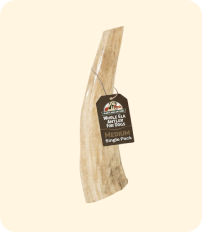
| Material | Antler; current choices include whole deer, whole elk and split elk | Durable nylon with product-specific flavor ingredients |
| Form | Natural shape and dimensions vary; cuts expose different surfaces | Manufactured shapes and labeled sizes; check the exact model |
| Hardness | Hard outer material remains on whole and split cuts | The maker identifies nylon as a hard substance |
| Ingestion | Do not treat antler chunks as a food serving or allow swallowable pieces | The maker states that nylon toys are not edible |
| Wear and replacement | Check cracks, sharp edges, loose pieces and size before use | Use the maker's condition and replacement guide |
| Comparative useful life | No controlled comparison is supplied; fit, behavior and removal rules affect the result | |
Benebone's Wishbone page describes a shaped nylon toy with real flavor options. These are product features, not evidence that it is soft or safe to eat. Check the exact variant for ingredients that matter to the household. Antler's natural origin is also a material fact, not a safety rating.

Check the shared dental risk
AAHA warns that very hard chews can damage teeth. The same concern should guide this comparison. A dog that can apply strong force is not automatically a suitable user of harder material.
Benebone's nylon safety guide identifies tooth injury from aggressive chewing and says some dogs cannot withstand hard materials. It also says its nylon chews are not appropriate for older dogs with compromised tooth strength. This does not support describing standard Benebone nylon as a soft option for damaged teeth.
For antlers, a split exposes the inner surface while retaining the hard outer material. It is not a safety substitute for a soft product. Grade A, a larger size or a particular species does not establish protection from tooth fracture. Ask your veterinarian about the individual dog's dental history before offering hard material.
Our Grade A guide explains the product term, and the split and whole elk guide describes the cut. Neither distinction creates a general recommendation for puppies, seniors or forceful chewers.

Use condition-based replacement rules
Keep the instructions for the exact item. Benebone's replacement guide recommends replacement or recycling after about a month, or earlier for significant wear. It also gives a missing-material threshold and visual examples. These are the maker's removal rules, not a promise that every dog will get a month of use.
The nylon safety guide advises removal if the product appears to be eaten. It also warns that hair or debris can combine with small flakes. Do not use a small-fragment description as a guarantee that swallowed nylon will pass safely.
Inspect antler before and during use. Remove it for cracks, loose pieces, sharp edges or a size that can be swallowed. Do not continue using a piece simply because it is natural or because a calendar estimate has not expired. Supervision can help you notice a change; it cannot remove the physical dental risk.
To compare value, record the price of the exact item, the dog's interest, suitable uses and reason for removal. Avoid assigning fixed life spans by breed or intensity labels. Our long-lasting chew guide explains why session time and product life need separate records.

Choose from the dog's needs
Start with the purpose. For a dental-care goal, discuss home care and the exact products on the VOHC accepted list. For enrichment, ask about an appropriate flexible toy or food puzzle. For a food reward, check ingredients, calories and portions. You do not have to choose between two hard materials if neither suits the dog.
- Existing tooth damage or pain: Stop hard chewing and get a veterinary assessment.
- Crushing or gulping: Describe that behavior and ask for a different activity or product plan.
- Ingredient concerns: Read the exact item details and discuss restricted diets with your veterinarian.
- Interest and fit: Follow the product's directions, observe the individual dog and remove the item if use becomes unsuitable.
Explore our natural chew guide, other chew categories and bully stick alternatives for further comparisons. These guides do not establish that natural or manufactured material is always better.
For Heartland's current product details, see the elk range or all sizes. Ask Heartland support about the item. Refer questions about Benebone specifications to its current product and safety pages.

Frequently asked questions
Is Benebone softer than antler?
We do not have a controlled hardness comparison. Benebone identifies its durable nylon as hard. A split antler also retains hard outer material. Neither should be described as a general soft option for vulnerable teeth.
Are antlers safer than Benebones?
No comparative safety result is established here. Both require attention to hard material, tooth condition, behavior, wear and swallowed pieces. Natural origin does not settle the question.
Can a dog eat a Benebone?
Benebone says its nylon toys are not edible. Remove the toy if it appears to be eaten. Contact your veterinarian if material has been swallowed or symptoms occur.
Which lasts longer?
There is no verified universal winner. Follow the exact item's removal rules and record actual use. Do not compare a replacement recommendation with an antler marketing estimate as though they were matching test results.
Is a split antler a suitable puppy or senior alternative?
A split cut does not remove hard material. Age labels alone cannot establish suitability. Ask your veterinarian for a choice that fits tooth development, dental condition and behavior.
Does Benebone use real flavor?
The Wishbone page lists real flavor options. Check the exact variant and current ingredients. Flavor does not make the nylon body edible.