
An alternative to antlers should fit the reason you need it: dental care, a chewing outlet or another form of enrichment. Compare the actual material, ingredients, size and instructions. “Natural” describes a product claim. It does not establish that a chew is safe for a particular dog's teeth or digestion.
Start with the job you need the product to do
For dental care, ask your veterinarian about brushing and suitable products on the Veterinary Oral Health Council accepted-products list. Check the exact product and claim. Acceptance of one item does not apply to every item from that brand.
For a chewing outlet, consider a toy with some give that the dog cannot easily tear apart. For food enrichment, a suitable puzzle or supervised sniffing game may meet the need without a hard chew. A dog that ignores an antler does not need to be persuaded to use one.

Compare six alternatives by their actual features
This is a comparison checklist, not a safety ranking. Each category contains different products.
| Option | What to check | Main limit |
|---|---|---|
| Flexible rubber chew toy | Material, firmness, size and cleaning directions | Remove it if the dog tears off pieces. Rubber products vary in firmness. |
| Dental chew | Exact VOHC listing where relevant, dog size, age and feeding directions | A dental claim does not replace examination or establish suitability for every dog. |
| Bully stick | Ingredient list, portion, calories and size | Watch for swallowed end pieces and discuss dietary restrictions. |
| Yak-style cheese chew | Actual milk ingredients, firmness and manufacturer instructions | Some are very hard. The name does not guarantee digestive tolerance. |
| Rawhide chew | Exact product, size, handling and use directions | Swallowed pieces can cause problems. Product forms and processing differ. |
| Beef tendon chew | Ingredient list, dimensions, portion and storage instructions | Texture and consumption vary. Do not assume a fixed lifespan or universal tolerance. |
Texas A&M's veterinary chew guide discusses the importance of product selection and supervision. Compare the item you are buying, rather than treating a category name as a guarantee.

A harder alternative keeps the hardness concern
Replacing an antler with a very hard cheese chew, horn or rigid toy can leave the same basic concern: teeth can be damaged when the object does not give. The AAHA chew-selection guide recommends checking flexibility and whether a thumbnail can mark the surface.
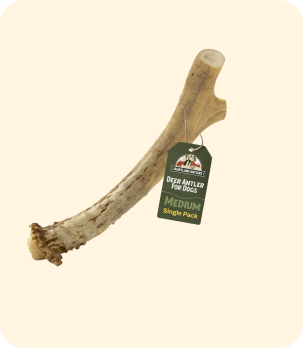
Heartland offers whole deer, whole elk and split elk antlers. All retain hard material. Our antler risk guide explains the limits. A larger size or split cut does not remove tooth-fracture risk.

Choose another activity when chewing does not fit
A food puzzle, sniffing game or short reward-based training session can provide an outlet. Use food that fits the dog's existing diet and supervise the activity. Remove an item if the dog damages it or tries to swallow parts. Our enrichment guide gives options to discuss with a trainer or veterinarian.
For a dog with developing teeth, worn or damaged teeth, prior fractures, forceful biting or a history of swallowing objects, start with veterinary advice. If a piece is swallowed, contact the vet promptly.

Frequently asked questions
What is the best alternative to an antler?
The appropriate choice depends on the dog's health, behavior and the purpose of the item. Compare flexibility, size, ingredients and instructions with your veterinarian's advice.
Is a yak chew automatically softer or easier to digest?
No. Firmness, ingredients and tolerance vary. Check the specific product and do not use a category name as a safety guarantee.
Does a dog need a hard chew for enrichment?
No. Suitable food puzzles, sniffing games, flexible toys and supervised activities can provide other outlets.