
A Toy, Miniature and Standard Poodle should not receive one automatic antler recommendation. Their body sizes differ, and each dog has its own teeth, health history and behavior. At the same time, a variety name or narrow muzzle cannot establish that a particular cut is safe.
Antlers are hard materials that can fracture teeth. A split cut exposes the inner face but does not remove that risk. Start with veterinary guidance, then review the actual item instead of selecting from a breed-wide chart of species, sizes and promised weeks of use.
Use variety as context, not a product prescription
The Poodle Club of America publishes the AKC standard, which separates the three varieties by shoulder height. Toy Poodles are 10 inches or less, Miniatures are over 10 through 15 inches, and Standards are over 15 inches. These are breed-standard categories, not antler sizing rules.
| Variety | Useful product question | Rule to avoid |
|---|---|---|
| Toy | Can the individual dog manage the item's actual shape? | The smallest catalog piece must be safe. |
| Miniature | What are the dimensions and intended use? | Every Miniature needs small deer antler. |
| Standard | What do the teeth and observed behavior indicate? | Every Standard needs large elk antler. |
Do not estimate chewing force from body weight or assume that all Poodles chew methodically. Record specific actions: carrying, biting at one area, trying to crush an item, removing pieces or losing interest. A description of what happens is more useful than calling the dog intelligent or gentle.
Tell your veterinarian about broken, worn or treated teeth, past difficulty with chews and changes in eating. A new reluctance to use an object can merit attention even when the dog used it before. Small body size does not make a hard material soft.

Separate muzzle shape from cut and hardness
A long muzzle does not prove that every whole antler is impossible to handle or that split elk is necessary. If a dog repeatedly loses its grip or cannot manage an item, stop and reassess. Do not force the mouth into position or hold the object while encouraging harder biting.
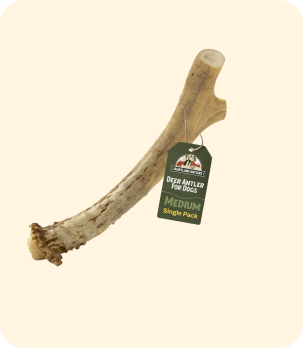
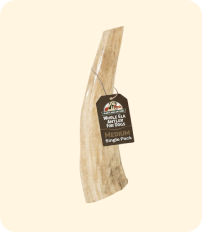
Heartland's current collection includes whole deer, whole elk and split elk. Do not plan a purchase around split deer; it is not a current product category here. Compare the actual options and their directions.
A true split is cut lengthwise to expose a long inner face. That changes access to the interior, but the hard outer material remains. It is not a soft option that automatically protects puppy teeth, older teeth or a small dog's mouth.
AAHA warns that antlers and other hard items can damage teeth. There is no universal elk-for-Standards and deer-for-Toys safety division. Species, size and grade cannot replace a dental assessment.
Read the elk and deer comparison and Grade A guide for product context. A grade is not a promise that a piece lacks every internal flaw or cannot crack. Durability and dental suitability are different questions.

Match the activity to the individual Poodle
The breed standard describes Poodles as active and intelligent. It does not establish one way that every Poodle must use a chew. Offer a varied routine based on age, health and preference: suitable walks, scent searches, reward-based training and rest can all have a place.
A suitable food puzzle may add another task. Check its directions, dimensions and condition too; no toy is indestructible. Include rewards in the feeding plan, and ask your veterinarian before changing food for a dog with a prescribed diet.
If the Poodle ignores an antler, let the dog choose another suitable activity. Do not coat a hard item with food, switch to a more exposed cut or make the task harder simply to force interest. Interest does not establish dental safety, and disinterest does not diagnose the cause.
For puppies, adult teeth or a birthday do not provide automatic clearance for antlers. For seniors, switching to a smaller piece or another species does not establish protection. Discuss current oral health and appropriate options. The puppy guide and senior guide provide further questions.
If the goal is dental care, ask about brushing and exact products listed by the Veterinary Oral Health Council. Acceptance of one listed product does not apply to all chews of the same material.

Inspect and supervise at every size
If you choose to offer a chew after veterinary guidance, follow its directions and supervise the full use. Pick a calm area where you can see the dog and item. Keep other pets and children separate. Do not reduce supervision after three apparently successful sessions.
- Check the full item before use: ends, edges and the exposed face of a split.
- Stop for cracks, loose material, sharp areas or an unsuitable worn shape.
- Stop forceful crushing, piece removal, repeated slipping and attempts to swallow the object.
- End use for bleeding, discomfort, food or item dropping, or a new change in chewing.
- Inspect after use and store suitable items out of reach according to their directions.
Do not wait for a promised one-to-seven-week lifespan or an assumed tooth-width threshold. A piece that still looks large may already be unsuitable. A damaged item should leave use, rather than being filed, heated or reshaped for another session.
A crack does not establish that the grade was wrong. It is a reason to stop and review the item and activity. Replacing it with another grade or species cannot by itself resolve the question of whether antlers suit this dog's teeth.
Cornell explains that a fractured tooth may expose pulp and lead to infection. Contact your veterinarian if you suspect dental damage or a swallowed piece. Choking signs, breathing difficulty or collapse require urgent veterinary help.

Frequently asked questions
Is split antler required for every Poodle?
No. Muzzle shape does not establish one required cut. Both whole and split antlers remain hard and need an individual suitability discussion.
Which antler size should a Toy Poodle use?
No single size name can answer that safely. Start with the dog's dental health and the item's actual dimensions, shape and directions.
Does a Standard Poodle always need elk?
No. Breed variety and body weight do not establish one species as the right choice. Do not use a fixed density claim as a safety rule.
Does visible surface wear prove a good fit?
No. Wear shows that the item has changed; it does not show that the teeth are unharmed. Check both behavior and condition throughout use.
How long will the piece last?
There is no dependable variety-wide duration. Retire an unsuitable item promptly instead of waiting for an expected lifespan.
Sources and current product details
This article provides education and does not claim veterinary review. The Poodle Club of America supports the limited variety context, while AAHA and Cornell support the linked dental cautions. Contact Heartland for product specifications and your veterinarian for individual health advice.