
Choosing an antler for a Rottweiler starts with a question about the dog, not a search for the hardest item. Antlers are hard enough to fracture teeth. A powerful dog does not need an ever-harder chew, and a product's resistance to damage does not protect the teeth doing the chewing.
This guide separates working-breed history from individual behavior, explains product labels and wear, and gives you a clear basis for a veterinary discussion. The American Animal Hospital Association includes antlers among hard items that can damage teeth.
Watch the chewing pattern before choosing
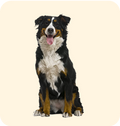
The American Kennel Club describes the Rottweiler as a robust working breed descended from mastiff-type dogs of the Roman legions. That background does not tell you how one Rottweiler will use a chew. Do not rely on bite-force rankings, claims that the jaw “locks,” or assumptions that all members of the breed apply the same pressure.
Describe behavior in plain terms: the dog licks, nibbles, grips with the back teeth, tries to crush the item, tears pieces off or attempts to swallow it. Tell your veterinarian about those actions, together with dental history and any past ingestion of objects. Teeth, gums and chewing habits all affect the choice.
A dog that repeatedly crushes hard items needs a change of activity. Moving from a split antler to a whole antler, or from one species of antler to another, does not resolve that behavior. A stronger-looking piece may remain intact while a tooth is injured.
Set a clear purpose
Is the goal quiet enrichment, a food reward or dental care? These are different uses. A food puzzle can make part of a meal into an activity. Training can provide focused interaction. A product with an accepted plaque or tartar claim may serve a dental-care purpose when used as directed. Ask your veterinarian which options suit your dog rather than treating hardness as the common answer.

Read product labels without a strength ranking
Size names and weight ranges describe a seller's product categories. They are a starting point for product questions, not an oral examination. Check the actual shape, dimensions, directions and condition. Do not test fit by putting a chew deep into the mouth or asking the dog to bite down for a measurement.
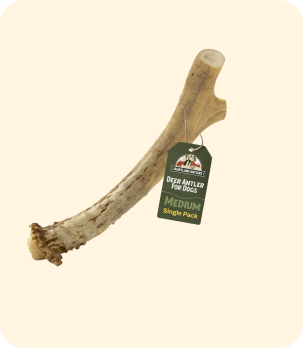
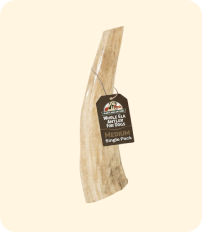
Heartland sells whole deer, whole elk and split elk antlers. A split cut exposes the interior but retains hard outer material. None of those categories establishes safety for Rottweilers, and a “Grade A” description is not a dental-risk rating.
| Claim to examine | Useful question |
|---|---|
| “For power chewers” | Does this dog try to break hard objects or swallow parts? |
| “Extra large” | What are the actual dimensions, intended use and removal directions? |
| “Split for easier access” | Does the dog still contact hard material? Yes. |
| “Natural” or “premium” | What are the source and preparation details, separate from health suitability? |
Use the current catalog to compare available specifications. Heartland can answer product questions, while your veterinarian can assess the dog's teeth. Do not use an unsupported density percentage or a breed-wide size recommendation to bridge that gap.

Stop damage and inspect every session
Supervision means watching how the dog uses the item and being ready to end the activity safely. Follow the exact product directions. Keep dogs separate during chew time and keep children away from a dog with an item. If the dog guards, do not force a retrieval; ask a qualified behavior professional or veterinarian for a safe plan.
- Before use, check for cracks, loose pieces, sharp areas and a shape that has become unsuitable.
- During use, stop forceful crushing, piece removal, gulping attempts or signs of mouth discomfort.
- After use, inspect the item again and follow its cleaning, drying and storage directions.
- Retire an unsuitable item promptly. Do not wait for a predicted number of weeks.
Swallowing attempts are not merely a sizing issue. Remove the opportunity and discuss that behavior with your veterinarian. If a fragment may have been swallowed, call for advice; VCA explains that foreign objects can cause serious gastrointestinal obstruction. Breathing difficulty, collapse or choking signs need urgent care.
Bleeding, a broken tooth, one-sided chewing, dropping food or a new reluctance to eat also warrant veterinary attention. Cornell notes that tooth fractures can expose the pulp and lead to pain or infection. Continued interest in food does not rule out an injury.

Use rotation and records for a clear purpose
Rotating suitable activities can offer variety. It does not repair cracks, restore lost material or make a hard antler easier on teeth. An antler does not gain useful strength by “resting” between sessions. Each item still needs its own inspection, and a damaged one stays out of use.
Store items so you can tell them apart. Record the item, its condition and how the dog used it. This helps you distinguish interest from damage and makes product questions more specific. There is no evidence-based requirement for every large Rottweiler to own two antlers, and no fixed breed-specific lifespan should drive a purchase.
For puppies, changing teeth and behavior need individual guidance. For older dogs, dental wear, previous treatment and comfort matter more than an age-based cut recommendation. Split antlers are not an automatic solution for either group.
If hard chewing is unsuitable, choose another activity with your veterinarian. For dental care, discuss home brushing and the VOHC accepted-products list. Use the exact product's directions; a dental claim for one product does not apply to all chews.

Frequently asked questions
Does a Rottweiler need the hardest antler available?
No. Hardness can increase concern for teeth. A dog that tries to crush hard objects needs a suitability review and may need a different activity.
Is a split antler better for a puppy or senior?
A split cut still contains hard material. Age alone cannot establish suitability; ask your veterinarian about the individual mouth.
How long will an antler last for a Rottweiler?
There is no reliable breed-wide duration. Inspect the exact item and stop use for damage, poor fit, ingestion attempts or discomfort.
Will rotating two antlers make them last longer?
Rotation can vary activities, but it does not restore an item's condition or remove dental risk. Do not return a damaged item to use after storage.
Our guide to forceful chewing provides more behavior context. The size guide and elk and deer comparison explain product details; neither supplies a breed-wide safety rule.
Sources and product help
This is an educational guide, not a claim of veterinary review. The linked AKC page supports breed context; AAHA, Cornell and VCA support the health cautions. Contact Heartland for current product specifications and your veterinarian for health advice.