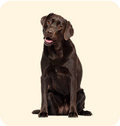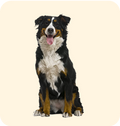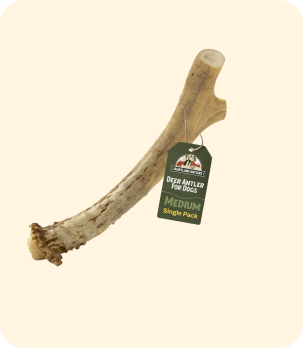
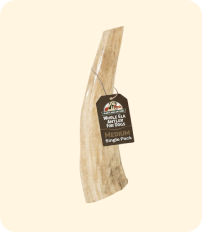
The right antler for an American Bully is XL whole elk, Grade A, sized to jaw mechanics rather than body weight. Standard and Classic Bullies (65-85 lb) need XL because the compression force their jaw generates outclasses what weight-chart sizing predicts.

Quick Answer: For a Standard or Classic American Bully (65-85 lb, wide crusher jaw, compression-and-hold bite style), the correct antler is XL whole elk, Grade A. Body weight consistently undersizes this breed. The jaw mechanics outclass what weight charts predict. A Grade A XL whole elk antler typically lasts a Standard American Bully 3-5 weeks of daily chewing. Lower-grade antler does not gradually degrade under the Bully's compression load. It finds the weakest fault line and fails abruptly. Grade A is the floor, not the upgrade. Heartland Antlers grades to the jaw, not the scale.
You ordered something rated for heavy chewers. The label said "for dogs up to 80 lb." Your Bully is 75 lb. The antler, the rubber chew, the pressed stick, whatever it was, did not make it through the first session. You are not imagining things. The product was correctly rated for an 80 lb dog. Not for this dog.
In our experience fitting antler for american bully owners, the gap between weight-chart sizing and correct jaw sizing runs 20-30 lb on average for this breed. A 70 lb Bully consistently performs at the same chew intensity as a 90-100 lb dog of any other breed.
For a Standard or Classic American Bully (65-85 lb), the correct antler is XL whole elk, Grade A. The American Bully does not have the jaw of a generic 75 lb dog. It has one of the widest, most muscular crusher jaws produced by selective breeding in any domestic breed. Weight-based sizing was built for average jaw mechanics. The Bully is not average.
That gap between what the label promises and what your dog destroyed is not a mystery. It is a fit problem.
Customers with American Bullies consistently describe the same sizing failure: a piece that looks adequate for the dog's weight is done within a few sessions because it cannot handle the jaw structure behind it. After working with Bully owners, we've found that breed class, not body weight, is the controlling variable. An XL Bully at 90 pounds chews nothing like a Standard Bully at 70. Grade A elk sized by jaw class is what actually holds.
The American Bully Chew Profile: Why Standard Sizing Fails This Breed
The American Bully was developed specifically for exaggerated jaw musculature. Not as a side effect of breeding for other traits. As the goal. The result is a short, wide muzzle with a jaw-to-body-weight ratio that sits at the extreme end of what domestic breeding has produced.
The chew style is compression-and-hold. The Bully does not grind methodically down the length of a chew. It does not grip-and-pull. It sets the jaw on the target surface, applies full compression, holds, and releases. Over and over, on the same point.
The failure mode for undersized chews is abrupt. The piece survives intact, sometimes through multiple short sessions, and then fails completely under a single compression event. No warning. No gradual wear telling you to step in. One compression cycle and the chew shatters.
Sharp edges. Fragments. Those are what you are trying to prevent.
The Bully is not a Pit Bull. This matters for sizing. The American Pit Bull Terrier is a compression jaw at medium weight. The American Bully was developed past that point. The Bully's jaw is wider, the compression force is higher, and the use geometry is more extreme. A chew sized for a 70 lb Pit Bull will be undersized for a 70 lb Bully. A Grade A XL whole elk antler typically lasts a Standard American Bully 3 to 5 weeks of daily chewing, compared to under a week for products sized by weight alone.
Why Pocket Bullies Are the Most Consistently Undersized Dogs in the Bully Family
The Pocket Bully is the most consistently undersized dog in the bully breed family. Not because owners are careless. Because the math misleads.
A Pocket Bully weighs 50 to 70 lb. That puts it in medium dog territory on a weight chart. Medium-to-large chews seem reasonable. They are not.
A 55 lb Pocket Bully carries the jaw mechanics of a dog 25 to 30 lb heavier. The body stayed compact. The head and jaw structure did not scale down proportionally. The compression load that jaw generates matches a much heavier crusher. Weight-based sizing has no way to account for that.
The call for a Pocket Bully is large or XL whole elk, Grade A. When there is any doubt between large and XL, the XL is correct. Size to the jaw, not the scale. Pocket Bully owners who have burned through every size-appropriate chew are making one consistent mistake: buying for the number on the scale instead of the jaw attached to the dog.
Why Grade A Is the Minimum Specification, Not an Upgrade
For many breeds, Grade A antler is the premium choice. The longer-lasting option. The better value. For an American Bully, that framing is wrong.
Grade A is not the top of the range for a Bully. It is the floor.
Lower-grade antler carries micro-fractures. Internal density variations. Structural inconsistencies distributed through the piece. For a grinding jaw, those weaknesses degrade slowly over time. The chew wears down faster than it should. Frustrating, but recoverable.
For a compression jaw, the dynamic is different. The Bully's lock-and-compress bite does not spread load gradually across the piece. It concentrates force on a single point until something gives. A B or C grade piece does not degrade slowly in that scenario. It finds the weakest fault line and snaps along it.
Grade A antler is harvested at peak density from the base of the elk rack. The internal structure is dense and consistent. It absorbs compression load rather than fracturing under it.
For a Bully, that is not a quality preference. It is the mechanical specification that keeps the chew from becoming a hazard. B grade on a Bully is not a savings. It is a risk per session.
Antler for American Bully: What Size Elk Antler Does This Breed Need
These configurations are based on jaw mechanics, not weight charts.
| Bully Type | Weight | Correct Antler | Grade | Protocol |
|---|---|---|---|---|
| Standard/Classic | 65-85 lb | XL whole elk | A | Single or rotate |
| Pocket Bully | 50-70 lb | Large or XL whole elk | A | Default to XL |
| XL Bully | 80-120 lb | XL whole elk | A | Two-piece rotation |
| Puppy under 10 months | Any | Split elk, supervised | A | Single |
| Senior Bully | Any | Split elk | A | Single |
Standard/Classic American Bully (65-85 lb): XL whole elk, Grade A. Not large. XL. The standard and classic Bully generates compression force that exceeds what a large whole elk, appropriately rated for a dog this weight, can handle. The extra cross-section diameter of an XL piece is what carries the load.
Pocket American Bully (50-70 lb): Large or XL whole elk, Grade A. Size to the jaw. When in doubt between the two, XL is correct. A Pocket Bully at 55 lb has the jaw of a dog significantly heavier and needs the diameter to match.
XL American Bully (80-120 lb): XL whole elk, Grade A. Rotate two pieces. A single piece on an XL Bully is fine for individual sessions, but rotating two pieces lets each rest and prevents one antler from receiving all the daily load. Two-piece rotation is the practical approach for high-drive XL dogs.
Puppy under 10 months: Split elk, supervised. Adult teeth are still developing. Whole antler is off the table at this stage. Split elk provides marrow access without the hardness demand that developing teeth cannot safely carry.
Senior Bully: Split elk. The jaw drive is there. The teeth may not be. Split gives the chew reward and marrow access without the full compression requirement.
Why Elk Is the Only Correct Species for an Adult American Bully
Elk only. No exceptions for adult American Bullies.
Elk antler is 30-40% denser than deer antler at equivalent size. A Grade A XL whole elk antler is also 15-25% heavier per linear inch than a Grade B piece at the same size, which is the material difference that prevents abrupt compression failure.
For most breeds, the elk-vs-deer gap is a longevity question. For an American Bully, it is a safety question. The compression load a Bully generates is too high for deer antler to carry. That holds for Grade A deer as well. The species difference in density is large enough that grade does not close the gap.
The only deer antler appropriate for this breed is split elk for puppies. Once the dog is fully adult, elk is the only correct material.
How to Read the First Session
The first session is your fit check. Watch for 20 full minutes.
What correct fit looks like: The dog engages consistently, works the antler throughout the session, and shows visible surface wear by the end. The antler holds its shape. No sharp edges. No new geometry. The dog returns to it voluntarily. That is the right fit.
What means go up in size or verify grade: Deep compression marks in the first session. Noticeable shortening. Any sharp edges developing. The antler survived, but the margins are wrong. Order Grade A XL if you have not already. If you have Grade A XL and this is happening, verify the grade on the piece you received. Mislabeling happens.
What means try split: The dog engages for a short stretch, then loses interest. This usually means the whole cut is not offering fast enough marrow access to hold a high-drive dog through the session. Split elk provides immediate marrow engagement. Some dogs are marrow-first.
The Chew Graveyard Reality
American Bully owners know this shelf. The failed rubber toy. The destroyed braided chew. The antler that came with a reputable size recommendation and did not make it through Tuesday.
The cost is real. Bully sticks at the rate most Bullies consume them run $50-100 a month before you stop counting. Each product that fails is not a refund. It is money spent on something that introduced a hazard on its way out.
One Grade A XL whole elk antler, correctly fitted for the jaw, lasts most adult Bullies 3 to 5 weeks of regular chewing. XL Bullies with high drive may move faster. The point is not the duration number. The point is that the antler does not fragment. It does not disappear mid-session. It wears down slowly and predictably, the way a correctly fitted chew should.
The graveyard ends when the fit is right.
Find the Right Fit for an American Bully
For most adult American Bullies, the call is XL whole elk, Grade A. Pocket Bullies who have been burning through smaller chews: go XL.
Heartland Antlers Grade A elk antler is naturally shed, hand-sorted to confirm cortex integrity and marrow quality, and contains no additives or flavor sprays. For an American Bully's compression jaw, that internal consistency is the difference between a chew that absorbs the load and one that fractures along a hidden fault line.
Read these next:
- What Grade A Means for a Power Chewer
- How We Grade Antlers for Aggressive Chewers
- Find the Right Fit by Breed and Jaw Style
- Elk vs. Deer Antler: Which Holds Up to a Crushing Jaw
- Antler for a Pit Bull
- Antler for a Cane Corso (another extreme compression jaw breed; useful sizing comparison for the upper end of crusher-breed fit)
Find the Right Fit for your American Bully
Frequently Asked Questions
What size antler for an American Bully?
XL whole elk, Grade A, for a Standard or Classic adult American Bully (65-85 lb). The American Bully's jaw is wider and generates higher compression force than body weight suggests. A large whole elk rated correctly for a dog this weight will be undersized for this jaw type. For Pocket Bullies (50-70 lb): large or XL whole elk, Grade A, sized to the jaw rather than the scale. For XL Bullies (80-120 lb): XL whole elk, Grade A, with a two-piece rotation recommended.
Are antlers safe for American Bullies?
Yes, with the correct fit and grade. The risk with antlers for this breed comes from two sources: undersized chews that fracture under the compression load a Bully generates, and lower-grade antler with internal micro-fractures that a crusher jaw exploits in one session. With Grade A whole elk at the correct size, the antler is dense enough to absorb rather than fracture under compression. The combination of correct grade and correct size is what makes the chew safe for this jaw type.
Elk or deer antler for an American Bully?
Elk for adult American Bullies, without exception. Deer antler, including Grade A deer, does not hold the compression load an American Bully applies. The density difference between elk and deer is a longevity question for most breeds and a safety question for this one. Split elk is the appropriate choice for American Bully puppies under 10 months. For fully adult Bullies, elk is the only correct material.
What size antler for a Pocket Bully?
Large or XL whole elk, Grade A. When in doubt, XL. A Pocket Bully at 50-70 lb carries the jaw mechanics of a dog 25-30 lb heavier. Weight-based sizing will consistently underfit this dog. The Pocket Bully is the most frequently undersized dog in the bully family, because owners see a compact dog and buy to the scale rather than to the jaw. Size to the jaw.
How long does an antler last for an American Bully?
A Grade A XL whole elk antler typically lasts an adult American Bully 3 to 5 weeks of regular chewing. XL Bullies with high drive may work through it faster. If the antler shows dramatic wear, develops sharp edges, or fails in one or two sessions, the size or grade was wrong. Verify Grade A and move to XL if not already there. Correct fit produces steady, predictable surface wear over multiple weeks, not sudden or catastrophic failure.
Schema (do not paste into Shopify body_html)
Frequently Asked Questions
What size antler for an American Bully?
XL whole elk, Grade A, for a Standard or Classic adult American Bully (65-85 lb). The American Bully's jaw is wider and generates higher compression force than body weight suggests. A large whole elk rated correctly for a dog this weight will be undersized for this jaw type. For Pocket Bullies (50-70 lb): large or XL whole elk, Grade A, sized to the jaw rather than the scale. For XL Bullies (80-120 lb): XL whole elk, Grade A, with a two-piece rotation recommended.
Are antlers safe for American Bullies?
Yes, with the correct fit and grade. The risk with antlers for this breed comes from two sources: undersized chews that fracture under the compression load a Bully generates, and lower-grade antler with internal micro-fractures that a crusher jaw exploits in one session. With Grade A whole elk at the correct size, the antler is dense enough to absorb rather than fracture under compression. The combination of correct grade and correct size is what makes the chew safe for this jaw type.
Elk or deer antler for an American Bully?
Elk for adult American Bullies, without exception. Deer antler, including Grade A deer, does not hold the compression load an American Bully applies. The density difference between elk and deer is a longevity question for most breeds and a safety question for this one. Split elk is the appropriate choice for American Bully puppies under 10 months. For fully adult Bullies, elk is the only correct material.
What size antler for a Pocket Bully?
Large or XL whole elk, Grade A. When in doubt, XL. A Pocket Bully at 50-70 lb carries the jaw mechanics of a dog 25-30 lb heavier. Weight-based sizing will consistently underfit this dog. The Pocket Bully is the most frequently undersized dog in the bully family, because owners see a compact dog and buy to the scale rather than to the jaw. Size to the jaw.
How long does an antler last for an American Bully?
A Grade A XL whole elk antler typically lasts an adult American Bully 3 to 5 weeks of regular chewing. XL Bullies with high drive may work through it faster. If the antler shows dramatic wear, develops sharp edges, or fails in one or two sessions, the size or grade was wrong. Verify Grade A and move to XL if not already there. Correct fit produces steady, predictable surface wear over multiple weeks, not sudden or catastrophic failure.