
A Cane Corso does not need a mandatory two-antler rotation. Start with dental suitability, actual behavior and a plan for supervised activities. Putting a worn antler aside does not restore its structure or establish that it is safe to use again.
The useful part of rotation is variety: choosing suitable activities and controlling access. It is not a method to make hard materials recover. This guide separates those ideas and explains what to check when a dog returns to the same object.
Observe the dog instead of assigning a pressure profile
Some dogs work one point on an object; others carry it, bite it forcefully or leave it. Record what your Corso does without assuming that all members of the breed use constant pressure. A quiet session can still cause wear.
Check the item before and during use while you remain present. Compare its condition with the earlier inspection. Do not wait several days simply because the dog looked calm or the product carried a durability claim.
A visible groove or damaged area does not tell you the internal strength of the remaining material. Stop use if a piece cracks, sheds loose parts, develops sharp damage or becomes small enough to swallow. Do not deliberately stress it to see whether it will break.
There is no measured breed-wide pressure profile or three- to ten-week lifespan behind this guide. A material that lasts longer is not necessarily a better choice for the dog's teeth.

Understand what rotation can and cannot do
Keeping suitable items out of reach between activities can help you manage access and inspect them. If several items are available, assess each one separately. A second piece does not reduce the need to check the first.
There is no basis here to claim that antler contact points heal, regain strength or become structurally fresh after a rest. Damage remains a reason to retire the piece. Dry storage is care, not repair.
Nor can we promise that buying two pieces halves replacement cost or doubles useful life. A fair comparison needs actual purchase cost, use and retirement information. Avoid keeping an uncertain piece simply to meet a target number of weeks.
Useful rotation can also mean changing the type of activity: a brief training task, an appropriate food puzzle, a suitable walk and rest. Choose for the individual dog's health and response. More objects are not a substitute for a workable daily routine.

Review hardness before grade and size
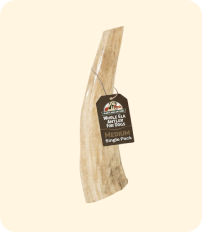
AAHA identifies hard antlers as a risk for fractured teeth. A powerful dog does not have protection from that risk. Whole elk, split elk and whole deer should not be treated as steps in a strength contest.
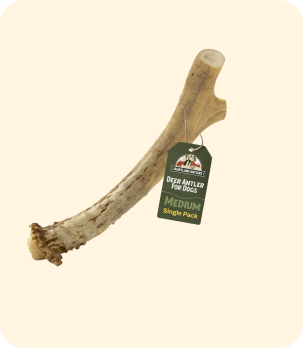
A split elk antler exposes its interior but retains hard material. It is not automatically suitable for a puppy, senior or dog with worn teeth. Heartland's deer antlers are whole; split deer is not a current Heartland option.
Discuss your dog's teeth and behavior before selecting a hard chew. If a product is being considered, use the exact dimensions and directions, with current weight and individual observations. An XL name or Grade A description does not perform that assessment.
Cornell describes dental fractures that can be present without a known injury. New reluctance, food dropping or mouth discomfort calls for care, not a switch to a flavored or smaller hard piece.
Read the cut comparison and size guide for product questions.

Build a routine that is easy to supervise
The AKC describes the Cane Corso as intelligent and trainable. Use that as a reason to plan clear, manageable tasks, rather than to assume the dog needs the hardest available chew.
Choose one quiet activity area, keep other animals separate and decide how each task will end. For food activities, reserve suitable food from the daily allowance and follow the device directions. Start with a task the dog can complete without frustration.
Allow the dog to leave an activity. Refusal does not prove that marrow exposure, grade or species is wrong. Persistent changes in interest, especially with eating or comfort changes, need a wider assessment.
Do not reach into the mouth or turn item collection into a contest. If the dog guards an object, keep people and other animals away and seek a safe plan from a qualified professional. Strength makes good preparation useful; it does not justify confrontation.
Put usable items away after inspection and discard damaged ones securely. For current Heartland specifications, ask our team or view the catalog. Ask your veterinarian about health and suitability.

Frequently asked questions
Must I buy two antlers for a Cane Corso?
No mandatory two-piece protocol is established. Decide whether the material is appropriate before considering quantity.
Does rest repair an antler?
No repair benefit is established. Keep damaged pieces out of use regardless of how long they have been stored.
Should rapid wear lead to a denser antler?
Remove the damaged item and reassess the activity. A denser piece does not remove tooth-fracture risk.
Is split elk a safe senior option?
A split surface remains hard. A senior dog's teeth, comfort and health need individual advice rather than an automatic cut change.