Antler marrow is the soft, spongy tissue that runs through the center of an elk or deer antler - think of it as the inside filling. It's made up of fat, proteins, collagen, and minerals, including calcium and phosphorus. When an antler is split lengthwise, that marrow is fully exposed from the first chew. When an antler is left whole, the marrow sits inside and your dog has to work inward to reach it. Most dogs will go absolutely sideways for it - and once you understand what it actually is, why that happens makes perfect sense.
What Is Antler Marrow, Exactly?
An antler has two distinct layers. The outer cortex is a dense, bone-like shell - hard, mineralized, and built to handle serious chewing pressure without splintering. This is the part that makes antlers a trusted chew for power chewers and aggressive chewers who destroy most other options in minutes.
The inner layer is the marrow: a spongy, porous matrix of fat, proteins, collagen, and minerals. This tissue is similar in composition to the bone marrow dogs would access if they were gnawing on a raw femur. It isn't hard like the cortex - it's softer and more yielding, which is exactly why dogs can eat antler marrow even on day one.
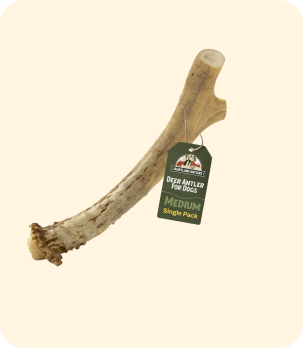
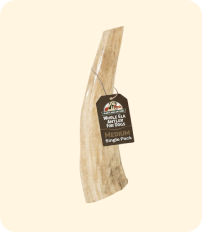
Deer antlers tend to have a denser cortex and less marrow relative to their size, which is why they're favored by the most intense power chewers. Elk antlers have a higher marrow-to-cortex ratio - more of that soft center - which is why split elk is the go-to recommendation for first-time antler dogs.

Can Dogs Eat Antler Marrow Safely?
Yes - and here's why the answer is a firm yes rather than a qualified maybe.
Antler marrow is not a processed ingredient. There are no artificial additives, no preservatives, no hormones, and no chemical treatments. What's in the marrow is what elk carry in their bodies: calcium, phosphorus, zinc, fat, and structural proteins including collagen. These are the same nutrients dogs would get from raw bone marrow in a natural diet.
The mineral profile is worth highlighting:
- Calcium and phosphorus - the primary structural minerals in bones and teeth; both present in antler marrow
- Zinc - supports immune function and skin health
- Fat - energy-dense and palatable, which is a big part of why dogs find marrow so appealing
- Collagen - supports joint tissue and connective tissue health
The fat content in marrow is meaningful but not excessive for a dog that's actively chewing. This isn't a sit-and-gulp food item. Your dog earns the marrow by working for it, which means the caloric intake is spread across a chewing session rather than consumed all at once.
One honest note on safety: no chew is zero-risk. Always supervise chewing sessions, rotate the antler before it gets too small (a piece small enough to swallow is a piece to remove), and choose the right size for your dog's weight. Our size guide makes that straightforward.

Why Does Marrow Make Dogs Go Crazy for Antler Chews?
The scent.
Marrow has a distinct, rich animal scent that triggers prey drive in dogs. It smells like something real, something worth working for. Dogs that will sniff a whole antler and walk away will often lock on to a split elk antler immediately, because the exposed marrow releases that scent signal the moment they get close.
This is the single most important thing to understand if you've ever had a dog seem indifferent to an antler chew. The chew wasn't the problem - the marrow access was. Whole antlers require the dog to chew inward from the cut ends before they hit the marrow layer. For some dogs, especially those who have never had a raw or bone-based chew before, that's too much patience required up front. The reward isn't obvious yet.
Split elk solves this completely. The antler is cut lengthwise so the marrow is fully exposed from the first interaction. Your dog doesn't have to figure anything out - they smell it, and they're in.
This is also why split elk antlers are the correct starting point for puppies (6 months and older), senior dogs with slower chewing habits, and any dog that seems uninterested in whole antlers. The marrow is the engagement mechanism, and split elk puts it front and center.
Split Antler vs. Whole Antler: How Marrow Exposure Changes the Experience
The marrow content in a split elk and a whole elk antler is essentially the same. What's different is access.
Split elk antler:
- Marrow fully exposed along the entire cut surface
- Immediate scent engagement from the first sniff
- Softer starting point - easier on dogs new to hard chews
- Ideal for: first-time antler dogs, puppies 6+ months, seniors, moderate chewers, brachycephalic breeds
Whole elk antler:
- Marrow is centered inside; dog works toward it from the cut ends
- Engagement may take a day or two as the dog learns the reward is inside
- Longer-lasting challenge for experienced and power chewers
- Ideal for: dogs who have already worked through a split elk, aggressive chewers who need maximum duration
For a deeper breakdown of which type suits different chewing intensities, see our full guide: Split vs. Whole Elk Antler for Dogs.
The practical recommendation: if you've never given your dog an antler before, start with split elk. If they've already powered through a split elk and want more, step up to whole elk or consider deer antler for even greater density.
What Does "Naturally Shed" Mean and Does It Affect the Marrow?
Every year, elk drop their antlers naturally - a biological cycle tied to the seasons. No antlers are cut from animals. No animals are harmed. Naturally shed means the antlers were collected from the forest floor after the elk dropped them on their own.
This matters to a lot of dog owners, and it should. You're giving your dog something that came from a living animal and was discarded naturally, not taken by force.
As for whether shedding affects the marrow: it doesn't. The mineral composition and marrow structure are the same whether the antler was shed this season or last. What does affect quality is how the antler was handled after collection - how it was cleaned, dried, and graded. At Heartland Antlers, every chew is Grade A, which means it passed inspection for density, structural integrity, and appearance before it shipped.
The ethical sourcing story and the quality story are the same story: naturally shed, Grade A, no shortcuts.

What to Do If Your Dog Ignores Their Antler
If your dog sniffed the antler and walked away, don't panic - and don't assume antlers aren't for them. Nine times out of ten, the issue is marrow access.
Signs of engagement:
- Actively chewing or gnawing
- Carrying the antler around
- Returning to it repeatedly
- Licking the cut ends
Signs of disengagement:
- One sniff and walk away
- Using it as a pillow
- Complete indifference after 24 hours
What to try:
- Switch to split elk if you started with whole. This is the fix most of the time. Exposed marrow = immediate scent signal = immediate interest.
- Wet the tip with warm water or low-sodium broth. This releases the scent and softens the surface slightly to get the session started.
- Offer it at a high-value moment - after a walk or play session when your dog is ready to settle and engage.
- Try rotation - swap between antler types or introduce a deer antler alongside the elk.
For a full step-by-step process, including what to do in the first session, read our guide: How to Introduce an Antler Chew to Your Dog.
Frequently Asked Questions
Is antler marrow nutritious for dogs? Yes. Antler marrow contains calcium, phosphorus, zinc, fat, collagen, and proteins - the same minerals found in raw bone marrow. It's a naturally nutrient-dense tissue, not a processed additive, so what you see is what your dog gets.
Is elk antler marrow safe for puppies? Split elk antler is generally safe for puppies six months and older because the exposed marrow surface is softer and easier to work. Whole antlers are too hard for developing teeth - save those for adult dogs. Always supervise any chewing session and match the size of the antler to your puppy's weight.
What happens when the marrow runs out of the antler? The antler doesn't suddenly become worthless. Dogs will continue chewing the dense outer cortex, which delivers minerals through the chewing action itself. That said, most dogs do slow down once the marrow is gone - which is totally normal. If engagement drops off, try wetting the end with warm water or rotating in a fresh antler.
Do whole antlers have marrow? Yes, whole antlers have the same marrow in the center - it just isn't exposed from the start. Your dog has to work inward from the cut ends to access it. This is why some dogs ignore a whole antler on day one but are obsessed with it by day three, once they've chewed down to the marrow. For dogs who need immediate engagement, a split antler puts the marrow front and center from the first sniff.
Should I give my dog a split or whole elk antler? For first-timers: split elk, always. The exposed marrow creates immediate scent engagement and gives your dog a reward right away. For experienced chewers or power chewers who have already worked through a split antler, upgrade to whole elk for the longer challenge. Match the size to your dog's weight using our size guide.
Ready to Start? Split Elk Is the Right First Move.
If you're a first-time antler buyer, the answer is split elk. The marrow is exposed, the scent is immediate, and most dogs engage on the first session. It's the lowest barrier entry point into antler chews - and once your dog figures out what's inside, you'll have a hard time keeping them away.
Browse the split elk antler chew collection, pick the right size using the size guide, and if you have questions about whether antlers are a fit for your dog's chewing style, the safety breakdown is here: Are Antler Chews Safe for Dogs?
Free shipping on orders over $50. No artificial anything. Naturally shed, Grade A, veteran-owned.