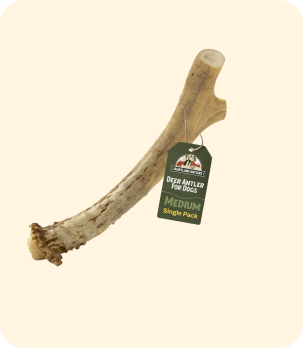
You bought the antler. Your dog sniffed it. Then they walked away and went back to their bed.
That's frustrating - especially when you spent $25 to $40 on something that was supposed to keep them busy for weeks. And especially when this is a dog who chews everything else.
Here's the thing: that reaction is normal. Almost all first-time antler chewers do it. It doesn't mean your dog doesn't like antlers, and it doesn't mean you bought the wrong thing. It usually means one of two issues - the wrong antler type, or an introduction that skipped the scent trigger. Both are easy to fix.
This guide walks you through exactly what to do, starting with the single change that gets the most first-timers chewing: switching to a split elk antler.

Why Dogs Sometimes Ignore Antler Chews at First
Antlers don't smell like food. That's the whole problem.
Your dog lives by their nose. A bully stick, a treat, a piece of chicken - they all broadcast scent immediately. An antler, sitting there dry on the floor? It smells like... bone. Faintly. Not the kind of smell that makes a dog drop everything and investigate.
Whole elk and deer antler chews are especially low-signal for first-timers. The marrow - the part that smells good, the part that makes chewing rewarding - is locked inside a dense outer cortex. Your dog has to already know what's in there to bother with it.
That's not a character flaw. It's just how dogs work. They go toward reward signals. If there's no immediate signal, they move on.
There's also the texture factor. If your dog has mostly had soft chews - bully sticks, rawhide, rubber toys - an antler feels completely different under their paws and jaw. Hard, smooth, unfamiliar. Dogs often need a few exposures just to understand what to do with it.
The short version: your dog isn't broken. The introduction just needs a little help.

Step 1 - Check That You Have the Right Type (This Is the Most Common Fix)
If your dog ignored the antler, the first question is: which type did you buy?
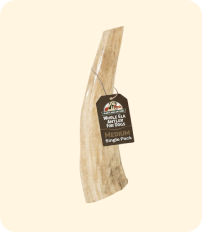
Whole elk antler: The entire antler, uncut. Dense, long-lasting, excellent for dogs who already love antlers. For a first-timer? Often too mysterious. No immediate scent, no obvious entry point.
Deer antler: The hardest antler type we carry. Great for dogs with serious jaw strength who need a real challenge. Not the right starting point for a dog who's new to antlers - too hard to engage with and too low-scent.
Split elk antler: The antler cut lengthwise. The inner marrow is fully exposed.
That last one matters. A lot.
The split elk antler is the right starting point for most first-time chewers - not because it's softer (though the split edge is more accessible), but because of the marrow. Exposed marrow has a distinct, meaty smell that registers differently than the sealed outer cortex. Dogs notice it immediately. It gives them a reason to investigate, a surface to start on, and a reward they can actually smell without having to work for 45 minutes first.
We've heard from hundreds of Heartland customers who tried a whole antler first, got zero engagement, switched to split elk, and never looked back. The marrow scent is the engagement trigger. It's not a trick - it's how the chew is designed to work.
If you started with something other than split elk, that's likely your entire problem. Try a split elk antler here.
Step 2 - The Wet Tip Trick (Activating the Scent)
Even with a split elk antler, a bit of prep makes a real difference on day one.
Run the end of the antler under warm water for 20 - 30 seconds. Or soak it in a small bowl of low-sodium chicken broth for 30 minutes before offering it.
What this does: it pulls the bone scent toward the surface. Dogs are scent-driven animals, and a slightly damp antler broadcasts more smell than a dry one. It also changes the texture slightly on the outside - less smooth, more interesting to teeth and tongue.
You're not making it into food. You're making it loud enough for your dog's nose to notice.
This one step alone has converted a lot of skeptical first-timers. It costs you nothing and takes less than a minute.
Step 3 - Location and Timing Matter More Than You'd Think
Where and when you offer the antler shapes how your dog receives it.
Timing: Offer the antler after exercise. A calm, settled dog is far more likely to investigate and settle into a chew than one who's still bouncing off the walls. Hyper dogs want to run and play - not sit down and work a chew. A dog who's just had a walk has the right mental state for this.
After a meal works well too. Your dog is satisfied, relaxed, and not frantically food-motivated - which means they're more likely to engage with the antler as an activity rather than confusing it with food.
Location: Put the antler in the spot where your dog already chews. Their dog bed, their crate, their favorite corner of the living room. Familiar territory makes new objects less strange.
Don't introduce it in the kitchen or near their food bowl - that creates conflicting associations. And don't introduce it in a new environment or after a stressful event. First impressions are real.
One other note: don't stand over them waiting and watching. Dogs pick up on that energy. Set it down and walk away. Let them discover it at their own pace.
Step 4 - The Peanut Butter Bridge (and When to Stop Using It)
If Steps 1 - 3 haven't gotten your pup interested within a day or two, add the peanut butter bridge.
Apply a thin layer of peanut butter - or a few drops of low-sodium broth - to one end of the antler. The goal is to bridge the gap between "food smell (which my dog understands)" and "antler smell (which is new and unfamiliar)."
Your dog licks off the peanut butter. In doing so, they get their nose and mouth onto the antler. They start associating the antler with reward. The chewing instinct kicks in. Then the antler's own scent takes over from there.
A few important notes:
- Use peanut butter sparingly. You want them chewing the antler, not just licking and walking away.
- Make sure your peanut butter contains no xylitol - that ingredient is toxic to dogs. Plain peanut butter only.
- Wean off the peanut butter after 3 - 5 sessions. If your dog only engages when coated, that's not sustainable. Taper it down by day 4 or 5 and see if the antler holds their interest on its own. With a Grade A split elk antler, it usually will.

What If My Dog Still Won't Touch It?
You've tried split elk. You've wet the tip. You've added the peanut butter. It's been five days. Your dog sniffs it and leaves.
A few things to check before giving up:
Is the size right? An antler that's too small doesn't give a medium or large dog enough surface to work with - and can feel awkward or even scary if they accidentally roll it under a paw. An antler that's too large can feel overwhelming. Check our size guide: the antler should be roughly as long as your dog's head, sized to your dog's weight class.
Did you try room temperature vs. slightly warm? Some dogs respond better to an antler that's been sitting at room temperature for a few hours rather than a cold one stored somewhere chilly. Warmth amplifies scent.
How long have you had this antler? Older antlers that have been sitting in storage too long can dry out and lose most of their scent. A fresh Grade A antler smells different than one that's been on a shelf for two years.
Is this a chewing dog? Some dogs genuinely prefer soft chews. If your dog has never been a hard chewer - if they typically mouth things gently rather than gnaw - a split elk antler is still worth trying, but it may take longer, and that's okay. If after two weeks of patient introduction there's still no interest, their chewing style may just be better matched to a softer chew type.
Don't force it. Never press the antler against their teeth or pressure them to engage. Negative associations on day one can stick.
Once They're Hooked - Moving from Split Elk to Whole Antler
Most dogs who start on split elk become serious antler fans within a week or two.
Once your pup is reliably settling in with their split elk antler - choosing it voluntarily, chewing for 15 - 20 minutes at a stretch - you can introduce a whole elk antler.
The whole antler is a longer challenge. The marrow isn't immediately exposed, so your dog has to work for it. That's the point - it keeps them engaged for much longer stretches once they understand the reward inside.
Here's how to make the transition easy:
- Introduce the whole antler the same way you introduced the split: wet tip, calm setting, after exercise.
- Keep the split elk around for a few weeks. Some dogs rotate between them depending on mood.
- Whole elk sizes up slightly from split elk for the same dog - the antler is denser and heavier, so size up if you're between sizes.
For dogs who never quite engage with a whole antler on their own, rub the exposed marrow end of a split elk antler against the whole antler for a few minutes before offering. You're transferring scent. Cheap trick, works well.
For a deeper look at the differences, read our split vs. whole elk antler guide.
Frequently Asked Questions
Why won't my dog chew the antler?
Most dogs ignore antler chews because the scent reward is locked inside. A whole antler has no immediate smell trigger. The fix: switch to a split elk antler, which exposes the inner marrow - that's the scent that gets dogs chewing. Also check size (too small or too large can both cause disinterest) and try offering it after exercise when your dog is calm and settled.
Is it normal for a dog to ignore an antler chew?
Yes, completely normal - especially on day one. Antlers don't smell like food. Dogs that chew everything else can still walk right past a new antler. It usually takes 3 - 5 days for a first-time chewer to warm up. Start with a split elk antler (exposed marrow) and try the wet tip trick to activate the bone scent.
How do I get my dog interested in an antler chew?
Three things work consistently: (1) Start with split elk - the exposed marrow creates immediate scent attraction. (2) Wet the tip of the antler with warm water to activate the bone smell. (3) Place a small amount of peanut butter or low-sodium broth on one end. Offer it in a familiar chew spot after exercise, not when your dog is hyper.
How do you soften an antler chew for a dog?
Soak the antler in warm water or low-sodium chicken broth for 30 minutes. This softens the outer surface slightly and draws out the bone scent - both of which help first-time chewers engage. Don't soak longer than 24 hours or the antler can become too soft. A split elk antler is naturally easier to start with than a whole antler because the dense outer cortex is already opened.
Should I start with a split or whole elk antler?
For first-time chewers, always start with split elk. The antler is cut lengthwise, which exposes the inner marrow. That marrow scent is the engagement trigger - it gives your dog an immediate reason to investigate and chew. Whole elk antlers are better once your dog already loves antlers and needs a longer-lasting challenge.
How long does it take for a dog to get used to antler chews?
Most dogs engage within the first 3 - 5 days once you've made the antler appealing (wet tip, peanut butter, calm introduction). Some dogs - especially older dogs or dogs who've mostly had soft chews - take a week or two. Don't force it. Leave it in their favorite chew spot and let them discover it on their own terms.
What if my dog still won't touch the antler after a week?
First, check the type. If you started with a deer antler or whole elk, switch to split elk - the exposed marrow is a different experience entirely. Second, check the size. Too small means your dog can't get leverage; too large and it feels awkward. If you've tried split elk in the right size with the broth soak and your dog still isn't interested after two weeks, they may simply be a softer-chew dog. Bully sticks or yak chews might be a better fit.
Still not getting engagement? Start with split elk.
That's the most common fix - and it works. Our split elk antler collection is specifically what we recommend for first-time chewers because the exposed marrow gives your dog an immediate reason to engage. Naturally shed, Grade A, sized by your dog's weight.
If you're not sure which size to pick, our antler size guide takes 30 seconds to use.
Related reading:
- Split vs. Whole Elk Antler for Dogs: Which One Is Right for Yours?
- Are Antler Chews Safe for Dogs? The Honest Answer