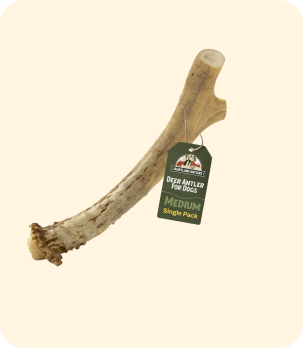
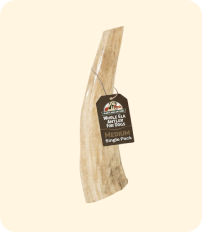
Your dog sniffed it and walked away. You spent $20 on a Grade A antler chew, set it down with reasonable confidence, and your dog treated it like furniture. Now it's just sitting there.

You're not alone - this is one of the most common frustrations first-time antler buyers run into. The good news is that it's almost always fixable. The better news is that the fix is usually not what you'd expect, and it takes about thirty seconds.
Here's what's actually happening, and how to solve it - with or without softening.

Why Is My Dog Ignoring Their Antler Chew?
Before softening anything, it helps to understand why the antler is being ignored in the first place. In most cases, hardness has nothing to do with it.
The antler is whole, and there's no scent signal on the surface.
This is the number one cause, and it catches most first-time buyers off guard. A whole antler has a sealed outer shell. The marrow - the nutrient-dense, flavorful core that dogs actually want - is locked inside with no scent escaping from the surface. Your dog's nose isn't detecting anything worth investigating. It's not that they don't want it; they genuinely can't tell what it is.
The size is off.
An antler that's too large is physically awkward for a dog to hold and work on. They'll pick it up, drop it, and give up. An antler that's too small gets ignored because it doesn't register as a serious chew object. Check the size guide - the right size makes a significant difference in engagement.
The antler is dry and scentless.
Naturally shed antlers lose surface scent over time, especially if stored in a warm, dry environment. No scent means no interest from a dog that relies on smell to evaluate everything.
Your dog isn't a self-starter with new objects.
Some dogs - particularly anxious dogs, older dogs, and dogs with no prior chew object experience - need an introduction period before they engage with something new. They're not broken; they just need a different approach.
Should You Actually Soften an Antler Chew?
For healthy adult dogs, softening is usually the wrong solution to the right observation.
If your adult dog is physically capable of chewing and is simply ignoring the antler, the problem is almost never that the antler is too hard. It's that the antler is the wrong type. Specifically: a whole antler with no marrow access gives a dog no reason to engage. Softening the outer shell doesn't expose the marrow. It doesn't change what the dog is missing.
When softening is genuinely the right answer:
- Senior dogs with dental wear, missing teeth, or known jaw sensitivity
- Dogs with documented dental conditions or recovering from oral procedures
- Puppies between 5 and 8 months transitioning from soft toys to harder chews
- Dogs on prescription diets or with jaw limitations confirmed by a vet
For these dogs, a softer surface does reduce the mechanical load on teeth and joints. The methods below are appropriate. That said, even for this group, a split elk antler is often the better long-term fit - the exposed marrow side is naturally softer than the outer shell, and it provides the palatability that drives engagement without requiring any prep.

How to Soften an Antler Chew for Dogs
If you've confirmed that softening is what your dog needs, here are two methods that work - and a list of what not to do.
Method 1: Soak in Warm Water (15 - 30 Minutes)
This is the standard method for senior dogs, dental-sensitive dogs, and first-time softening.
- Fill a bowl with warm water - not hot, not boiling.
- Submerge the antler fully and let it soak for 15 - 30 minutes.
- Remove, pat dry with a towel, and let it cool to room temperature.
- Offer to your dog while the surface is still slightly warm and the scent is activated.
What this does: The warm water slightly softens the outer surface and reactivates the antler's natural scent, which can trigger interest in dogs that have been ignoring a dry antler.
What this doesn't do: It doesn't permanently change the structure. As the antler dries, it returns to its normal hardness. This is fine - you can re-soak as needed.
Best for: Senior dogs, dogs with dental sensitivities, first-time buyers introducing antlers to a hesitant dog.
Method 2: Broth Soak (For Low-Engagement Dogs)
This method is specifically for dogs that sniff the antler and walk away. It adds a palatability trigger to a dry, scentless antler surface.
- Use low-sodium chicken or beef broth - no onion, no garlic, no additives. Check the ingredient label. Plain, unseasoned broth only.
- Soak the antler at room temperature for 20 - 30 minutes. You don't need heat for this one.
- Pat dry and offer immediately while the coating is fresh.
What this does: Coats the outer surface with familiar food scent and mild flavor. This doesn't soften the antler structurally - it makes it smell like something your dog already wants.
Best for: Healthy dogs that have ignored an antler three or more times. If the broth soak doesn't generate interest within a session or two, the antler type is the problem, not palatability.
What NOT to Do
- Don't microwave. Uneven heating creates hot spots and can crack the antler.
- Don't use boiling water. It weakens the antler's structural integrity and increases the risk of splintering during chewing.
- Don't add garlic, onion, or any product containing xylitol. These are toxic to dogs, even in small amounts.

The Better Fix: Switch to a Split Elk Antler
If your dog is a healthy adult and you've had an antler sitting on the floor for two weeks, don't soften it. Switch it.
A split elk antler is a whole elk antler cut lengthwise, with the marrow channel fully exposed along the entire surface. That marrow is the engagement trigger. When a dog gets near a split elk, they immediately smell the interior - the fatty, mineral-rich core that makes antlers worth chewing in the first place. The outer shell gives them nothing. The marrow gives them everything.
This is why split elk is the recommendation for first-timers, for reluctant chewers, and for dogs transitioning from bully sticks or rawhide. The learning curve essentially disappears.
For a detailed breakdown of which type suits which dog, read the split vs. whole elk antler guide. For the full science on what makes marrow the palatability key, see what is antler marrow for dogs.
How to Introduce an Antler Chew (If Your Dog Won't Engage)
If you're working with a hesitant or inexperienced dog, introduction technique matters as much as the antler type. These five steps work for most dogs that have ignored an antler:
- Start with a split elk antler, not a whole antler. The exposed marrow gives the dog an immediate scent signal.
- Wet the marrow-exposed surface with water before offering it. A quick rinse activates the scent. Takes five seconds.
- Hold the antler and let your dog lick and explore it. Don't just place it on the floor - that's how you get furniture. Hold it at nose level and let them make first contact at their pace.
- Give it right after exercise. A dog that's physically tired and mentally calm is far more likely to settle and chew than a dog that's wound up. Post-walk, post-run, post-play is the window.
- If still no interest after three sessions, try the broth soak. At that point you've ruled out scent, timing, and type - the broth adds one more palatability layer.
For the full protocol with troubleshooting, see the antler introduction guide.
When Softening IS the Right Answer
To be direct: softening is appropriate for a real subset of dogs, and there's no reason to talk anyone out of it if the shoe fits.
Senior dogs with worn teeth, missing molars, or arthritis in the jaw are legitimate candidates for pre-softened antler or for split elk (which is naturally softer on the marrow side) as a permanent solution.
Puppies between 5 and 8 months are transitioning from soft toys to harder objects. A whole antler can be discouraging at this stage. A water-softened split elk is a gentler on-ramp that builds the chewing habit without risking tooth damage on baby teeth.
Dogs recovering from dental procedures may need weeks of soft-only chews. Consult your vet on timing, but a water-soaked split elk is generally the safest option when they're cleared to chew again.
Dogs with jaw limitations from injury, surgery, or congenital conditions should always be matched with a vet-approved chew hardness level. Split elk or a pre-soaked antler is typically appropriate.
For all of these dogs, are antler chews safe for dogs covers the full safety picture, including the tooth fracture caveat that applies to any dog chewing on a hard object.
Frequently Asked Questions
Can you soften an elk antler for dogs? Yes. Soak it in warm (not boiling) water for 15 - 30 minutes. This slightly softens the outer surface and activates the natural scent. You can also use a 20 - 30 minute room-temperature soak in plain, low-sodium, unseasoned broth to add palatability. Neither method permanently changes the structure - the antler returns to its original hardness as it dries. For senior dogs or dogs with dental sensitivities, a split elk antler is usually a better long-term fit.
Why won't my dog chew their antler? In most cases, the antler is a whole piece with no marrow exposed. Dogs are drawn to antler by the scent of the marrow inside, but a whole antler's sealed outer shell gives off almost no scent signal. Switching to a split elk antler - where the marrow channel runs open along the full length - resolves this for most dogs. Other causes include size mismatch, a dry/scentless antler, or a dog that needs an introduction protocol rather than just being handed something new.
Is it safe to soak antler chews in water? Yes. Warm water soaking is safe and effective. The key is to use warm, not boiling, water. Boiling water weakens the antler's structural integrity and can increase splintering risk. Never microwave an antler - uneven heating creates hot spots and can cause cracking. A 15 - 30 minute warm soak is all that's needed.
Should I get split or whole antler if my dog ignores their antler? Split elk antler is almost always the right call for a dog that won't engage with a whole antler. The split cut exposes the marrow channel, which is the palatability trigger that whole antlers don't provide on the surface. For healthy adult first-timers or reluctant chewers, split elk is the correct starting point - not a softened whole antler.
How do I make antler chews more interesting for my dog? Start with a split elk antler. Wet the marrow-exposed surface to activate scent before offering. Hold it at nose level and let your dog explore rather than placing it cold on the floor. Time it right - post-exercise, when your dog is calm and ready to settle. If they're still not engaging after a few sessions, try a 20 - 30 minute soak in plain, low-sodium, unseasoned broth (no onion, no garlic) and offer it immediately after.
The Real Fix Is Usually One Click Away
If your dog is healthy, adult, and ignoring their antler, softening probably isn't the answer. The split elk antler is. The exposed marrow gives dogs the scent trigger they need to understand what they've got - and once they get it, most dogs don't put it down.
Browse the split elk antler collection, check the size guide if you're not sure which size fits your dog, and get free shipping on orders over $50.
If you're still not sure whether antlers are the right fit for your dog's age, breed, or chewing style, the antler safety guide covers everything - no fluff, just the actual answers.