
Antlers and horns are different structures. Antlers are bone. True horns usually have an outer keratin sheath around a bony core. The two names should not be treated as interchangeable on a dog-chew label. Start with the animal and material, then check the product's cut and size.
This guide explains the wording on a label. Our antler and buffalo horn comparison covers the specific buying comparison in more detail.
1. Identify the material before the marketing claim
The National Park Service distinguishes seasonal antlers from the usual permanent horn structure. Deer and elk belong to the antler-bearing group. Cattle, goats, and sheep have horns. Keratin is the protein material also found in hair and nails. Source: National Park Service.
Those differences help you ask precise questions. “Natural chew” is a broad description. “Whole deer antler” identifies an animal and a form. “Buffalo horn” identifies a different material. None of those names alone proves that the item is appropriate for a particular dog.
| Label term | What it tells you | What still needs checking |
|---|---|---|
| Deer or elk antler | Animal group and material | Cut, dimensions, condition, suitability |
| Buffalo or cattle horn | Horn material | Preparation, size, product guidance |
| Natural chew | A broad marketing description | Exact material and product details |
| Naturally shed | A sourcing claim | Whether it applies to this exact item |

2. Keep anatomy and finished products separate
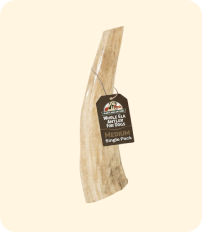
A true horn on a living animal contains a bony core and an outer sheath. A retail horn chew may be a prepared sheath. Read what the seller says is included rather than assuming every anatomical part is present in the package.
The American Museum of Natural History also notes exceptions among animal groups. That is a reason to name the species, rather than stretching a simple rule to every animal with headgear. Source: American Museum of Natural History, 2016.
For an antler, a cut end can show a denser outside and a porous inside. A split exposes more of the interior. It does not convert the remaining hard bone into a soft edible treat. Our antler interior guide explains what retailers often call marrow.
When a description jumps from a material fact to a health benefit, look for evidence specific to that benefit. A statement about what an object is made of is not a test of how a dog's teeth or digestive system will respond.

3. Read species and cut as two separate choices
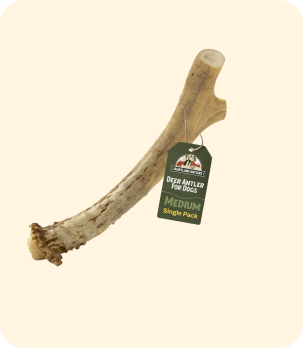
Heartland's current antler range includes whole deer, whole elk, and split elk. “Deer” and “elk” identify the source animal. “Whole” and “split” describe the cut. Keep both details in your comparison so that you do not compare a whole product with a split product by accident.
For example, a shopper moving from whole deer to split elk changes two things at once: species and cut. If the aim is to understand just the cut, compare the whole and split elk guide. If the aim is to understand the species, start with elk versus deer.
Also check the selected option before checkout. A collection photograph can show several examples. The product title, chosen size, and pack count must describe the item in your cart. The all-sizes collection connects to the current product details.

4. Use a five-field label check
Write down the following fields before comparing two products. If one is missing, ask the seller instead of filling the gap from a photograph.
- Animal: deer, elk, or the named horn-bearing species.
- Material and cut: whole antler, split antler, horn sheath, or another clearly named form.
- Size: the seller's weight guide plus the item's stated dimensions.
- Quantity: the number of pieces in the selected pack.
- Use guidance: age restrictions, supervision, condition checks, and when to remove it.
AAHA's dental guidance cautions that antlers and other hard chewing objects can damage teeth. A clear label supports an informed choice; it cannot remove that underlying concern. Source: AAHA dental care guidelines, 2019.
Bring the exact product details to your veterinarian if you are uncertain about your dog's dental suitability. A clear photo of the package is more useful than asking about “one of those natural chews.”

Frequently asked questions
Is an elk horn the same as an elk antler?
Elk grow antlers. A seller may use “elk horn” informally, but the accurate material name is elk antler. Confirm the exact product when the wording is unclear.
Does naturally shed apply to every horn chew?
Do not assume that it does. Antlers and true horns have different biological patterns. Ask how the specific material was obtained.
Does split mean soft?
Split describes the cut. It exposes the antler's interior while leaving hard bone present. It does not establish that the item is suitable for vulnerable teeth.
What is the most useful detail to check first?
Check the exact species and material. Then compare cut, size, pack count, and use guidance for the selected item.
Image note: These AI-generated illustrations explain materials and labels. They are not photographs of measured Heartland products or proof of product safety.