
Quick answer: Antler is hard bone material; a beef tendon chew is dried animal tissue that is usually sold to be eaten. This difference affects the diet and use instructions, but it does not create a universal winner. A tendon is not a proven joint treatment, and an antler is not a risk-free or guaranteed lower-cost choice for a forceful chewer.
Heartland sells antlers. We can explain the material and cuts, but we should not predict a dog's chew time or claim a clinical benefit without evidence. Compare the actual tendon product with the actual antler, then decide whether either fits your dog's teeth, diet and behavior.
Compare the material and texture
Tendons connect muscle to bone. A dried beef tendon is connective tissue from cattle. The ingredient panel should tell you whether the product is only tendon or has other ingredients. Drying, dimensions and the individual piece affect its texture. Do not assume that every dried tendon is soft, bends easily, or is suitable for a dog with dental pain.
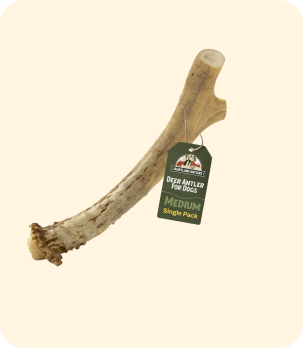
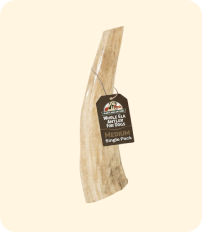
Antler is mineralized bone with a hard outer layer and an inner structure. Heartland sells whole deer, whole elk and split elk antlers. A split exposes the inner material, but the piece still includes hard material. Antler should not be treated as a serving of edible food, and loose chunks should not be offered as treats.
| Decision point | Antler | Beef tendon |
|---|---|---|
| Material | Hard bone material. | Dried bovine connective tissue; check ingredients. |
| Diet | Not a substitute for food or a mineral supplement. | An edible product can add calories and beef protein. |
| Texture | Hardness remains in whole and split cuts. | Varies by product and condition; not automatically gentle. |
| Use endpoint | Retire for wear, damage, sharp edges, loose pieces or unsafe remaining size. | Follow feeding limits and remove when condition or size creates concern. |
| Duration | No dependable universal safe-use time. | No dependable universal eating time. |
Neither odor nor mess is fixed across an entire category. Used chews can carry saliva and debris. Protect the surface, follow the storage directions, wash hands and discard an item that cannot be kept in suitable condition. “Single ingredient” does not mean sterile.

Count food, calories and allergens
A beef tendon can be rich in connective-tissue protein, but that alone does not establish a meaningful treatment effect for a dog's joints, skin or coat. Product composition is not the same as a clinical trial. Do not use a chew in place of a prescribed joint plan or balanced food. Antler's mineral content also does not make it a necessary dietary supplement.
AAFCO notes that treat products usually are not intended to provide complete and balanced nutrition. Check the tendon product's calorie information and serving directions. Ask the manufacturer if those details are unclear. Count it with the other treats your dog receives rather than adding it outside the food plan.
Beef tendon contains a beef source and is not appropriate to introduce casually when beef is excluded from a veterinary diet. Do not assume antler is a proven allergy-safe substitute. During an elimination diet, follow the veterinarian's exact list of permitted foods, treats and chews. An unplanned extra can make the result difficult to interpret.
“Digestible” does not mean that a large swallowed piece is harmless. Piece size, gulping and the individual dog's health matter. If a dog swallows a substantial remnant, call the veterinarian for advice; do not rely on a general product claim to decide that it must pass.

Match the plan to chewing behavior
Watch what the dog actually does. Slow nibbling, repeated crushing, tearing off pieces and gulping lead to different concerns. A breed name or body weight does not tell you which pattern your dog will use with this object. Finishing a tendon quickly is not evidence that the dog should move to antler.
AAHA warns that hard chews can damage teeth and that swallowed pieces can cause problems. Supervision can help you stop a session, but cannot remove the physical risks of a material. Do not give a tendon or antler as a solution for a painful mouth. Puppies, older dogs and dogs with dental work need advice for their own situation.
Stop when biting becomes forceful, a piece comes loose, an edge becomes sharp, the remaining piece becomes a swallowing concern, or the dog shows discomfort. There is no universal safe session length that overrides those signs. A crack can occur early, and a short session is not automatically a safe one.
Separate dogs during high-value enrichment if competition changes how they eat. Teach a calm trade and store chews out of reach between sessions. If guarding is a concern, get qualified help rather than repeatedly taking the item by force.

Compare cost and plan the routine
The original appeal of this comparison is practical: a consumable chew may need frequent replacement, while a hard object can remain for longer. That does not justify a fixed monthly saving. We cannot assume two tendons per day, a particular retail price, or a month of suitable antler use for your dog.
Use your own record. Note purchase cost, feeding allowance, suitable supervised sessions and the reason you stopped using each item. Divide cost by actual suitable sessions if that helps you compare value. A product that needs early retirement has still reached the end of its useful life. Never extend use to recover its price.
An enrichment routine can include walks, scent games, short training sessions and suitable food puzzles. It does not require both tendon and antler. If you add an edible chew, count it within the diet. If you consider a hard antler, read the antler safety guide and discuss alternatives with your veterinarian. The size guide can describe fit, but cannot establish dental suitability.

Frequently asked questions
Is beef tendon better for a dog with sensitive teeth?
Not automatically. Dried products vary in hardness. A dog with pain, loose teeth or recent dental treatment needs veterinary advice rather than a category-based substitute.
Does beef tendon support joint health?
Its connective-tissue composition does not by itself prove a clinical benefit from a chew. Keep any treatment or nutrition plan based on evidence for that dog.
Which is more affordable?
Compare the price and actual suitable use of the products you buy. Fixed claims about monthly savings or lifespan cannot predict your result.
Can a dog use both?
Only if each product fits the dog's individual plan. A rotation does not make an unsuitable chew suitable, and edible items still count toward food intake.
Is antler free of allergy concerns?
Do not assume that. Ask the veterinarian about any chew during a food-allergy investigation or prescribed diet.
For other comparisons, read antler versus bully stick and antler versus yak-style cheese chew. Contact Heartland for product material and dimension questions, or review the current catalog.