
Quick answer: A single-ingredient label tells you about composition. “Naturally shed” tells you how an antler separates from the animal. Neither statement, on its own, proves the lowest environmental impact, absence of processing, allergy suitability or dental safety. A useful buying decision asks for specific evidence about the product, source, collection, packaging and use.
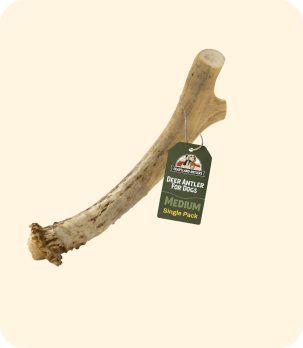
Heartland sells naturally shed antlers. That is a material and sourcing choice we can discuss. We do not have a comparative life-cycle study that ranks our chews above every hide, tendon, cheese or manufactured toy. This guide explains what a clear environmental claim should answer and where the limits remain.
Separate the label claims
A single-ingredient product declares one ingredient. That can make it easier to identify what is offered, but it does not prove zero processing or eliminate all food-allergy concerns. Cleaning, cutting or drying are still processes. A short ingredient list also does not tell you the energy used, distance traveled or packaging material.
“Natural” is another claim with a different purpose. AAFCO's pet-food definition allows several forms of processing, including heat and physical processing. Natural should not be used as a synonym for untouched, sterile, environmentally best or clinically safe. Not every chew is regulated as food, so first identify the kind of product being sold.
| Claim | What to ask | What it does not establish alone |
|---|---|---|
| Single ingredient | What exact ingredient is declared? Are coatings or flavorings included? | No processing, no contamination or no allergy concern. |
| Naturally shed | How does the seller document collection after shedding? | Zero disturbance or the lowest total footprint. |
| USA sourced | Which part of the source and processing chain does this cover? | Zero transport emissions or an audited life-cycle result. |
| Recyclable packaging | Which component, and is it accepted locally? | That the whole package will actually be recycled. |
| Grade A | What selection standard does this seller apply? | Medical approval or environmental certification. |
Compare actual packages, not stereotypes about categories. A bully stick may declare a single bovine ingredient. A cheese chew's recipe varies. Rawhide processes differ. A manufactured toy may use more than one material. None of these facts should be replaced with a blanket assumption about a competitor's additives or country of origin.

Understand naturally shed sourcing
Deer and elk antlers are bone structures that are shed and regrown as part of a biological cycle. Collecting an antler after it falls is different from removing one from a living animal. Shedding is not the same event as the loss of velvet during antler development; the two should not be merged into one spring-time explanation.
A shed is also part of an ecosystem. The National Park Service explains that shed antlers support nutrient cycling and are used by wildlife. They are not simply waste that has no other purpose. Collection can involve access rules and wildlife considerations. Follow the rules for the specific land and season; do not assume that finding an antler gives permission to remove it.
Ask a supplier how it verifies the collection source and permitted access, how it selects pieces and what happens before packing. A general statement about annual shedding does not document the history of a particular batch. Clear records are more useful than a picture of a mountain or a leaf symbol.
Heartland's brand information describes a veteran-owned business with USA-sourced, naturally shed antlers. These are the brand's sourcing statements. They should not be expanded into unsupported claims of zero wildlife disturbance, zero emissions or independent environmental certification.

Ask for evidence of environmental impact
The FTC's consumer guide to green claims encourages specific explanations of what an environmental claim covers. For a chew, separate the material from its collection, processing, transport and packaging. A favorable fact in one stage does not settle the whole comparison.
A practical supplier check includes these questions:
- Does the claim cover the chew, its package or both?
- Is a comparison based on measured results with a stated boundary, or only on a general impression?
- Which source and processing steps can the business document?
- What packaging arrives, and what can your local system accept?
- What instructions apply when the item reaches the end of suitable use?
We cannot verify a universal “zero waste” claim merely because different antler sections have different uses. Cuts, unsuitable pieces and packaging can still require management. Nor should a natural material be presented as automatically suitable for a home compost pile. Follow local disposal guidance and product instructions. Keep discarded pieces away from dogs and wildlife rather than leaving them in a yard.
Durability can affect replacement frequency, but the relevant endpoint is suitable use. Do not keep a cracked chew to reduce waste. Do not buy an unsuitable hard object on the assumption that its longer physical life must mean a lower environmental impact.

Keep the dog in the decision
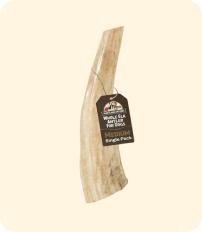
Environmental preference and dental suitability are separate decisions. Whole deer, whole elk and split elk antlers all retain hard material. AAHA includes antlers among hard chews that can damage teeth. A natural source, one ingredient or the right weight label does not remove that concern.
Ask your veterinarian about your dog's teeth and chewing behavior before selecting a hard chew. Repeated crushing, snapping or swallowing attempts are reasons to reassess. Puppies, older dogs and dogs with dental treatment need individual advice; split elk is not a universal safe option for them.
For a food allergy or elimination diet, follow the veterinarian's permitted list. Single ingredient is not the same as hypoallergenic, and a chew can interfere with a diet plan even when the package looks simple. If the goal is enrichment, suitable food puzzles, scent games and training may also meet that need.
If you still compare Heartland products, use the split and whole elk guide for the cut difference and the size guide for dimensions. Treat these as product information, not a guarantee of safety.

Frequently asked questions
Are antlers the most sustainable dog chew?
We cannot establish that without an appropriate comparison of the full supply chains and use. Naturally shed sourcing is one useful fact, not a complete life-cycle result.
Does single ingredient mean no processing?
No. One declared ingredient can still be cleaned, cut, dried or otherwise processed. Ask what the maker actually does.
Are antlers hypoallergenic?
Do not assume that. Use your veterinarian's plan for a diagnosed allergy or diet trial.
Can I compost a leftover antler?
Do not assume that a home compost system can handle it appropriately. Follow local and product disposal guidance, and prevent access to the discarded piece.
Is a split antler a gentle option?
A split exposes inner material but retains hard material. It does not remove tooth or fragment risk.
To ask about a Heartland product's source, ingredient or cut, contact us. See the current catalog and the antler safety guide before purchase.