
Deer normally shed their antlers and grow a new set each year. The old antler does not reattach. New growth begins from a permanent base on the skull called the pedicle. This seasonal process is why a naturally shed antler can be collected after the animal has left it behind.
The biology is useful when reading a dog-chew label. It explains the phrase “naturally shed.” It does not, by itself, prove a seller's sourcing practices or establish that a hard chew suits a dog.
1. New antlers grow under velvet
Velvet is the living, soft tissue covering a growing antler. It supplies the developing structure through blood vessels. During this phase, the antler is different from the hardened shed material used in finished antler chews.
The University of Missouri's wildlife guide describes antler growth as a hormone-regulated process tied to day length. Age, nutrition, and genetics influence the antlers a deer develops. This explains why natural antlers vary and why a new set is not an exact copy of the previous one. Source: University of Missouri Extension, reviewed 2022.
A photograph of a buck in velvet shows a stage in the animal's life. It is not evidence that a finished chew contains living velvet or has the properties of growing tissue. When a product claim depends on that distinction, ask the seller which material is actually in the package.

2. The antlers harden before the breeding season
As the growth stage ends, the antler hardens and the velvet is lost. The buck carries the hardened set through its breeding season. The familiar branched rack in an autumn photograph is this mature stage.
Missouri's deer ecology guide describes the local sequence from summer velvet to hardened antlers later in the year. Calendar dates can differ by region and animal. Use a seasonal description rather than assuming that every deer sheds on the same date. Source: University of Missouri Extension, deer ecology guide.
| Stage | What is happening | What a shopper should understand |
|---|---|---|
| New growth | Antlers develop from the pedicle. | The antler is a growing structure. |
| Velvet stage | Living tissue covers the antler. | Velvet and a finished hard chew are different materials. |
| Hardened stage | The animal carries mature antlers. | Mature antlers are hard bone. |
| Shedding | The old antlers separate from their bases. | Collection can take place after natural shedding. |

3. Shedding makes room for another set
The American Museum of Natural History explains that antlers are shed, then replaced by new growth. This differs from the usual pattern for true horns, which have a different structure. For a buyer's comparison, see antlers versus horns. Source: American Museum of Natural History, 2016.
The useful distinction is between the base that remains on the animal and the antler that is shed. A found antler does not need the animal to keep growing after it has fallen. It is detached material.
Avoid treating the number of points as a simple age label. A rack's appearance reflects several factors, and a photograph alone is not a complete history of the animal. In the same way, a chew's appearance cannot tell you the exact date its source antler was shed.

4. Read “naturally shed” as a sourcing claim
On a dog-chew page, “naturally shed” describes how the seller says the antler was obtained. It is separate from where the material came from, how it was prepared, and whether the seller can trace it through the supply chain.
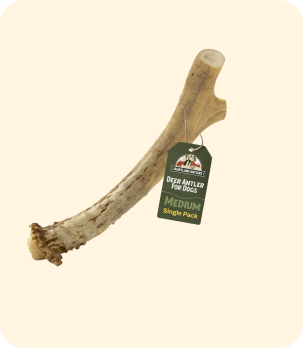
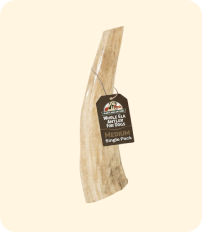
Heartland Antlers describes its antler chews as USA-sourced and naturally shed. The current range includes whole deer, whole elk, and split elk chews. See the antler collections for the available products and their current details. These are Heartland's product statements, rather than an independent audit of every collection event.
When comparing sellers, ask four plain questions:
- What animal is the material from?
- Does “naturally shed” apply to this exact product?
- Where was it sourced, and where was it prepared?
- What record can the seller provide if a product question arises?
Our sourcing guide covers the broader environmental questions. For a specimen found on a walk, use the separate found-antler guide.

Frequently asked questions
Do deer grow a completely new set of antlers?
Yes. In the normal annual cycle, the old antlers are shed and new antlers grow from the pedicles. The detached old antlers do not reattach.
Do all deer shed on the same date?
No. Timing varies with the species, region, and individual animal. A seasonal pattern is more useful than a single calendar date.
Are antlers the same as horns?
No. Antlers are bone structures with a shedding and regrowth cycle. True horns usually have a bony core and an outer keratin sheath. Exceptions exist among animal groups.
Does naturally shed mean an antler is safe for every dog?
No. The phrase describes sourcing. Dental condition, chewing behavior, and the risk from hard objects remain separate questions. Read the suitability guidance before considering an antler chew.
Image note: The five images are AI-generated natural-history illustrations. They do not document a particular animal, collection site, or Heartland production process.