
A Samoyed's thick coat and familiar smile do not tell you which chew suits its teeth. Antlers can fracture teeth, even when a piece is large, natural and intact. The useful starting point is an individual dental assessment and a clear picture of how your dog uses objects.
This guide focuses on three questions Samoyed owners often face: whether breed appearance should change a size choice, what it means when a dog likes to settle near people, and when wear calls for a different activity. The American Animal Hospital Association warns about dental damage from hard chews, including antlers.
Look past the coat and the smile
The American Kennel Club describes the Samoyed as a substantial, graceful dog with a thick white coat and distinctive expression. Those visible features cannot establish a jaw measurement or a chewing pattern. Claims that every Samoyed needs one size above a weight chart are not a substitute for actual product details and veterinary advice.
Before buying, note what the dog does with familiar toys. Does it settle quietly, pull pieces away, grip hard objects with its back teeth or attempt to swallow parts? Avoid labels such as “moderate chewer” if they hide those actions. A dog can change its approach when offered a different material.
Tell your veterinarian about damaged or worn teeth, dental procedures and any history of swallowing objects. A puppy's developing mouth and a senior dog's dental condition need separate assessment; neither a whole nor a split antler becomes suitable merely because it matches an age category.
Company and enrichment are different needs
If your Samoyed brings objects near you, you can observe that preference without turning it into a breed-wide rule. The dog may want company, play or another activity. Quiet time beside an owner does not require an antler. Consider a suitable food puzzle, training or a scent game as part of the dog's routine, with food choices that fit its diet.

Use the current product details for fit
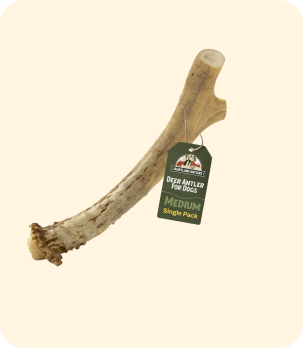
A weight range is a product category, not a dental clearance. Check dimensions, shape, use directions and removal rules for the exact item. Natural antlers vary. If the information is incomplete, ask the seller before ordering rather than using coat volume or head appearance to guess.
| Question | Useful information |
|---|---|
| What piece is being sold? | Current size range, dimensions, shape and pack contents |
| What material and cut is it? | Whole deer, whole elk or split elk |
| What does the dog do? | Observed gripping, crushing, tearing or swallowing attempts |
| Are the teeth suited to the activity? | An individual veterinary assessment |
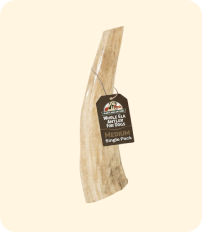
Heartland's current catalog lists available options. Whole deer, whole elk and split elk all retain hard material. A split face exposes the interior; it does not make the item soft or protect worn teeth. A grade description also cannot establish safety.
Read the size guide and elk and deer comparison for product context. There is no reliable density percentage or automatic “elk first, deer later” rule for a Samoyed. If an item is rapidly damaged, stop use instead of simply increasing hardness.

Being nearby is not the same as watching
A dog can settle beside you while your attention is on a screen. If you offer a chew after discussing suitability, active supervision still matters. Follow the product's directions, keep the item visible and separate the dog from other dogs and children during the activity.
Do not use a fixed fifteen-minute trial as proof of safety. Check before, during and after every session. An uneventful first week cannot predict the next use.
- Before use, look for cracks, loose material, sharp areas and an unsuitable worn shape.
- During use, stop forceful crushing, piece removal or attempts to swallow the item.
- End the activity for bleeding, mouth sensitivity, dropping the item or a sudden change in chewing.
- After use, inspect again and follow the current cleaning and storage directions.
If a tooth may be broken, contact your veterinarian. Cornell explains that fractures can expose the pulp and lead to pain or infection. If a piece may have been swallowed, call for advice. Choking signs, breathing difficulty or collapse require urgent help.

Use wear as a reason to reassess
Fast wear is information about the activity. It is not an instruction to buy a harder species of antler. Likewise, an item that lasts a long time can still be too hard for the teeth. Record the actual condition and behavior rather than trying to achieve a promised number of weeks.
Remove an item with damage or an unsuitable shape. Do not wait for a universal three-inch threshold, and do not put your fingers into the dog's mouth to compare it with tooth width. Do not file damaged edges to extend use.
Rotating suitable activities may add variety. It does not let a damaged antler “rest” back into good condition. Keep records for each item, and keep retired pieces out of reach. If your Samoyed ignores an antler, let it stop; interest is neither required nor proof of safety.
For dental care, ask about brushing and products on the VOHC accepted-products list. For age-specific questions, see the senior-dog guide and discuss the dog's current teeth with your veterinarian.

Frequently asked questions
Does every Samoyed need a larger antler than its weight suggests?
No universal breed adjustment is established here. Use current product information and individual advice; size alone cannot remove dental risk.
Should I switch to deer if elk wears quickly?
Do not solve rapid damage by increasing hardness. Stop the activity and review the dog's behavior and dental suitability.
Is a social chewing style safer?
Company does not prevent a tooth fracture or swallowing incident. Watch each use and inspect the item.
Will split elk protect an older Samoyed's teeth?
No. Split elk retains hard material. An older dog needs a dental assessment and may need a different activity.
Sources and product questions
This educational guide does not claim veterinary review. AKC supports the limited breed description; AAHA and Cornell support the dental cautions. Contact Heartland for current specifications and your veterinarian for health advice.