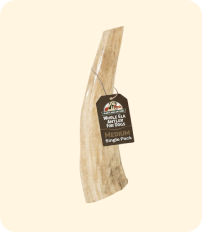


An antler's color is one clue about its surface, not a complete quality test. Natural antlers can show cream, tan, and brown areas. Surface staining and later outdoor exposure can change their appearance. A photograph cannot certify freshness, strength, or suitability for a dog's teeth.
Use color to form a question for the seller. Use the product's condition, documented history, and your dog's needs to make the decision.
1. Brown color can come from surface staining
Texas Parks and Wildlife explains that blood associated with velvet and tannins in tree bark can stain hardened antlers brown. Tannins are plant compounds that can add color. This is one reason a natural exterior can look different from a pale cut surface. Source: Texas Parks and Wildlife, winter 2012.
That explanation is about antler biology. It does not tell you whether a particular retail piece has been treated, coated, or stored well. Ask about the exact item when those details matter. A brown exterior alone cannot provide a collection date or a handling record.
When you look at a product photo, compare the outer surface with the cut end. Those are different views of the same material. Do not assume a pale exposed interior means the seller has bleached the whole piece.

2. A pale antler needs context
Outdoor antlers can become pale as they weather. The visible surface can also differ from one side to another. Heartland's Grade A guide discusses condition and grading language in its own catalog. A seller's grade is a purchasing specification, not a clinical safety approval.
Ask whether you are viewing an intact natural exterior, a freshly cut surface, or an old outdoor specimen. Those are different situations. A seller should be able to explain which one the photograph shows.
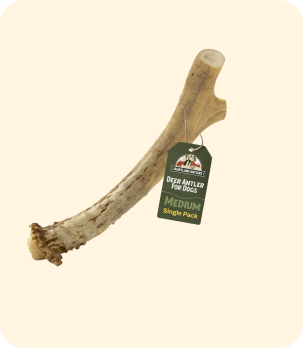
A screen adds another source of uncertainty. Lighting and image processing can make an object appear lighter or darker. The illustrations in this article show the concept; they cannot be used as a color-matching card for a purchased chew. If the item you receive differs from your expectation, take clear photographs in neutral daylight and send them to the seller before use.

3. Check the surface, shape, and history together
Visible damage matters more than a pleasing color. Set aside a piece with a crack, a sharp edge, or loose material while you ask the seller about it. Do not give it to a dog as a way to find out whether it will hold together.
| Observation | Useful follow-up question |
|---|---|
| Brown exterior, pale cut end | Is this the natural exterior and a cut face? |
| Very pale or chalky outside | What condition criteria did this item pass? |
| Crack or loose fragment | Can the seller review the item before use? |
| Strong mismatch with the listing | Does the photo show the same species, cut, and size? |
| A grade without an explanation | What does that grade mean for this seller? |
An antler that passes a seller's visual check is still a hard object. AAHA's dental guidance cautions that hard chews such as antlers can damage teeth. Color does not resolve that risk. Source: AAHA dental care guidelines, 2019.
For a piece already in use, see the replacement guide. It covers changes that matter during the chew's life, rather than assigning a lifespan from its starting color.

4. Send a useful product question
A short, specific message helps the seller identify the concern. Include the order number, product name, and a clear description of what changed or looked different. Photograph the entire piece, then the area you want reviewed. Keep the item out of use while the question is unresolved.
You can use this simple wording: “This is the item from my order. The area shown looks cracked, chalky, or different from the listing. Please confirm the product's condition and the next step before I give it to my dog.”
There is no need to guess a defect's cause. Describe what you can see. If the concern is pain, a tooth injury, or a swallowed piece, contact a veterinarian first. A seller can address the product; a veterinarian must assess the dog.
For a Heartland order, use the contact page. For general selection, compare the species and cut guide alongside the current product details.

Frequently asked questions
Does a white antler always mean it was bleached?
No. A pale cut surface and a weathered outer surface can both look light. Ask the seller about preparation and condition instead of inferring a treatment from color alone.
Does brown color prove an antler is fresh?
No. Brown staining does not provide a collection date. A seller's sourcing and handling records are separate from the visible color.
Can I use this article's images to grade my antler?
No. The images illustrate color and condition concepts. They are generated scenes, not calibrated photographs or a grading standard.
Should I keep using a cracked antler while waiting for support?
Keep it out of use. Send the seller clear photographs. If the dog has signs of injury or may have swallowed a piece, seek veterinary advice.
Image note: All five images are AI-generated illustrations. They do not prove the condition, treatment, dimensions, or grade of an actual Heartland product.