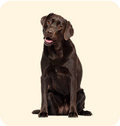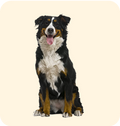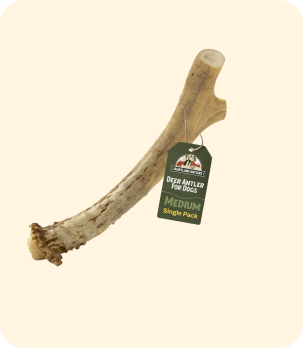
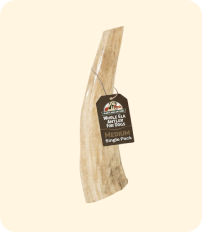
The right antler for a German Shorthaired Pointer is large whole elk, Grade A, sized by drive level rather than body weight.

Quick Answer: The right antler for a German Shorthaired Pointer is sized by drive level, not weight. The German Shorthaired Pointer (45-70 lb, medium-strong scissors bite) needs large whole elk, Grade A. Drive level controls sizing for this breed, not body weight. A 55-pound GSP in a high-drive state applies cumulative chew pressure equivalent to a much larger low-drive dog. Medium antler holds up on ordinary days and fails on the days it matters most. Elk density handles the burst sessions that drive-state chewing demands. A Grade A large whole elk typically lasts an adult GSP 4 to 10 weeks. Heartland Antlers ships Grade A elk sized for high-drive sporting breeds.
You have a 55-pound dog that has destroyed every chew in the house. Not because it is a power chewer. Because it had energy, nothing to do with it, and the couch cushion was the next available target. From customers with German Shorthaired Pointers, the most common order mistake is sizing by weight and choosing medium antler, which holds up on quiet days and disappears on high-drive days.
That is the GSP problem. Not jaw strength. Not a crusher bite. Drive. The German Shorthaired Pointer chews because it is built to retrieve, flush, track, and run all day, and when that energy has nowhere to go, the mouth finds something.
A chew is not a luxury item for this breed. It is behavioral management.
For a German Shorthaired Pointer (45-70 lb, medium-strong scissors bite, high drive), the correct antler is large whole elk, Grade A. The drive level, not the weight, is the controlling variable for sizing. A medium antler handles ordinary sessions and gets outpaced on the hard days. That is exactly backwards.
Customers with German Shorthaired Pointers consistently report the same sizing mistake: they match weight to medium antler, it holds up for two weeks, and then disappears in one session on a high-drive day. After working with GSP owners, we've found that drive state, not body weight, is the controlling variable for sizing. Large whole elk is sized for the hard days. Medium gets outpaced exactly when the chew matters most.
Drive, Not Jaw Force, Is Why GSPs Destroy Chews: What You Are Fitting
Weight: 45-70 lb. A medium-large dog by most sizing charts.
Jaw type: Medium-strong scissors bite. Functional and capable, built for field work. The GSP jaw is not designed for guard-dog crushing or sustained bone-splitting. It is a working retriever mouth. Long muzzle, moderate bite force relative to body size.
Chew style: High-energy and opportunistic. GSPs do not chew the way working guardian breeds do. They are not grinding something down methodically. They chew in bursts, with intensity, when drive is high and the outlet is available. When well-exercised, chew sessions tend to be moderate and focused. When over-threshold, bored, or coming off a high-stimulation session, the chewing becomes hard, fast, and purposeful.
The chew is not recreational for a GSP. It is a discharge mechanism.
What this means for fitting: A chew that handles a calm GSP on a normal weekday is not the right benchmark. The benchmark is a GSP at the end of a rained-out weekend. That is when the antler earns its keep or does not.
Antler for a German Shorthaired Pointer: Large Whole Elk Because Drive Sets the Load
A GSP at 55 pounds is not a 55-pound chewer when it is under-stimulated.
In those states, the retriever drive that makes this breed exceptional in the field redirects completely. The energy does not disappear. It does not moderate. It looks for an outlet. If the outlet is a chew, the dog will work it at an intensity level that exceeds what the weight-based sizing charts would predict.
Most GSP owners are not asking what antler to buy because their dog is a mechanical power chewer. They are asking because the dog has destroyed the house, the furniture, the leash hanging by the door, and the edge of the kitchen cabinet. The concern is not jaw force. It is unmanaged drive.
A medium antler sized by weight alone may handle the average session. On a bad day, it will be outpaced. The drive level, not the body weight, is the controlling variable for this breed. A 55 lb GSP at peak drive applies as much cumulative pressure to a chew in one afternoon as a 65 lb low-drive dog applies in a week.
What We Ship for GSPs
These are the configurations that match how GSPs actually chew.
Standard adult GSP (50-65 lb): Large whole elk, Grade A. The weight says medium. The drive says large. A medium will hold up on ordinary days and get outpaced on the days you need it most. The drive level earns the large.
Working or hunting GSP (field dog in season): Large whole elk, Grade A. A field dog in active season has legitimate high-intensity sessions that demand serious decompression afterward. The antler serves as recovery tool and outlet. Go large, Grade A.
GSP under 10 months: Split deer, supervised. Adult teeth are not fully set. Whole antler at full hardness is not appropriate until the dog is closer to full dental maturity. Split deer provides marrow access and engagement at the right hardness level.
Senior GSP: Large split elk. The drive fades as the dog ages, but the behavioral need for an outlet does not disappear entirely. Split reduces the hardness demand on older teeth while keeping the chew engagement the dog expects.
Elk Holds Up at Peak Drive; Deer Does Not
Elk for adult GSPs.
Deer antler works fine for lower-drive dogs and careful chewers. For a GSP with high drive, the lower density of deer antler becomes a longevity problem on the hard days. Elk antler is measurably denser than deer antler at the same diameter, with a harder outer cortex that handles sustained burst engagement better. A 55-pound dog in a peak-drive state will work through deer antler faster than the weight chart would predict. Not because the jaw is especially powerful, but because the session intensity is sustained and purposeful.
Elk provides the density margin that drive-state chewing demands. It holds up for the full session.
For puppies and seniors: split deer is appropriate where whole antler hardness is not the right fit. The species call changes when the hardness equation changes.
How to Read the First Session
The first session is informative, but not always representative. Watch the full 20 minutes.
What you want to see: The dog engages with the antler, works it with focus, and you can see surface wear by the end. The piece holds its shape. No deep gouging, no sharp edges created.
What means try large instead of medium: The dog works through the antler at a high rate, sustained for the whole session, with no natural moderation. The session looks more like a retriever in full pursuit than a dog settling in for a chew. Size up.
What means try split: The dog investigates, attempts a few passes, and loses interest. Some GSPs need the marrow reward to establish the chew habit. Split elk gets the engagement started. Once the dog understands the payoff, whole antler holds attention reliably.
A GSP may hit the first antler hard because it is novel, then moderate in subsequent sessions as the novelty fades. Give the fit three sessions before judging the size. Post-novelty burst chewing on the first session is not a reliable indicator of normal session intensity.
The Antler as a Behavioral Management Tool for a High-Drive Retriever
The antler is not just a chew for a GSP. It is a management tool.
On bad-weather days when the dog cannot run, the antler buys time and reduces the pressure of unspent energy. On post-hunt evenings when the dog is coming off high stimulation and needs to decompress, the antler gives the drive somewhere specific to go. In the crate during a long absence, it provides engagement that shortens the perceived duration of confinement.
A well-fitted antler that holds up through a full drive-state session earns a place in the GSP owner's rotation. The dog learns to go to the antler when energy is high, which is genuinely useful behavior for a breed that will otherwise find its own outlet.
A chew that fails quickly does not teach that pattern. It disappears after one hard session and the training value disappears with it. Durability is not a sales point here. It is functional.
Why the Chew Graveyard Is a Drive Problem, Not a Jaw Problem
If you own a GSP, you know the list: antlers, synthetic chews, knotted bones, rope toys. All gone. Some fast, some slower, all the same destination.
The destruction catalog does not mean your dog is abnormal or exceptionally powerful. It means you have a high-drive retriever and most chews on the market are not designed around that. They are designed around body weight and bite force. Neither variable fully captures what happens when a motivated GSP sets its attention on a chew.
Grade A elk antler at the right size is one of the few chews that is actually matched to the problem. Elk runs 30-40% denser than deer at equivalent diameter, and a Grade A large whole elk piece typically lasts an adult GSP 4-10 weeks, even through drive-state sessions. The material wears slowly and evenly rather than fracturing or splintering. It does not get smaller fast enough to become a swallowing hazard in a single session. It stays in the rotation.
German Shorthaired Pointer Antler Size and Cut Reference
A Grade A large whole elk antler typically lasts an adult GSP 4-10 weeks depending on drive level and exercise. Elk antler runs 30-40% denser than deer at equivalent diameter, which is the margin that holds through drive-state sessions. Grade A pieces run 15-25% heavier per linear inch than Grade B, giving the antler the structural consistency a high-drive working dog needs.
| Dog | Weight | Recommended Antler | Duration |
|---|---|---|---|
| Standard adult GSP | 45-70 lb | Large whole elk, Grade A | 4-10 weeks |
| Working or hunting GSP | 45-70 lb | Large whole elk, Grade A | 3-7 weeks |
| GSP puppy | Under 10 months | Split deer, supervised | Varies |
| Senior GSP | Any | Large split elk, Grade A | 4-9 weeks |
Find the Right Fit
For most adult GSPs: large whole elk, Grade A. Choosing the right antler for a German Shorthaired Pointer means sizing for peak drive days, not calm ones.
For working field dogs in season: large whole elk, Grade A.
For GSPs under 10 months: split deer, supervised.
For senior GSPs: large split elk.
- Find the Right Fit by Breed and Jaw Style
- Elk vs. Deer Antler: How to Choose for an Active Breed
- What Grade A Means and Why It Matters for a Working Dog
- Antler for Weimaraners: Same Gun Dog Category, Same Large Elk Answer
- The Right Antler for an Irish Setter (another sporting breed with similar drive-state chew demands)
- Antler for Vizsla: High-Drive Retriever, Same Sizing Logic
- Shop Now
Frequently Asked Questions
What size antler for a German Shorthaired Pointer?
For a standard adult GSP (50-65 lb): large whole elk, Grade A. The drive level, not the weight, is the controlling variable for sizing. A medium antler will handle ordinary sessions but get outpaced on high-drive days, which are exactly the sessions when you most need the chew to hold up. For GSPs under 10 months, use split deer supervised. For seniors, large split elk.
Are antlers safe for GSPs?
Yes, with the right fit. The safety practices are consistent across breeds: supervise early sessions, retire pieces when they reach molar width so they cannot be swallowed whole, and go up in grade if the dog is working through the piece unusually fast. Grade A whole elk is the appropriate hardness level for a healthy adult GSP. Puppies under 10 months and seniors with worn teeth should use split antler, which is softer and provides marrow access without the full hardness load.
Elk or deer antler for a GSP?
Elk for adults. Deer antler is lower density than elk, and a GSP in a drive state will work through deer faster than the weight chart would predict. The drive-state intensity is the issue, not the jaw force. Elk provides the density margin that holds up through the hard sessions. Split deer is appropriate for puppies under 10 months and seniors where whole antler hardness is not the right fit.
Will my GSP destroy an elk antler?
Not the way it destroys most chews. A Grade A large whole elk antler wears slowly and evenly. It does not fracture, splinter, or compress the way synthetic chews and lower-quality natural products do. A GSP in a high-drive session will make visible progress on the surface, which is the intended use. The antler is not indestructible. It is the right material at the right grade, matched to the chew style.
How long does an antler last for a German Shorthaired Pointer?
A Grade A large whole elk antler typically lasts an adult GSP between four and ten weeks with regular chewing. Duration varies with drive level, exercise, and session frequency. A well-exercised GSP on ordinary days will moderate naturally. An under-exercised or high-drive dog will chew harder and more frequently, shortening the timeline. If the antler is disappearing faster than expected, check that the grade is actually A and that the size is large, not medium.
Frequently Asked Questions
What size antler for a German Shorthaired Pointer?
For a standard adult GSP (50-65 lb): large whole elk, Grade A. The drive level, not the weight, is the controlling variable for sizing. A medium antler will handle ordinary sessions but get outpaced on high-drive days, which are exactly the sessions when you most need the chew to hold up. For GSPs under 10 months, use split deer supervised. For seniors, large split elk.
Are antlers safe for GSPs?
Yes, with the right fit. The safety practices are consistent across breeds: supervise early sessions, retire pieces when they reach molar width so they cannot be swallowed whole, and go up in grade if the dog is working through the piece unusually fast. Grade A whole elk is the appropriate hardness level for a healthy adult GSP. Puppies under 10 months and seniors with worn teeth should use split antler, which is softer and provides marrow access without the full hardness load.
Elk or deer antler for a GSP?
Elk for adults. Deer antler is lower density than elk, and a GSP in a drive state will work through deer faster than the weight chart would predict. The drive-state intensity is the issue, not the jaw force. Elk provides the density margin that holds up through the hard sessions. Split deer is appropriate for puppies under 10 months and seniors where whole antler hardness is not the right fit.
Will my GSP destroy an elk antler?
Not the way it destroys most chews. A Grade A large whole elk antler wears slowly and evenly. It does not fracture, splinter, or compress the way synthetic chews and lower-quality natural products do. A GSP in a high-drive session will make visible progress on the surface, which is the intended use. The antler is not indestructible. It is the right material at the right grade, matched to the chew style.
How long does an antler last for a German Shorthaired Pointer?
A Grade A large whole elk antler typically lasts an adult GSP between four and ten weeks with regular chewing. Duration varies with drive level, exercise, and session frequency. A well-exercised GSP on ordinary days will moderate naturally. An under-exercised or high-drive dog will chew harder and more frequently, shortening the timeline. If the antler is disappearing faster than expected, check that the grade is actually A and that the size is large, not medium.