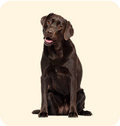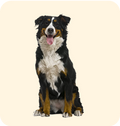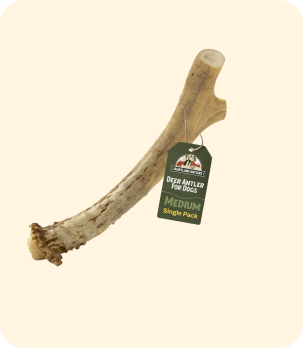
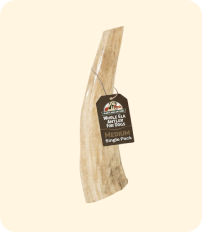
Quick Answer: The right antler for an English Springer Spaniel is determined by reward rate, not bite force. For an adult English Springer Spaniel (40-55 lb), the correct antler is medium split elk, Grade A. The Springer's soft mouth and reward-wired retriever genetics mean a sealed whole antler gets abandoned quickly when it delivers no marrow feedback. Split elk opens the marrow channel from the first session, keeping the dog engaged across multiple weeks. A medium split elk, Grade A, typically lasts an adult Springer 3-8 weeks. Heartland Antlers ships Grade A split elk sized for the Springer's moderate-force, motivation-driven chew style.

Your Springer went at the antler hard for three minutes, then dropped it and walked away. The chew was not too hard. The chew was not delivering anything. After working with Springer owners, this pattern accounts for most of the "my dog hates antlers" complaints we hear from this breed, and the fix is always cut, not species.
English Springer Spaniels are field dogs built around reward. They flush birds and retrieve them. That wiring does not go off at home. A whole antler with a sealed cortex asks your dog to work with no return, and a Springer trained by centuries of retriever genetics stops doing things that do not pay.
For most adult English Springer Spaniels (40-55 lb, soft-mouth scissors bite, moderate jaw force), the correct antler is medium split elk, Grade A. The split exposes the marrow channel from the first session, and that immediate reward is what keeps this breed engaged.
Customers with English Springer Spaniels consistently report that the dog shows initial excitement about a new antler, then abandons it after a few minutes when a whole piece provides no accessible reward. After working with Springer owners, we've found the transition from whole to split elk resolves this pattern in the first session in most cases. The exposed marrow face gives the reward-wired Springer immediate feedback.
The English Springer Spaniel Chew Profile: Enthusiastic Drive, Soft Mouth, Reward-Wired
An adult English Springer Spaniel (40-55 lb, long soft muzzle, scissors bite) has one of the softer mouths in the sporting dog group. The breed was developed to flush and retrieve birds without damaging them. That soft-mouth genetics means your dog applies consistent, exploratory pressure rather than crushing use.
Chew drive is high and enthusiastic. Springers come to a chew with energy. They work it actively. But they are not grinding through material the way a power chewer breed does. The effort is real. The jaw force behind it is not at power-chewer levels.
A whole antler presents a hard outer shell with nothing accessible on the surface. For a breed wired to retrieve, the question is always whether the effort produces the reward. A whole antler fails that test quickly. The dog tries, finds no marrow, and stops. Not stubbornness. Not disinterest. The cost-benefit calculation ran and came back negative.
The fit problem for an English Springer Spaniel is almost never about whether the antler is too hard. It is about whether the antler opens early enough to stay interesting.
A medium split elk, Grade A, typically lasts an adult Springer 3-8 weeks of regular daily sessions, compared to a whole elk that many Springers abandon within the first three attempts. Elk antler is 30-40% denser than deer at comparable grades, giving the split piece enough durability to outlast the breed's working-session chew rate across multiple weeks. The split cut and elk density together are the correct combination for this breed's motivation-driven chew pattern.
Antler for an English Springer Spaniel: What We Ship and Why
These are the configurations that match how Springers actually chew.
Standard adult English Springer Spaniel (40-55 lb): Medium split elk, Grade A. The split opens the marrow channel and delivers immediate feedback. Your dog engages from the first session and keeps coming back because the reward is there. Whole elk at this size sits ignored in most cases.
High-drive or working field Springer: Medium split elk, Grade A. A dog that has been hunting or running hard comes home with energy to spend. The marrow access that makes split elk work for the standard house dog works the same for the field dog. The cut is the controlling variable regardless of drive state.
English Springer Spaniel puppy (under 10 months): Small split deer, supervised. Adult teeth are not fully set. Whole elk is too hard at this stage. Split deer is softer and provides marrow access at an appropriate hardness level for developing dentition. Cap sessions at 15 minutes and watch closely.
Senior English Springer Spaniel: Medium split elk, Grade A. Drive often moderates with age and jaw pressure is lower on older dentition. Split keeps the engagement going without demanding sustained effort from teeth that have already done years of work. If a senior dog has specific dental concerns, check with your vet before introducing any antler.
Elk vs. Deer for an English Springer Spaniel: Split Is the Controlling Variable
Split elk for most adult English Springer Spaniels. This is the core call.
Deer antler is lower density. For a breed that chews with enthusiasm but not force, deer antler gets worked through faster than expected during active sessions. The math on durability favors elk across multiple sessions.
The case for split elk over whole elk is clear. Whole elk has density and mass on its side. But it fails the reward test that Springers run constantly. A dog that chews by motivation rather than by drive will return to a whole elk piece a few times, find nothing, and stop returning. The piece sits.
Split elk changes the first session. The marrow face is exposed. Your dog finds it immediately. The session is longer, the engagement is real, and the piece gets worked from the first day rather than ignored from the second.
Whole deer antler fails twice: it delivers less density than elk, and the narrow marrow channel in a whole deer antler still does not give a Springer the immediate feedback it needs. Split deer is appropriate for puppies under 10 months where hardness is the primary fitting constraint.
For seniors: split elk remains correct. The marrow access reduces the jaw effort without sacrificing how long the piece lasts.
How to Read the First Session
The first session tells you whether the fit is working.
Right fit: Your dog finds the marrow face within two or three minutes. You see sustained surface work, steady posture, and the dog returning to the piece after a short break. Visible scuffing or surface wear at the end of the session confirms the piece is being worked.
Go up in size: Your dog is fully engaged but is working through the marrow channel faster than expected. If you see real material loss within a 30-minute session, the piece is undersized for the engagement level. Size up to large split elk.
Losing interest fast: If your dog is walking away from a split elk piece inside five minutes, check whether the marrow face is fully exposed. On a Grade A split elk, the channel should be visible and accessible from the start. Hold the piece and let your dog investigate the open face directly. Most Springers will engage once the reward is clearly in front of them. If the dog still walks, offer the piece again 24 hours later. Some dogs need a second introduction.
Normal Springer behavior: Springers are not going to sit and grind for two hours straight. They work the piece, step away, come back. A 20-minute session with two or three return visits is a solid fit.
Supervision Notes
Supervise all chew sessions until you know how your dog works the piece.
Retire criteria: Pull the piece when it is reduced to a size small enough to reach the back of the mouth. For a 40-55 lb English Springer Spaniel, retire when the piece reaches roughly molar-width. This is the threshold that matters regardless of breed.
Session length: 20-30 minutes for new sessions. Springers do not chew to exhaustion the way high-drive guardian breeds do, but jaw fatigue is real. Cap early sessions to let your dog establish a pattern without burning through novelty too fast.
Storage between sessions: Keep the piece in a clean, dry location. Do not leave it on a damp floor where it can pick up debris or moisture. A piece stored clean stays fresh and retains the marrow scent that draws your dog back.
If the dog is consuming the antler faster than expected: Confirm you have Grade A elk, not a mixed-grade or unlabeled product. Grade affects density directly. Also verify the piece is split elk rather than a soft cut or flavored product. If both are confirmed and consumption rate is still high, size up to large.
The Retriever Chew Pattern
Most antler selection advice is written for power chewers. It asks how much force the dog produces and sizes the antler to handle it.
That framework does not apply to English Springer Spaniels.
The Springer is a sporting breed with centuries of field work behind it. Flush the bird, mark the fall, retrieve to hand, soft mouth all the way. Every part of that sequence runs on motivation and reward rate. The dog learns to work because the work pays. That pattern carries through to how your dog approaches every task, including a chew.
A whole elk antler is a sealed object. There is no way in and no feedback until the dog has done a significant amount of surface work. For a Malinois or a Pit Bull with jaw force to spare, that sealed surface gets cracked eventually and the reward follows. For a Springer, the cost-benefit clears before the first reward arrives and the dog stops.
Split elk is not a compromise. It is the correct call for retriever-pattern chew behavior. The marrow channel is open, the reward is there from the first session, and the dog stays. The piece lasts because a Springer works steadily rather than crushing, which means the marrow face gives the dog sustained engagement across many sessions without disappearing in a day.
One ingredient. One piece. It works with how your dog is built.
Springer owners who hunt or train their dogs know the pattern: after a long morning in the field, the dog comes home ready to settle but full of energy. A whole elk piece sits ignored. A split elk piece gets worked for 20 minutes and the dog is calm. The marrow access is the difference. That is what keeps this breed at the chew instead of finding something else to do.
English Springer Spaniel Antler Size and Cut Reference
| Dog | Weight | Recommended Antler | Duration |
|---|---|---|---|
| Standard adult Springer | 40-55 lb | Medium split elk, Grade A | 3-8 weeks |
| High-drive or field Springer | 40-55 lb | Medium split elk, Grade A | 3-6 weeks |
| Springer puppy | Under 10 months | Small split deer, supervised | Varies |
| Senior Springer | Any | Medium split elk, Grade A | 4-9 weeks |
Find the Right Fit
For most adult English Springer Spaniels (40-55 lb): medium split elk, Grade A. Choosing the right antler for an English Springer Spaniel means matching marrow access to retriever reward-rate, not jaw force.
For working or field dogs: medium split elk, Grade A.
For puppies under 10 months: small split deer, supervised.
For seniors: medium split elk.
Related reading: - Find the Right Fit by Breed and Jaw Style covers the variables that body weight alone does not capture - Elk vs. Deer Antler: Which Is Right for a Soft-Jawed Retriever for the full species comparison - Antlers for Senior Dogs: When to Switch to Split if your Springer is older or has reduced jaw strength - The Right Antler for an Irish Setter for another sporting dog fit guide - The Right Antler for a Golden Retriever -- same soft-mouth retriever pattern, slightly heavier build - What Grade A Means and Why It Matters -- the density standard that keeps split elk sessions productive rather than letting the piece fracture early
Frequently Asked Questions
What is the best antler for an English Springer Spaniel?
Medium split elk, Grade A, for most adult Springer Spaniels (40-55 lb). The split exposes the marrow channel from the first session, which is the reward that keeps a Springer engaged. Whole antlers present a sealed surface with no immediate feedback, and most Springer Spaniels will abandon them quickly. The cut is the controlling variable for this breed.
Are antlers safe for English Springer Spaniels?
Yes, with the right fit. Use Grade A split elk for adults. Supervise sessions until you understand how your dog works the piece. Retire the antler when it is reduced to a piece small enough to reach the back of the mouth. For puppies under 10 months, use split deer rather than split or whole elk. For seniors, split elk remains appropriate; check with your vet if the dog has known dental issues.
What size antler for an English Springer Spaniel?
Medium for most adult Springer Spaniels (40-55 lb). The cut matters more than the size for this breed. A large whole antler will fail a Springer before a medium split elk will. If the dog is working through the piece quickly during active sessions, size up to large split elk.
Elk or deer antler for an English Springer Spaniel?
Elk for adult Springer Spaniels, specifically split elk. Split elk gives you marrow access that holds the breed's attention and enough density to last across multiple sessions. Deer antler is lower density and wears faster under active chewing. Split deer is the right call for puppies under 10 months where fitting to hardness is the priority.
How long does an antler last for an English Springer Spaniel?
A medium split elk, Grade A, typically lasts an adult Springer between three and eight weeks with regular chewing. Springers work in sessions rather than sustained grinding, which extends the life of the piece compared to power chewer breeds. The marrow face gets worked down gradually across many sessions. If the antler is disappearing faster than expected, confirm you have Grade A elk and verify the piece is split, not whole.
Schema (do not paste into Shopify body_html)
Frequently Asked Questions
What is the best antler for an English Springer Spaniel?
Medium split elk, Grade A, for most adult Springer Spaniels (40-55 lb). The split exposes the marrow channel from the first session, which is the reward that keeps a Springer engaged. Whole antlers present a sealed surface with no immediate feedback, and most Springer Spaniels will abandon them quickly. The cut is the controlling variable for this breed.
Are antlers safe for English Springer Spaniels?
Yes, with the right fit. Use Grade A split elk for adults. Supervise sessions until you understand how your dog works the piece. Retire the antler when it is reduced to a piece small enough to reach the back of the mouth. For puppies under 10 months, use split deer rather than split or whole elk. For seniors, split elk remains appropriate; check with your vet if the dog has known dental issues.
What size antler for an English Springer Spaniel?
Medium for most adult Springer Spaniels (40-55 lb). The cut matters more than the size for this breed. A large whole antler will fail a Springer before a medium split elk will. If the dog is working through the piece quickly during active sessions, size up to large split elk.
Elk or deer antler for an English Springer Spaniel?
Elk for adult Springer Spaniels, specifically split elk. Split elk gives you marrow access that holds the breed's attention and enough density to last across multiple sessions. Deer antler is lower density and wears faster under active chewing. Split deer is the right call for puppies under 10 months where fitting to hardness is the priority.
How long does an antler last for an English Springer Spaniel?
A medium split elk, Grade A, typically lasts an adult Springer between three and eight weeks with regular chewing. Springers work in sessions rather than sustained grinding, which extends the life of the piece compared to power chewer breeds. The marrow face gets worked down gradually across many sessions. If the antler is disappearing faster than expected, confirm you have Grade A elk and verify the piece is split, not whole.