
Antler chews are hard pieces of deer or elk antler offered as chewing objects. The useful questions are about the material, your individual dog and what a product claim can actually establish. Natural origin does not make a chew free of risk.
This FAQ explains the main decisions before purchase and during use. It does not provide a universal starting size or a promise that an antler is suitable for most dogs.
What are whole and split antler chews?
What does Heartland sell?
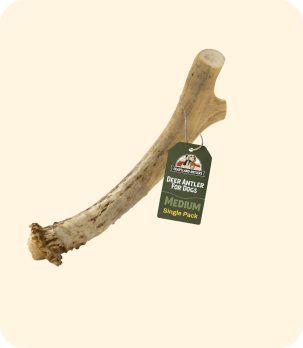
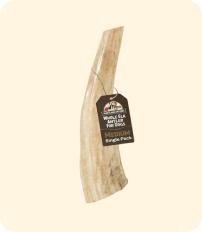
Heartland's range includes whole deer, whole elk and split elk antlers. A split elk antler is cut lengthwise to expose the interior. Whole pieces retain more of the outer surface. Check the current catalog for the exact item and its description.
Does naturally shed mean safe to chew?
No. Naturally shed describes how the antler originated. It does not test a dog's teeth, predict chewing force or remove the chance of swallowing a piece.
Is a split antler soft?
A split cut changes which surfaces are exposed. Hard material remains, so it is not a soft toy or a dental-safe option established by the cut alone. Read our split and whole guide for the material distinction.

What risks and benefits should I weigh?
Can antlers break teeth?
Yes. AAHA warns against antlers and other hard objects that can fracture teeth. Fragments can also create choking or digestive hazards. Supervision helps an owner respond, but it cannot prevent every tooth injury.
Are antlers best for aggressive chewers?
Forceful biting is not evidence of suitability. A dog that bears down hard on an object can still damage a tooth. Do not choose a harder item simply to make the dog work longer.
Do they clean teeth or provide essential nutrients?
Chewing contact alone does not establish a dental benefit for the exact product. Do not replace toothbrushing or veterinary dental care with an antler. For products with evaluated plaque or tartar claims, consult the Veterinary Oral Health Council's accepted-product list and check the precise item and directions.
Antlers contain minerals, but composition does not establish the amount your dog absorbs or a useful health dose. An antler is not a complete diet, a joint treatment or a prescribed supplement.
Are they guaranteed to be clean and odor-free?
No natural chewing object stays sterile through use. Saliva, storage and wear affect its condition. Do not rely on an odor-free or mess-free promise when deciding whether to keep a used piece.

How do I decide whether an antler fits my dog?
Is there a default size for a first purchase?
No single large whole elk piece suits every dog. Start with the dog's current weight, mouth size, chewing behavior and dental history, then check the exact product label. A label is not a dental safety test.
What should I tell the veterinarian?
Bring information about damaged or missing teeth, mouth pain, previous swallowed objects, dietary restrictions and how the dog uses chews. Ask whether hard chewing is appropriate and what alternatives the clinician recommends. Our discussion checklist can help.
What about puppies or older dogs?
Do not use an antler to train a puppy to tolerate hard objects. For an older dog, changes in appetite or chewing need assessment rather than an automatic cut change. Follow the veterinarian's instructions after dental treatment or with a diagnosed condition.
What if my dog ignores the antler?
Walking away is a valid choice. Do not press it against the teeth, coat it to overcome refusal or assume the dog must progress to a harder item. A new change in eating or chewing is different from a simple product preference.

When should I stop, replace or seek help?
How long does an antler last?
Wear depends on the piece and how the dog uses it. A weeks-or-months promise cannot replace checking the actual item. Do not keep a worn piece to meet an expected lifespan.
What condition ends use?
Remove a piece that is cracked, sharp, loose or small enough to be swallowed. Do not place it inside the mouth to test fit. Discard it where pets cannot retrieve it. The retirement guide gives more detail.
Can a timer make a session safe?
No fixed number of minutes removes hardness risk. Stay present, follow product directions and stop when behavior or condition causes concern. Do not leave an antler as unattended entertainment.
What if a tooth breaks or a piece is swallowed?
Stop access and contact your veterinarian promptly. Report the item, time, approximate piece size and signs you observed. Breathing trouble, collapse or severe distress needs emergency care. Do not induce vomiting or give medication unless instructed by the veterinarian.
Ask Heartland about specific product facts. A purchase decision should keep those facts separate from an individual medical recommendation.