Can Antlers Cause Diarrhea in Dogs? The Short, Honest Answer
Most of the time, the antler is not the problem. Loose stool or an upset stomach after a chew almost always traces to rich marrow eaten too fast, a first session that ran too long, or a young or senior gut that was not ramped in slowly. A single-ingredient elk antler does not poison a dog. Fix it with a balanced-moisture Grade A antler, the right split-versus-whole fit, and a 3-day ramp. Call the vet if diarrhea lasts past 24 hours, or you see blood, repeated vomiting, or lethargy.
You gave your dog a chew. A day later you are cleaning up loose stool, or your dog skipped breakfast, and now you are wondering if antlers were a mistake. They were not. But a few things around how the chew got introduced probably were, and every one is easy to correct.
Can Antler Chews Cause Diarrhea in Dogs?
Yes, an antler chew can lead to loose stool. No, that does not mean antlers are unsafe for your dog. The difference is in the cause.
A real antler is one ingredient: naturally shed elk or deer bone. No flavor spray, no additive, no protein powder packed into it. So when a dog's stomach reacts, it is not reacting to a mystery filler. It is reacting to three ordinary things:
- Rich marrow, eaten too fast. The marrow inside an antler is fatty and dense. A gut that meets a lot of it in one sitting can loosen up. This is the same reaction a dog has to a fatty table scrap.
- A first session that ran too long. A brand new chew is exciting. A dog will work it hard for an hour if you let them, swallow more marrow and fine grindings than usual, and pay for it the next morning.
- A gut that was not ramped in. Puppies, seniors, and dogs new to hard chews have less tolerance for a sudden rich addition. Their systems need a few days to adjust, not a full day of grinding on day one.
Notice what is missing from that list: the antler itself as a toxin. A Grade A elk antler is bone. Bone does not upset a healthy gut on contact. Speed and volume do. That is a fixable owner-side problem, not a reason to quit chews.
Why Marrow Can Loosen Your Dog's Stool
The marrow is the good part. It is why your dog wants the antler at all, and it carries most of the flavor and nutrition. It is also the richest part, and richness is what moves stool.
Fat is harder to break down in bulk, and the gut speeds things along to clear it. When a dog gets deep into an exposed marrow channel and takes in a lot of it fast, the stool that follows can turn soft. It is a rich-food response, not an illness.
This is why the type of antler you hand over matters as much as the antler itself. Our guide to what antler marrow is for dogs breaks down why it draws them in and why it can be too much of a good thing on day one.
The 3-Day Ramp That Prevents Most Upset Stomachs
A dog does not need to be protected from antlers. A dog needs to be walked into them at a pace their gut can keep up with. Here is the ramp we hand to first-time owners:
- Day 1: One short session, 10 to 15 minutes, then take it up. Let your dog get their teeth on it, then trade it for something else and put the antler away. This caps how much marrow they take in before you know how they handle it.
- Day 2: Two short sessions if day one stool was normal. Same 10 to 15 minute cap. You are watching the back end, not the clock alone. Firm stool means you have room to grow.
- Day 3: Lengthen the session only if everything held. Now you can let a session run longer, because the gut has met the marrow in small doses and adjusted.
Supervise every early session. You want eyes on how hard your dog is going and what the stool looks like the next morning. If loose stool shows up, drop back a step and slow down. Nothing is wrong with the antler. Your dog just needs a shorter ramp. We cover the full sequence in how to introduce an antler chew to your dog, including how to trade the chew away cleanly.
Split or Whole: The Fit Call That Prevents Most of This
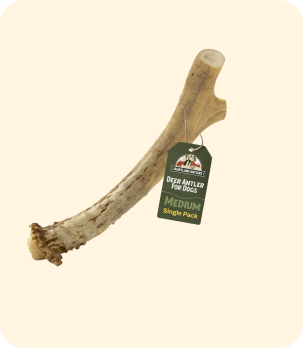
Here is the fit decision that quietly solves most upset-stomach cases before they start. A split antler has the marrow channel exposed. The soft center is right there on the surface, which makes it easy to reach. That is a good thing for a dog that needs a softer, more forgiving chew, and a risky thing for a strong adult chewer who will hoover the whole marrow line in one sitting and loosen up.
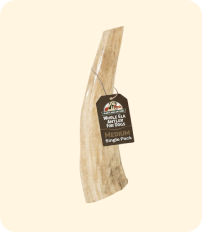
A whole antler keeps the hard cortex intact. Your dog has to earn the marrow over days of work, which paces the richness for them automatically. A power chewer on a correctly sized whole antler takes in marrow slowly, the way the gut prefers.
So the rule is not "split is gentle, whole is tough." The rule is fit:
- Split fits puppies over 10 months, seniors, first-timers, and dogs with undershot jaws that cannot get purchase on a whole antler. Pair the split with the 3-day ramp, because the exposed marrow makes overeating easier.
- Whole fits experienced adult power chewers. The intact cortex slows them down, which is exactly what a rich-food gut wants.
Get this pairing wrong and even a perfect antler can loosen stool. Get it right and the antler does the pacing for you. Our split versus whole elk antler guide walks the exact call for your dog, and if you have a puppy in the mix, antlers for puppies covers the softer-gut adjustments.
Why Is My Dog's Poop White or Chalky After an Antler?
This one looks alarming and is usually harmless. White or chalk-flecked stool after antler chewing is almost always undigested calcium.
Antler is bone, and bone is high in calcium. When a dog grinds fine particles off the surface and swallows them, the body absorbs what it needs and passes the rest. That passed calcium shows up as white bits or a chalky cast in the stool. A single white or speckled stool after a good chewing session is normal and clears on its own.
The version worth watching: stool that is both white and chalky-dry across several movements, or paired with straining. That points at too much bone material moving through, or a digestion issue that is not about the antler at all. If the chalky stool keeps up for more than a day or two, shorten the sessions and call your vet. A quick fix for the harmless version is simply pacing the chew, which the 3-day ramp already does.
This Is Not the Same as a Swallowed Piece or an Allergy
Keep three different problems separate, because they get very different responses.
- Transient upset stomach. Soft stool or a skipped meal from rich marrow or a long first session. This is the topic of this article, and the ramp fixes it.
- A swallowed chunk. If your dog broke off and gulped a hard piece, that is a possible blockage, not a rich-food reaction, and it does not wait. Read what to do if your dog swallowed an antler piece and treat it as urgent.
- A true allergy. Rare, and it looks different, often itching, ear trouble, or ongoing digestive issues that do not resolve when you pace the chew. Our piece on antler chews and allergies covers how to tell.
Most owners cleaning up one soft stool are dealing with the first case. The ramp and the right fit handle it.
When Loose Stool Means Call the Vet
Rich-food loose stool clears fast. A sick dog does not. Here is the line, drawn from standard veterinary guidance.
Mild diarrhea lasting under 24 hours in an otherwise bright, active dog can usually be managed at home. Pull the antler for now, keep fresh water down, and feed a bland meal of plain boiled chicken and rice until things firm up.
Call your vet, or an emergency vet, when you see any of these:
- Diarrhea that lasts longer than 24 hours, or keeps returning
- Blood in the stool, whether bright red or dark and tarry
- Repeated vomiting alongside the diarrhea
- Lethargy, or a dog that is not acting like itself
- Signs of dehydration: dry or tacky gums, sunken eyes, or skin that does not spring back when you gently pinch it
- Any suspicion your dog swallowed a hard piece
When in doubt, call. A short phone conversation with your vet costs you nothing and settles the question fast.
The Real Fix: Right Antler, Right Fit, Right Pace
Owners end up in a graveyard of half-trusted chews because they treat every bad reaction as proof the chew failed. Usually it is not the chew. It is the pace, the fit, or the grade.
A balanced-moisture Grade A elk antler, matched split-or-whole to your dog and introduced over three days, gives a rich chew without the rich-food fallout. That is the whole system. Get it right once and you stop guessing, stop rotating brands, and get your mornings back.
If you want a chew sorted for grade and moisture before it reaches your dog, start with our Grade A elk antlers and match the fit to your dog. If you are still weighing whether antlers belong in your house at all, are antler chews safe for dogs lays out the full picture.
Frequently Asked Questions
Can antlers cause diarrhea in dogs?
They can, but the antler is rarely the real cause. Loose stool after an antler almost always comes from rich marrow eaten too fast, a first session that ran too long, or a young or senior gut that was not ramped in. A single-ingredient Grade A antler, the right split-or-whole fit, and a 3-day ramp fix nearly all of it.
How long should my dog chew an antler the first time?
Keep the first few sessions to about 10 to 15 minutes, then trade the antler away and put it up. Short early sessions cap how much marrow your dog takes in before you know how their gut handles it. Lengthen sessions over three days only if stool stays firm.
Is white or chalky poop after an antler a problem?
Usually not. White or chalk-flecked stool is almost always undigested calcium from the bone passing through, and a single episode clears on its own. Watch it only if the stool stays white and dry across several movements or comes with straining, in which case shorten sessions and call your vet.
Should I stop giving antlers if my dog got loose stool once?
No. One soft stool is a pacing signal, not a verdict on antlers. Pull the chew for a day, let the gut settle, then restart on a shorter ramp with a fit matched to your dog. If loose stool keeps happening after you slow things down, then talk to your vet about other causes.
Are split antlers or whole antlers easier on the stomach?
It depends on the dog. A split antler exposes the marrow, which suits puppies, seniors, and first-timers but makes overeating easier, so pair it with the ramp. A whole antler keeps the marrow behind hard cortex, which paces a strong adult chewer automatically. Fit to your dog, not to a rule of thumb.
When does antler-related diarrhea mean I should call the vet?
Call if diarrhea lasts more than 24 hours, if you see blood, if there is repeated vomiting, if your dog is lethargic or not acting normal, if you spot dehydration signs like dry gums or sunken eyes, or if you suspect your dog swallowed a hard piece. Mild loose stool under 24 hours in an otherwise bright dog can usually settle at home with water and a bland meal.