
Chewing is one way dogs interact with their surroundings. The same visible action can have different reasons: exploration, access to food, an enjoyable activity or distress. To choose a useful response, look at the context instead of assuming that every chewer needs a harder object.
This guide helps you observe the pattern, provide practical outlets and know when to seek help. Antlers are one type of hard chewing material, but a natural behavior does not make every natural object suitable.
Observe what happens around the chewing
Write down the object, location and timing. Was the dog alone? Had food been left within reach? Did the behavior start after a change in routine? Did the dog stop comfortably, or continue with signs of distress?
One damaged shoe is not a diagnosis. VCA's guide to destructive chewing describes several possible motivations. The practical first step is to understand the pattern, then match the response to it.
Separate observation from interpretation in your notes. “Chewed the cushion near the door while alone” is more useful than “was spiteful.” Record what a camera shows during an ordinary absence if that helps a professional assess the situation. Do not create a distressing test.
Also record changes in eating, comfort or movement. A new behavior, repeated ingestion of objects or a sudden loss of interest in usual activities deserves a veterinary discussion.

Give the dog more than one outlet
Enrichment is broader than chewing. A routine can include sniffing, movement, learning, social contact and rest. Choose options the dog can use comfortably rather than trying to fill every quiet period with one object.
| What you observe | An activity to consider |
|---|---|
| The dog enjoys searching. | A simple supervised food search using part of the measured meal. |
| The dog seeks interaction. | A brief reward-based training or suitable play session. |
| The dog investigates new smells. | A controlled sniffing walk in a suitable place. |
| The dog struggles with a puzzle. | Reduce difficulty, or choose a different activity. |
These are starting ideas, not diagnoses or guaranteed fixes. Follow food restrictions and product directions. Remove items the dog damages or attempts to swallow.
VCA discusses predictable routines and reward-based communication. Consistent cues and expectations help you make the day's activities understandable. A household can agree on the same allowed items and the same way to start and end an activity.

Match the material to the individual dog
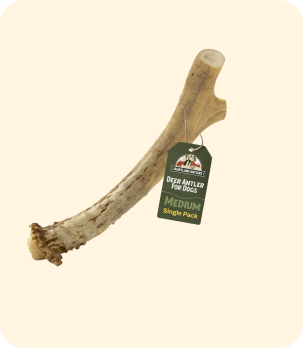
“Natural” describes origin; it does not establish dental safety. AAHA warns that antlers can fracture teeth. A split antler still contains hard material. Strong interest, a large body or a working-breed label does not remove that risk.
Review dental history, chewing behavior and swallowing attempts before choosing any item. A dog that quickly destroys one toy does not necessarily need a harder replacement. It may need a different kind of activity or closer management of access.
Check the exact product's size and use instructions. Observe the dog using it, inspect the item and put it away when the activity ends. There is no single session duration that makes all materials suitable.
For a reluctant dog, accept the choice to walk away. Our introduction guide explains observation without pressure. Do not use coatings or home preparation to make a dog accept a hard item.

Respond to problems without confrontation
Manage access to shoes, rubbish and other unwanted targets while you develop a useful routine. Provide appropriate choices before a predictable difficult period. Reward the behavior you want to see instead of relying on punishment after damage has occurred.
If a dog becomes stiff, growls or guards an object, do not grab at it or punish the warning. Keep people away and get qualified behavior help if access or removal is unsafe. In homes with several dogs, use secure separation around valued items.
Chewing enrichment is not an established treatment for separation-related distress. A dog that panics, damages exits or injures itself during absences needs professional assessment and a plan. See our anxiety and enrichment guide.
Contact the veterinarian promptly if an object may have been swallowed or a tooth is damaged. For breathing trouble, collapse or severe distress, seek emergency care.

Frequently asked questions
Does chewing always mean boredom?
No. Look at timing, objects, other behavior and health changes. Similar actions can have different causes.
Do natural instincts make antlers the right outlet?
No. A behavior's origin does not establish the safety of a material. Choose for the individual dog and the exact product.
Should I make each activity harder?
Only adjust an activity according to the dog's comfortable response. Difficulty and duration are not goals by themselves.
Can an antler replace a walk or time with me?
A chewing object does not provide the same opportunities as movement, sniffing and interaction. Plan a range of suitable activities.
For an individual chew discussion, use our veterinary checklist. Ask Heartland about specific product facts.