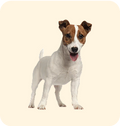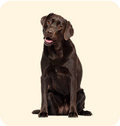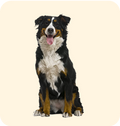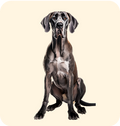
You're not shopping for a normal dog. You know that.
Your dog has destroyed a Kong, eaten through a "heavy duty" rope toy in twenty minutes, and turned what was marketed as an "indestructible" chew into a pile of shreds before you finished your coffee. You've spent real money on things that were supposed to last. They didn't.
Power chewer owners are their own tribe. You're not looking for a cute treat - you're looking for something your dog physically cannot obliterate before the weekend. Something that's also safe. Something that doesn't make the house smell like a slaughterhouse.
This guide covers every major chew type honestly. We'll rate each one for durability, safety, natural ingredients, cost per month, and mess. And yes - deer antler wins the power chewer column. We'll show you why, and we'll tell you where it falls short too, because honesty is the only thing that earns your trust when you've been burned by "indestructible" marketing before.
What Makes a Dog an "Aggressive Chewer"?
Not every hard chewer is an aggressive chewer. There's a real spectrum.
Moderate chewer: Works through a bully stick in 20 - 30 minutes. A standard antler lasts weeks.
Heavy chewer: Done with a bully stick in under 10 minutes. Needs denser options to get real engagement time.
Power chewer / aggressive chewer: Destroys bully sticks in minutes. Crushes yak chews in one sitting. Has cracked Nylabones. This is the dog this guide is written for.
What drives it? Usually a combination of:
- Jaw architecture. Breeds like Pit Bulls, Rottweilers, Mastiffs, and German Shepherds are built to crush. Jaw force studies put Rottweilers at 328 PSI. A Pit Bull can hit 235 PSI. These dogs aren't being bad - they're being exactly what they were bred to be.
- Age and energy. Dogs between 1 - 3 years old chew most intensely. High-drive working breeds (Malinois, GSD, Husky) chew out of frustration when under-stimulated.
- Chewing drive. Some dogs are just wired this way, regardless of breed. A 25-lb mutt can be a more destructive chewer than a 90-lb Lab.
If your dog fits this picture, most generic "durable" chew advice doesn't apply. You need the power-chewer-specific guidance below.
The Dangerous Options: What NOT to Give Aggressive Chewers
Before we get to what works, let's cut the things that don't - or worse, hurt.
Rawhide
Rawhide is the wrong chew for a power chewer. Full stop.
Here's why: rawhide is made from the inner layer of cattle hide, dried and pressed into shape. When a dog chews it, it softens into a gummy, slick mass. A power chewer can tear off a large chunk before it fully softens - and that chunk can cause choking, or worse, an intestinal blockage.
The chemical processing angle makes it worse. Most rawhide is treated with bleach, hydrogen peroxide, and chemical preservatives to achieve that bright-white look. That's not a natural product going in your dog's mouth.
For moderate chewers who get supervised 15-minute sessions, rawhide is lower-risk. For power chewers who are alone with a chew? The risk is real. Read our full breakdown of why rawhide is dangerous for power chewer dogs.
Cooked and Smoked Bones
Cooked bones - including those "smoked" bones sold at pet stores - splinter. Cooking changes the bone's structure, making it brittle. Power chewers crack these into shards. Those shards can perforate the intestines. This is not a theoretical risk; it sends dogs to emergency vet visits every year.
Raw bones have a lower splintering risk, but still require careful supervision and size-matching with power chewers. They're not addressed in this guide because they involve a separate set of prep and storage requirements.
Best Natural Chews for Aggressive Chewers - Ranked
Here's an honest look at all eight major options. For each one, we rate it specifically through the power chewer lens.
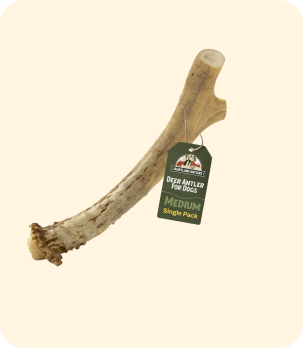
1. Deer Antler (Extra Hard) - Top Pick for Power Chewers
What it is: Naturally shed antler from white-tailed deer. The outer cortex is denser than elk antler. No processing, no additives. Grade-A selection means only the densest antlers make the cut.
For power chewers: This is it. Deer antler is the hardest naturally sourced chew available. The density that makes it last so long for power chewers is the same property that makes it safe - it doesn't splinter, it wears down gradually like a file.
A correctly sized Grade-A deer antler for a 60-lb power chewer: 3 - 8 weeks of daily engagement. Compare that to anything else on this list.
Safety note: Size up for power chewers. A dog who overwhelms a "right size" antler too quickly risks dental stress. See the size guide below.
Price: $19.99 - $39.99 | Shop Grade-A deer antler chews
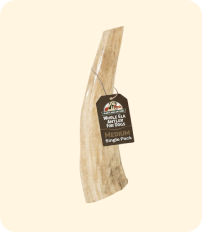
2. Whole Elk Antler - Best for Moderate-to-Aggressive Chewers
What it is: Naturally shed elk antler, whole (not split). Larger diameter than deer antler, with a slightly more accessible inner marrow layer that motivates longer chewing sessions.
For power chewers: Elk antler is less dense than deer antler, which makes it slightly more accessible for dogs who are power chewers but not at the extreme end. The larger size also means power chewers can't get it in their mouth all at once - an important safety factor.
A 70-lb aggressive chewer on a whole elk antler: 2 - 5 weeks typically.
Price: $18.49 - $64.99 | Shop whole elk antler chews
3. Split Elk Antler - Entry Point for First-Timers
What it is: The same Grade-A elk antler, cut lengthwise. The exposed marrow layer inside makes it immediately rewarding - dogs can lick and chew the soft center, which builds the habit.
For power chewers: Split elk is the right starting antler, not the permanent one. First-timers who've never had antler need the marrow exposure to understand it's a chew, not a toy. Once engaged, most power chewers move to whole elk or deer antler for the durability bump.
Split elk is also the right pick for dogs with moderate jaw strength who have sensitive teeth - slightly softer than whole elk, but still long-lasting by any comparison.
Price: $19.99 - $40.99 | Shop split elk antler chews
4. Yak / Himalayan Chews - Good Middle Option
What it is: Compressed blocks of dried yak and cow's milk with salt and lime juice. Very low lactose. Hard enough that most dogs chew them over multiple sessions.
For power chewers: True power chewers will blow through yak chews faster than antlers, but slower than bully sticks. These are a solid rotation option - especially useful for dogs who have sensitive teeth and need something slightly softer than deer antler. The chew goes down to a small nub, which can then be microwaved into a puffed "pop" treat, so there's no waste.
Durability vs. antler: Lower. Expect 1 - 3 days for an extreme power chewer vs. weeks on antler.
5. Buffalo Horns - Very Hard, Less Available
What it is: Hollow horns from buffalo, made of keratin (same material as human fingernails, but dense and compressed). One of the hardest biological chews available.
For power chewers: Buffalo horns are genuinely durable. The hollow center fills with marrow or can be stuffed. For extreme chewers who've cracked through everything else, buffalo horn is worth trying.
The catch: They're harder to find at consistent quality. Lower availability and fewer size options than antlers. And they can have an odor, depending on the source.
6. Rubber Chews (KONG-Type) - Not Consumable
What it is: Vulcanized rubber toys designed specifically for power chewers. Not a chew in the traditional sense - your dog can't eat it. KONG Extreme is the category standard.
For power chewers: KONG is the right choice when you want no ingestion risk whatsoever - or when you're leaving your dog unsupervised. Stuff it with peanut butter or kibble, freeze it. It's mental enrichment more than a chew. Doesn't satisfy the jaw-pressure drive the same way a hard natural chew does.
Cost: One-time purchase vs. consumables. Lower long-term cost, different purpose.
7. Bully Sticks - Safe but Consumed Too Fast
What it is: Dried beef pizzle (a single muscle). 100% digestible, no additives. The single-ingredient chew standard.
For power chewers: Bully sticks are safe. They're not a power chewer solution. A true power chewer will finish a 6-inch bully stick in 10 - 20 minutes. At $3 - 8 per stick, that's $90 - 240/month for one daily chew session. They're a great reward, terrible as a primary chew option for destroyers.
The smell is real, especially if they get wet. Mess-free, odor-free this is not.
8. Beef Tendons / Collagen Chews - Moderate Duration
What it is: Dried beef tendon (high collagen, natural protein). Lasts longer than bully sticks, shorter than antlers. Joint-support benefits from the collagen content.
For power chewers: A 30 - 90 minute chew for most power chewers. Better than bully sticks for duration, good for rotation. Digestible and natural. Not a standalone solution for the most destructive dogs, but a useful add to the rotation.
The Full Comparison Table
| Chew Type | Durability (Power Chewers) | Safety | Natural? | Cost/Month* | Mess/Smell |
|---|---|---|---|---|---|
| Deer Antler | ★★★★★ (weeks - months) | High (no splintering) | Yes - naturally shed | $13 - 35 | None |
| Whole Elk Antler | ★★★★½ (weeks) | High (no splintering) | Yes - naturally shed | $15 - 45 | None |
| Split Elk Antler | ★★★★ (days - weeks) | High | Yes - naturally shed | $20 - 50 | None |
| Yak/Himalayan Chew | ★★★ (1 - 3 days) | High | Yes | $30 - 60 | Minimal |
| Buffalo Horn | ★★★★ (days - weeks) | High | Yes | $25 - 55 | Mild |
| Rubber (KONG) | N/A (not consumed) | Very High | No | One-time $15 - 30 | None |
| Bully Sticks | ★★ (10 - 20 min) | High | Yes | $90 - 240 | Strong |
| Beef Tendon/Collagen | ★★½ (30 - 90 min) | High | Yes | $60 - 120 | Minimal |
*Estimated for a 50 - 70 lb power chewer with one daily chew session.
Deer Antler: Why It's the Top Pick for Most Power Chewers
Let's be direct about what makes deer antler different for this specific use case.
Density. Deer antler outer cortex is denser than elk antler. It's not just hard - it's structurally resistant to the crushing pressure that power chewer jaws apply. Most other natural chews soften, compress, or fragment under that pressure. Deer antler doesn't.
No splintering. This is the safety point that separates antlers from cooked bones and rawhide. When a power chewer works a Grade-A deer antler, it wears down gradually - like chalk on a board. It does not fracture into shards. The gradual wear also means the chew's surface stays safe at every stage.
Mess-free, odor-free. If you've owned a dog who loves bully sticks, you know what a wet bully stick smells like on your carpet. Antlers produce no odor and no residue. Your floors stay clean.
Nutritional value. While your dog is busy chewing, they're getting calcium and phosphorus for healthy teeth and bones from the marrow layer. Not a lot - this isn't a supplement - but it's more than a Nylabone gives them.
The honest caveat: Deer antler is hard. Too hard for the wrong dog. Dogs with dental disease, cracked teeth, or senior dogs with weakened enamel should not be on deer antler. For these dogs, split elk antler or yak chews are safer. And any dog - power chewer or not - should have the antler taken away when it gets small enough to swallow whole.
How to Choose the Right Size for Your Aggressive Chewer
Wrong size = short session (if too small) or safety risk (if too small to hold properly). Size up for power chewers - they work through antlers faster than the weight guidelines assume.
| Dog Weight | Standard Size | Power Chewer Recommendation |
|---|---|---|
| Under 20 lbs | Small | Medium |
| 20 - 35 lbs | Small - Medium | Medium |
| 35 - 55 lbs | Medium | Large |
| 55 - 75 lbs | Large | XL |
| 75 - 100 lbs | XL | Giant |
| 100+ lbs | Giant | Giant (or two XL) |
Rule of thumb: Your dog should be able to hold the antler between their front paws and work the end - not get the whole thing in their mouth at once. If they can get more than half of it in their mouth, size up immediately.
For breed-specific guidance, see our size guide and our posts on best chews for Pit Bulls, Rottweilers, and German Shepherds.
Safety Rules for Power Chewer Owners
Power chewers need tighter supervision than moderate chewers. Their jaw force means mistakes happen faster. These rules apply regardless of which chew you choose:
1. Supervise every session, especially early on. When introducing a new chew, your dog hasn't learned its limits yet. Watch the first several sessions closely.
2. Replace when it gets small. An antler that started at 6 inches is still fine at 4 inches. At 2.5 inches - for a large dog - pull it. Small pieces can be swallowed whole.
3. Start with split elk if they're new to antlers. New antler chewers sometimes ignore whole antlers for the first day or two. Split elk has exposed marrow that makes it immediately interesting. Once they're hooked, introduce the whole antler.
4. Limit sessions to 30 - 45 minutes. Not because the antler is dangerous - it isn't - but because sustained jaw pressure for hours at a time strains the muscles and puts more wear on teeth than necessary. Two or three 30-minute sessions per day is plenty.
5. Skip antlers if your dog has dental issues. If a vet has flagged cracked teeth, enamel wear, or periodontal disease, deer antler is not the right pick. Yak chews or rubber chews are safer until the dental situation is resolved.
Frequently Asked Questions
What is the best chew for an aggressive chewer?
Deer antler (extra hard) is the top pick for most aggressive chewers. It's the densest naturally sourced chew available, lasts weeks to months, won't splinter, and contains no additives. For dogs new to antlers or with moderate jaw strength, whole elk antler is the best starting point.
Are antlers safe for aggressive chewers?
Yes - when sized correctly and sourced at Grade A quality. The key rules: size up one level from your dog's weight (a 60-lb dog gets a Large, not Medium), choose whole elk or deer antler over split for power chewers, and replace the antler when it gets small enough to swallow. Grade-A antlers from naturally shed sources do not splinter the way rawhide or cooked bones do.
For a detailed breakdown of safe antler use, read Are Antler Chews Safe for Dogs?
What chews should I avoid for aggressive chewers?
Avoid rawhide - it softens and breaks into large chunks that can cause choking or intestinal blockage, and is processed with chemicals. Cooked bones (including store-bought "smoked" bones) splinter dangerously. Bully sticks are safe but consumed too fast to be cost-effective for power chewers.
How long do antler chews last for aggressive chewers?
For a true power chewer, a correctly sized deer antler typically lasts 3 - 8 weeks. Whole elk antler lasts 2 - 5 weeks for most aggressive chewers. Variables include dog size, jaw strength, and daily chew time. Compare this to bully sticks (15 - 45 minutes) or rawhide (1 session). See our full lifespan breakdown for the cost math by dog profile.
What size antler should I get for my aggressive chewer?
Size up one level from your dog's weight range when they are a power chewer. Under 25 lbs: Medium. 25 - 50 lbs: Large. 50 - 80 lbs: XL. 80 lbs and up: Giant. If your dog has previously blown through antlers quickly, go one size larger still.
Are Nylabones safe for aggressive chewers?
Nylabones are durable and won't be consumed quickly, but they are made from nylon - a synthetic material. Dogs shave off tiny nylon particles while chewing. For owners who prefer a fully natural chew, antlers or yak chews are better options. Nylabones aren't inherently dangerous, but they aren't a natural product.
What are the safest chews for dogs that destroy everything?
The safest chews for power chewers are: (1) Grade-A deer or elk antler - hard, no splintering, natural; (2) Yak/Himalayan chews - hard cheese, digestible, no additives; (3) Buffalo horns - very hard keratin, long-lasting; (4) Rubber chews like KONG Extreme - non-consumable, zero ingestion risk. Avoid rawhide, cooked bones, and undersized antlers.
What breeds are considered aggressive chewers?
Breeds most commonly classified as aggressive or power chewers include Pit Bulls, German Shepherds, Rottweilers, Belgian Malinois, Labrador Retrievers, Huskies, and Mastiffs. High-drive working breeds and terriers tend to chew with intensity regardless of size. Chewing behavior is also influenced by age (1 - 3 years old dogs tend to chew most intensely) and under-stimulation.
The Bottom Line
Your dog destroys everything. That's not a problem - it's who they are.
The right chew matches that dog. Not a chew that markets itself as tough, then lasts forty minutes. A chew that was literally grown to be dense - naturally shed, Grade A, no additives, no splintering. A chew that lasts because of what it is, not how it's packaged.
For most power chewers, that's a deer antler. For first-timers or moderate-to-aggressive chewers, that's a whole elk antler. For dogs making the switch from rawhide, start with split elk and work up.
We're a veteran-owned small business. Grade A quality isn't optional - it's the only way we operate.
Shop deer antler chews for power chewers → Not sure which size? Use the size guide →
Free shipping on orders over $50. 1,000+ reviews from power chewer owners who found something that finally lasts.
Related reading: