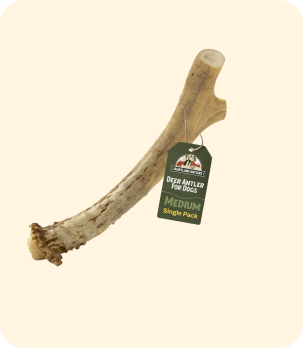

A useful weight plan starts with the dog's condition, measured food, suitable movement and follow-up. Ask your veterinary team for an individual plan, then give every caregiver the same portion and treat instructions.
Enrichment can support that routine, but antler chews are not a proven weight-loss tool. This guide has no verified calorie value for the amount consumed from an antler, so it should not be described as zero-calorie. Chewing time is not a measured substitute for activity.
Start with an individual food plan
Ask the veterinary team to assess body weight, body condition and muscle condition. A number on the scale alone does not show whether the dog needs to lose weight or whether a change is healthy. Health conditions, medicines and life stage can affect the plan.
Record the exact foods and quantities the dog currently receives. Include meals, training rewards, table food, edible chews, supplements and food used to give medicine. Ask other household members what they provide. Small extras are easy to miss when several people feed one dog.
AAHA's feeding guidance recommends that, for healthy dogs maintaining appropriate weight, at least 90% of calories come from complete and balanced nutrition, with treats and other foods at no more than 10%. A therapeutic weight-loss or medical diet can need a different, specific plan. Ask your veterinarian how extras fit.
Measure the agreed portion consistently. If you use part of the meal for training or a feeding toy, set that amount aside from the day's allowance before the activity.

Check calorie information before making comparisons
Compare the amount actually eaten, not simply the price, package size or time an item occupies the dog. Check the product's calorie information and the size of the serving. If the number is missing, ask the manufacturer and tell the veterinary team what remains uncertain.
An antler is mineralized tissue, but that fact does not provide a reliable calorie figure per session. Wear varies and does not tell an owner exactly what was swallowed. We do not assign a zero-calorie value or make a measured calorie-saving claim for Heartland antlers here.
| Item | What to record |
|---|---|
| Meal | Exact food, measured amount and label calorie information. |
| Training reward or edible chew | Product, serving and number given by all caregivers. |
| Food in a puzzle | Whether it came from the meal allowance or was extra. |
| Item without verified calories | The product and the missing information; ask before treating it as calorie-free. |
Antlers are not a replacement for a complete and balanced diet. We do not claim that their mineral content supplies a useful dose for bones or joints, or that they replace a supplement prescribed for a specific need.

Choose enrichment and movement for the dog
A dog can have an interesting routine without receiving food every time it asks for attention. Consider a suitable walk, a short training exercise, a sniffing opportunity or quiet interaction. Match movement to comfort, fitness and the veterinary plan.
A feeding toy can make part of a measured meal into an activity. Choose a device that suits the dog's size and behavior, follow its directions and watch for damage or attempts to swallow parts. Start with a manageable level of difficulty.
Do not count an antler session as a known calorie-burning exercise. We do not have a validated energy-use value for that activity. Likewise, a long-lasting item does not show that the dog's overall intake has fallen.
Dental risk needs a separate decision. AAHA warns that antlers can fracture teeth. A whole or split cut, a weight label and supervision do not remove that risk. Discuss materials and alternatives with your veterinarian rather than selecting an antler because the dog is on a diet.

Track progress and adjust the routine
Agree on when to recheck weight and body condition. Keep a brief log of portions, extras, activity and any difficulty following the plan. One person can keep the record, but everyone who feeds the dog needs the same instructions.
Use trends and the veterinary team's assessment to make changes. Do not keep cutting meals because a chew was added, or because the scale did not change on one occasion. Restricting a complete diet without a plan can also restrict nutrients.
Report unexpected weight loss, changes in thirst or appetite, difficulty moving, vomiting or other illness signs. Weight management should not hide a new health problem. If the dog has mouth pain or changes how it eats, arrange a dental assessment rather than changing only the treat.
Review what works in the household. A measured food container, a shared record and a list of allowed activities can be more useful than a new chew. The routine should be practical enough for all caregivers to follow.

Frequently asked questions
Are antlers zero-calorie chews?
We do not have verified calorie data for the amount consumed from a Heartland antler. Do not treat a missing number as zero.
Will chewing an antler help my dog lose weight?
There is no established weight-loss effect here. Build the plan around measured intake, suitable activity and veterinary follow-up.
Can I use meal food for enrichment?
Often this is a practical option, if it fits the diet and activity directions. Take the portion from the measured daily allowance so it does not become an unrecorded extra.
Does a split cut make an antler suitable for a diet?
A cut describes exposed surfaces. It does not establish calorie intake, weight-loss benefit or dental safety.
Read our questions to ask your veterinarian. For current product facts, see the catalog or contact Heartland.